Some mountaineers place a special value on climbs that are done in the winter, the idea being that those should be more challenging, more difficult. But wait a minute, it’s not that simple – there’s a lot more to it than just the time of year, a lot more. So let’s explore the concept together.
In the northern hemisphere, winter runs from around December 21st to March 20th, and that’s astronomical winter. I say “around” because it can very slightly by a day or so from one year to the next, and it’s all based on the tilt of the earth on its axis and its orbit around the sun. It’s more complicated than I fully understand, so if you really want to get into it, you can always Google it. But wait, that’s for the northern hemisphere. The southern hemisphere plays by its own rules, where astronomical winter usually runs from about June 21st to September 22nd.
So, as you can see, a climb can only be considered a winter climb if it falls between certain dates and also in which part of the world the mountain is located. At least those are the hard and fast rules that define a winter climb, but there’s still more to it than that, a lot more. In general, as you approach the equator in either hemisphere and move from a temperate climate to one that’s more tropical, conditions become warmer and probably less wintery, right? By that I mean a lower chance of snow and cold. But it also depends on the elevation of the climb. A 20,000-foot peak near the equator can have plenty of cold and snow, and therefore present quite challenging conditions at any time of year.
In many places with temperate climates, winter-like conditions can exist well before and well after the actual astronomical dates. I lived in British Columbia for my first 20 years of climbing, and there were summer days spent groping for a summit in a blizzard, and also dealing with fresh snowfall and below-freezing temperatures on mountains in July and August. How well I remember my first winter climb, though. On December 29th of 1967, my university room-mate and I drove from BC down to the trailhead for Mount Baker in Washington. By 1:00 PM we made it up to the Kulshan cabin and spent the night. We had the place to ourselves although there were bunks for 30 people. By 6:15 the next morning we set out, arriving at the 9,100-foot saddle by 11:00 AM. We climbed up to 10,000 feet on the Roman Wall but found the intense cold and strong wind to be too much for our inexperienced selves, so back down we went. We made it all the way back home by seven in the evening.
Undaunted, on February 22nd of 1968 we attempted Wedge Mountain. The amount of snow was outrageous, and we didn’t get very high – the amount of crap we took with us was ridiculous, like a couple of inexperienced boy scouts. But it certainly was a winter climb!
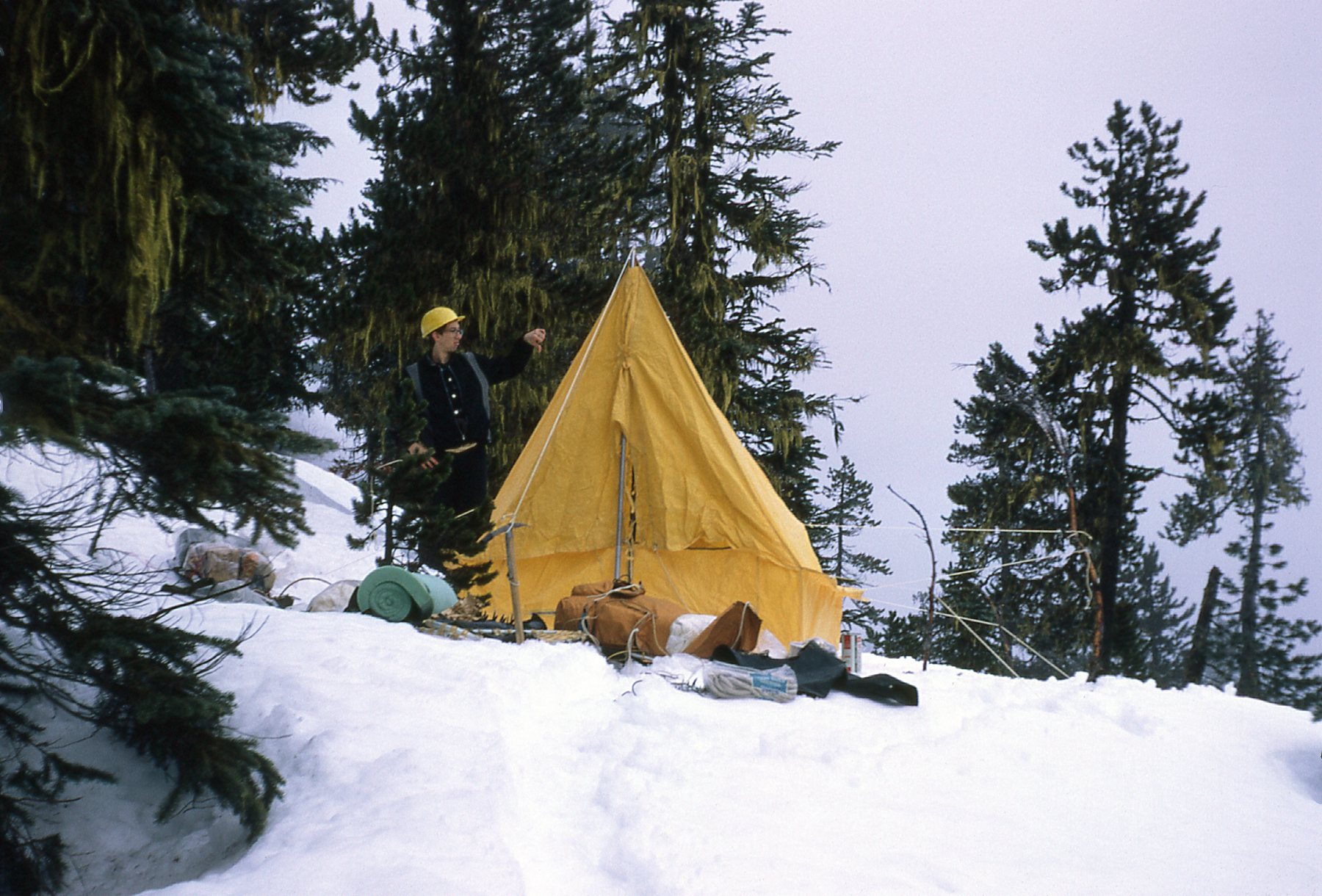
George at our high point, not very high.
We decided that the way to beat this peak was to start earlier in the season, so later in the same year we went back. Surely in October there’d be less snow and we’d have it made. Hah! Like I said earlier, the north can have its own ideas about weather.
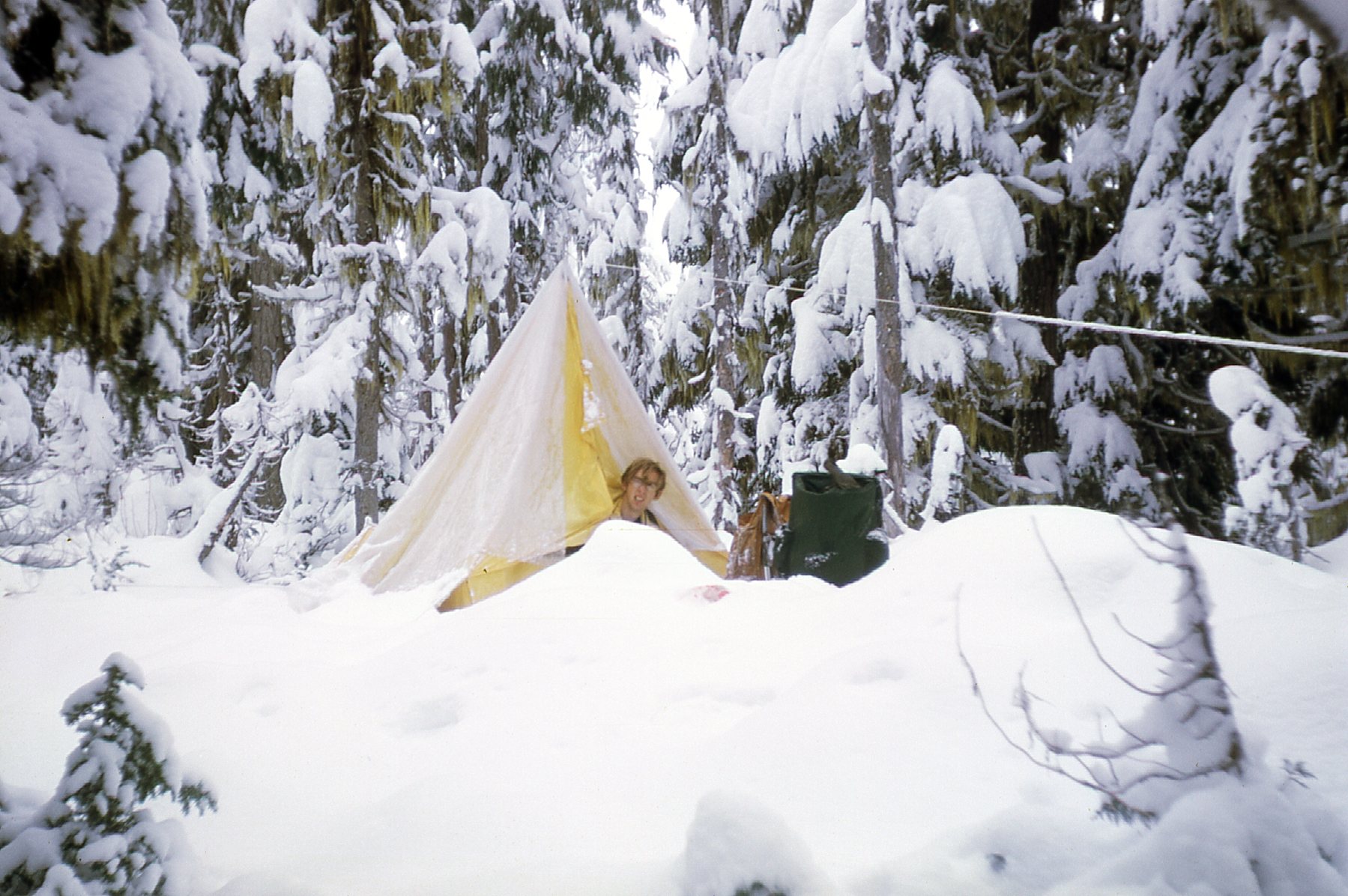
October 13th – not winter, but you wouldn’t know it.
I spent the summer of 1968 in central BC on a mining exploration crew. We were up in alpine country a lot, and I got snowed on 29 different times from May to August, yet those weren’t even winter days. I’ll bet the winter would have been hell!
It wasn’t until 1976 that I next tried winter climbing – well, almost. I went to Mexico and stood on the summit of Popocatéptl on March 22, so I just missed winter by a day or so. Peaks in the Statlu drainage of southwestern BC were my focus of attention later that year, and I found myself on the summit of Mt. Jasper on December 23rd (snowy indeed) and Mt. Kettley on December 28th. The records say those were first recorded ascents, and in the winter at that. New Year’s Day of 1978 saw me atop Mt. Crickmer.
Even better were the ascents of Stewart Peak and The Still in the Cheam Range, both completed on January 6th of 1977 and both of them were the first winter ascents of those peaks. January 16th saw me atop Bear Mountain near Harrison Hot Springs; January 21st produced climbs of MacDonald Peak and Mount Webb, and on the 23rd was an easy climb of Sumas Mountain. A challenging solo climb of Alouette Mountain and Blanshard Needle was done on January 27th. Check out this photo.
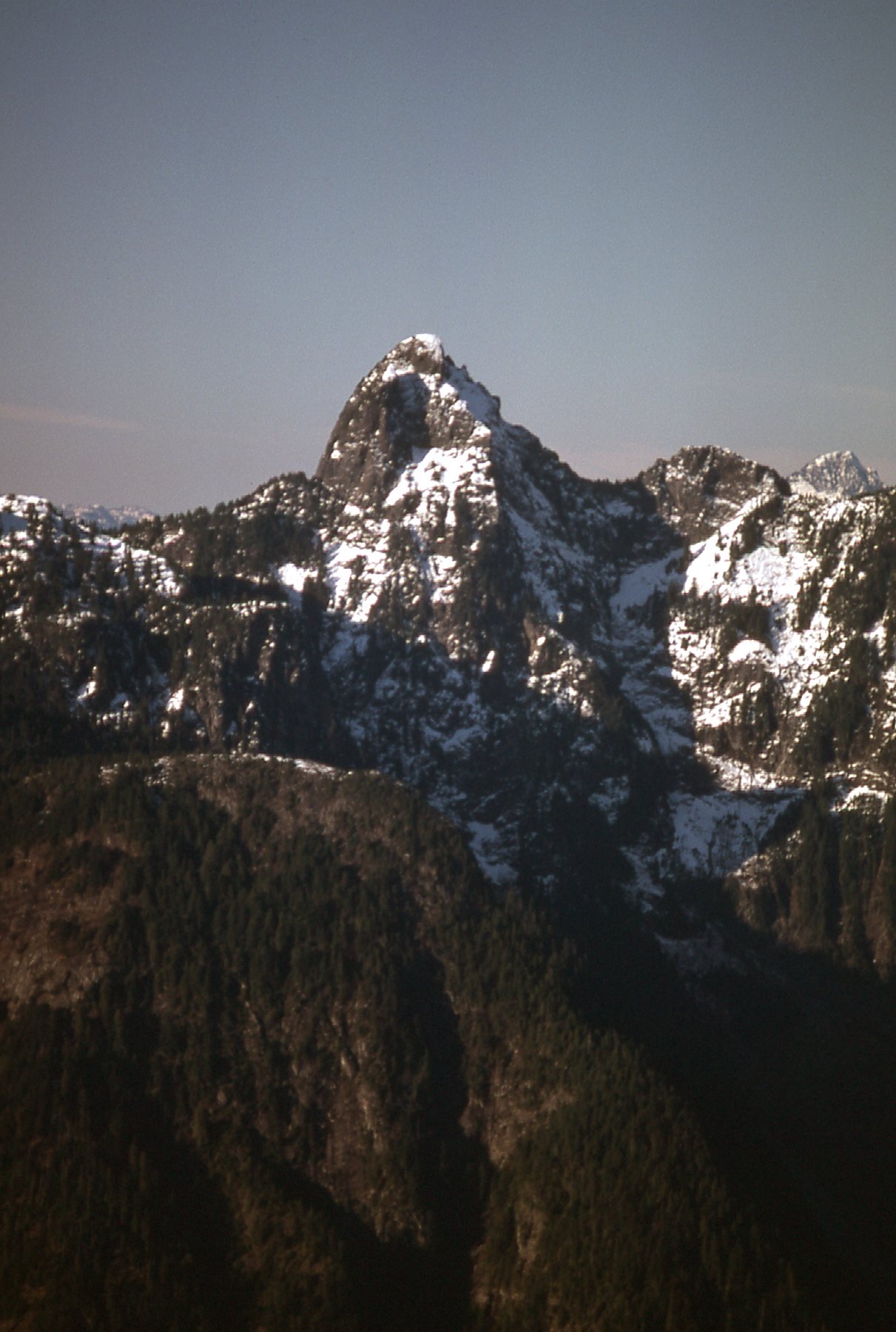
The route I climbed was the steep left side of Blanshard Needle shown in this photo.
A very wintery climb in deep snow of Cam’s Peak in the Scuzzy Creek drainage took place on January 30th. February 2nd of the same year produced a climb of Peak 4600 and Statlu Peak, also first recorded ascents. On the 5th, just a few days later, I climbed easy Deroche Mountain near my home.
On February 8th, my friend Mike and I went in and did a day climb of Larrabee Mountain in the Skagits, about as wintery a climb as one could hope to do.
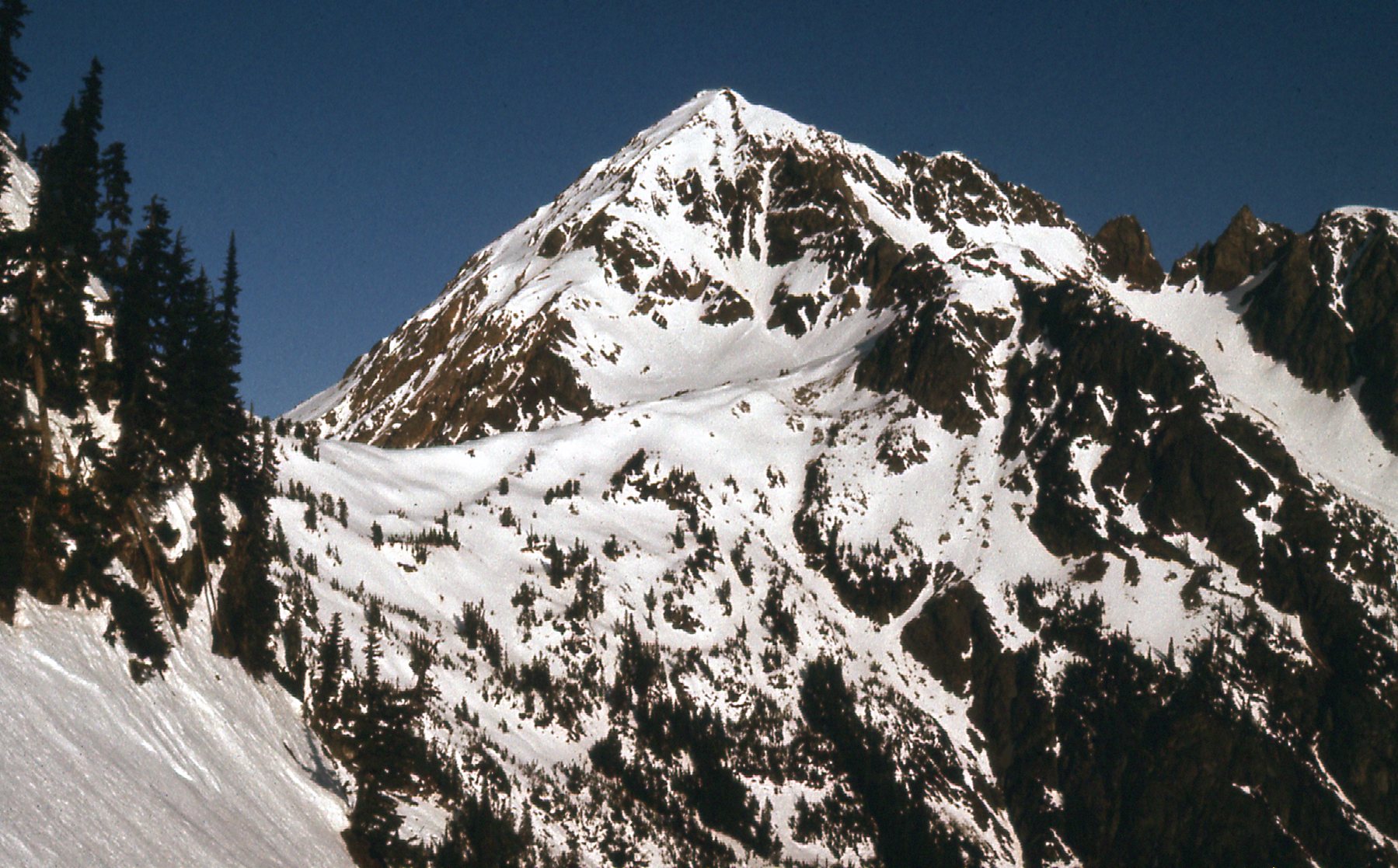
Larrabee Mountain
March found me practicing to build a snow cave (I was a dismal failure) high up on a peak and also doing minor climbs on the 4th near Harrison Bay. May 7th had me climbing the peaks surrounding Blinch Lake, and although not technically winter it sure felt like it. An overnight trip to Shawatum Mountain put me on top of the double summits on November 11th – again, not technically winter but you wouldn’t know it, it was a frozen wasteland. Six days later produced a summit climb of Church Mountain – yes, I know it wasn’t really winter, but the photo might fool you into thinking otherwise.
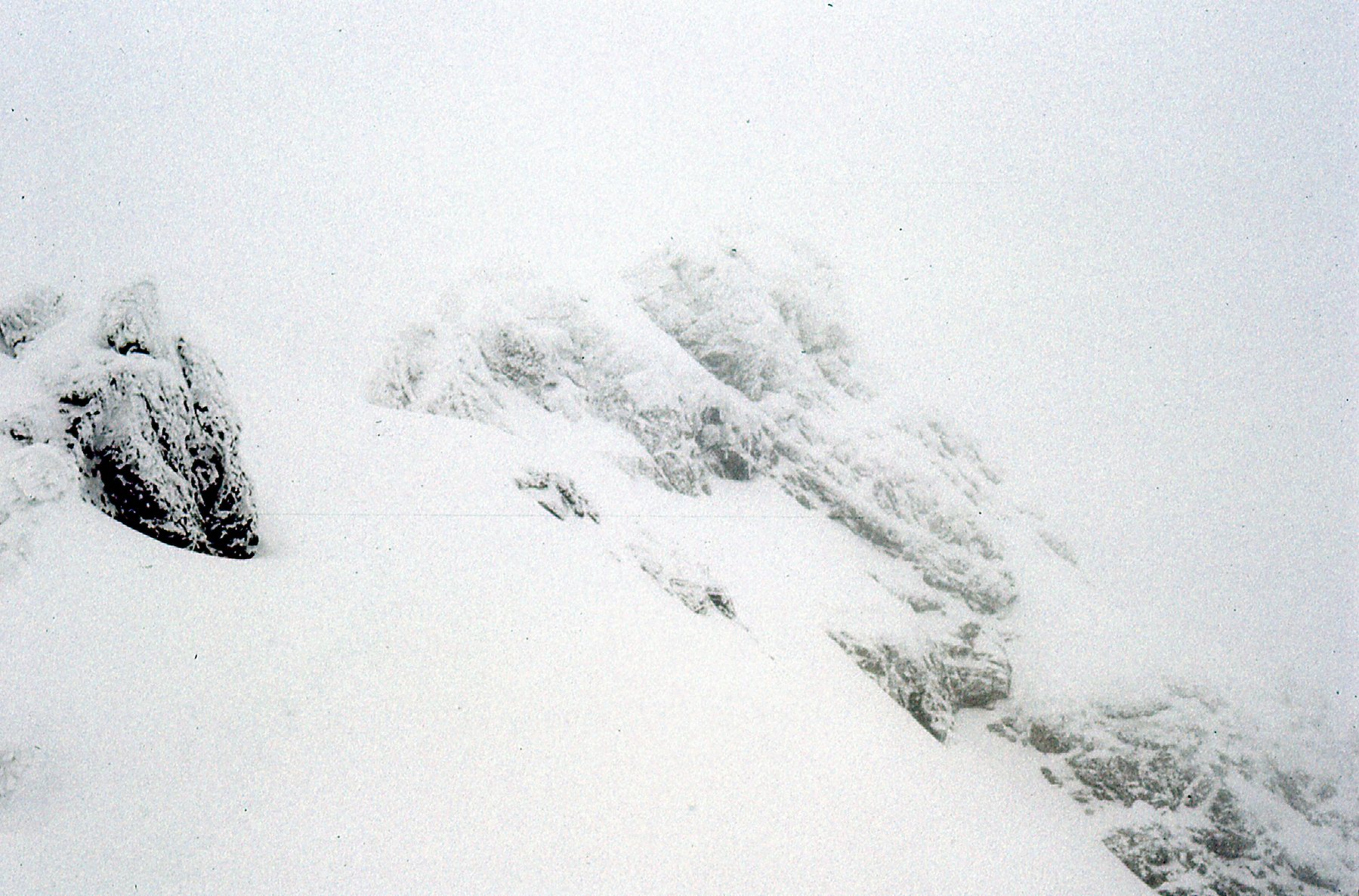
Approaching the summit of Church Mountain
Two days later, on November 19th, I stood on top of Mount Orrock – I know, not winter, but it’d fool you.
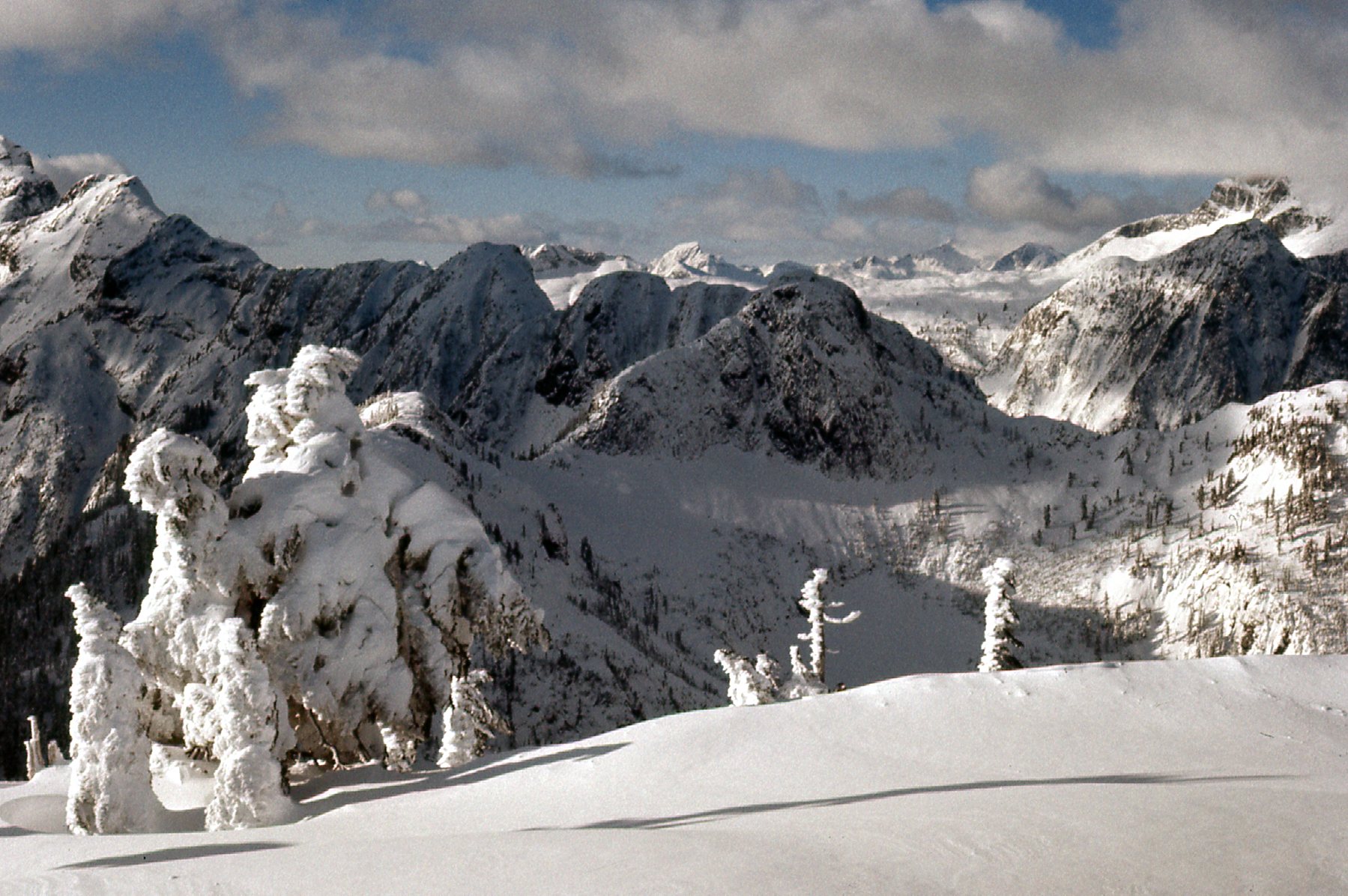
A fine November day on top of Mount Orrock
A few weeks passed, and Brian Rundle and I spent 3 days wallowing in the snow to complete a climb of Nepopekum Mountain. True, December 18th didn’t quite qualify for a winter climb, but have a look at the conditions in which we climbed – it would have been darn near impossible without our snowshoes. So tell me it wasn’t winter!
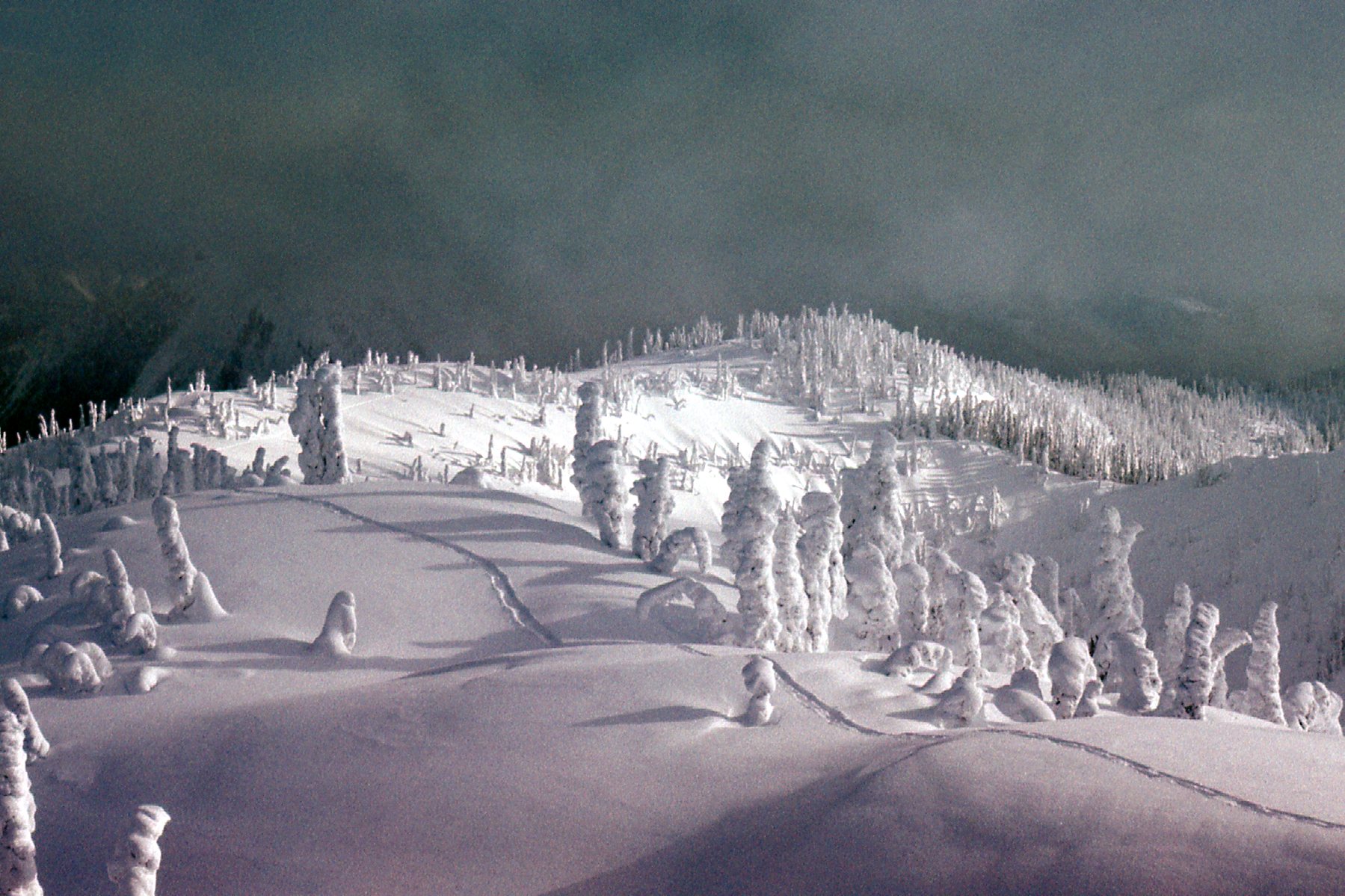
Endless miles of snow on the way to the summit of the peak. You can see the path we traveled.
I finished a great year by climbing a couple of peaks east of Hatzic Prairie on December 27th. Came 1978 and I was able to put up a few good winter climbs before the winter season ended. The best of them all was Robertson Peak.
Robertson was a real doozie. Ross Lillie and I spent an epic 5 days on this one, reaching the summit for its first ascent on February 19th of 1978. Nobody had ever gone in there before us, so it was all pioneering work. So tricky was this one to get to that it never even saw its second ascent until the year 2004, and has only seen a few ascents since. The first ascent was also the first winter ascent, and we climbed both east and west peaks. Here’s a photo I took looking over to the west shoulder of the higher summit, one of my favorite mountain photos ever.
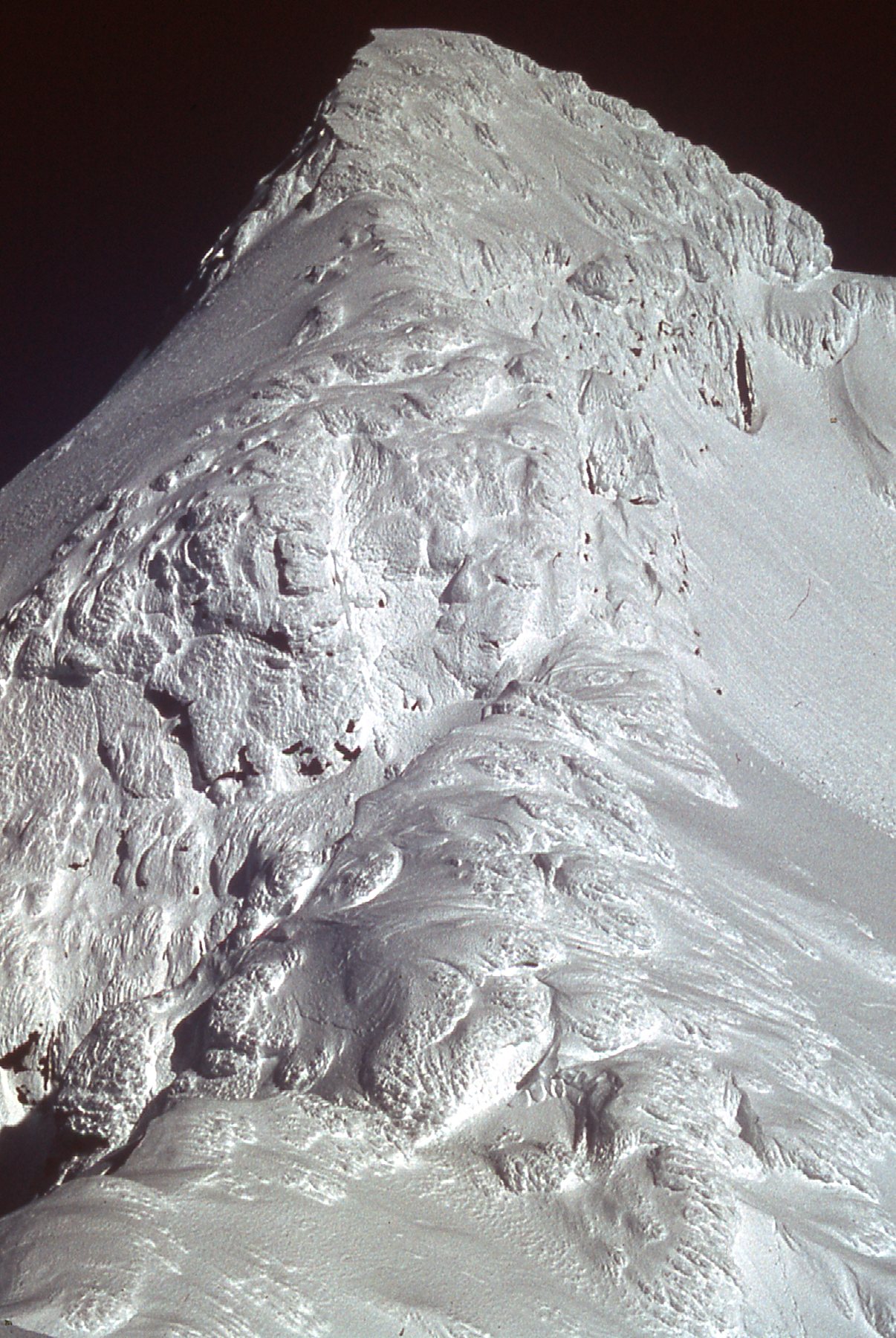
This is the ridge we climbed to reach the highest point.
In the entire continental US, there are only 57 mountains that are ultra prominences (peaks that have 5,000 feet or 1,500 meters of prominence). A few years ago, the climbers who are prominence experts concluded that if one considered these 57 peaks, and the few ultras within 60 miles of the border of the continental US, all of the climbers who had made the first ascents of these peaks were now dead. Andy Martin, a climber friend here in Tucson, Arizona who happens to be an expert on the statistics of mountain prominence, called to inform me that I should be aware that I was dead. He knew that I had climbed Robertson and thought I should at least have a chance to update my obituary. So part of the reason this piece is being written is to tell the world that Ross Lillie and the Desert Mountaineer are in fact both alive and well, thank you very much!
Only a few weeks later, three of us went into the heart of Garibaldi Park. Brian Rundle and I did the first winter ascent of Castle Towers on March 12th, 1978 – it was a challenging climb, wallowing in deep snow and with some tricky summit moves in icy conditions. The next day, Ross Lillie and I made it to the top of Deception Pinnacles. The 3 of us got to within a hundred feet of the summit of Guard Mountain, stopped by icy rock.
On April 10th (okay, I know that winter was technically over, you don’t need to remind me!), I went in and did what turned out to be the first ascent of Nursery Peak in the Chehalis area. Truth be told, I don’t think I could have done it if it weren’t for the very wintery conditions – the deep snow provided a perfect route to the summit.
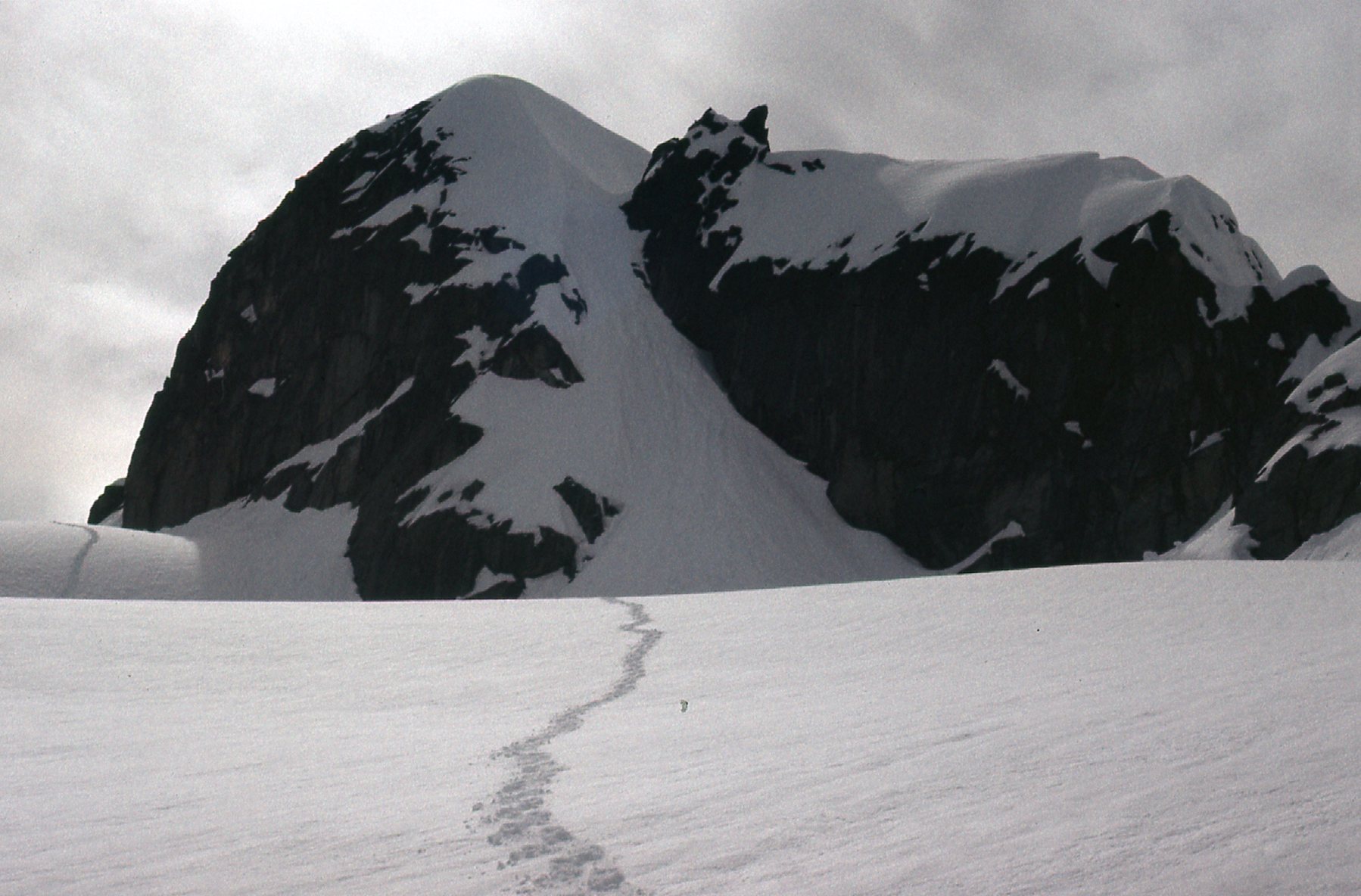
Nursery Peak
Winter still lay deep on the land.
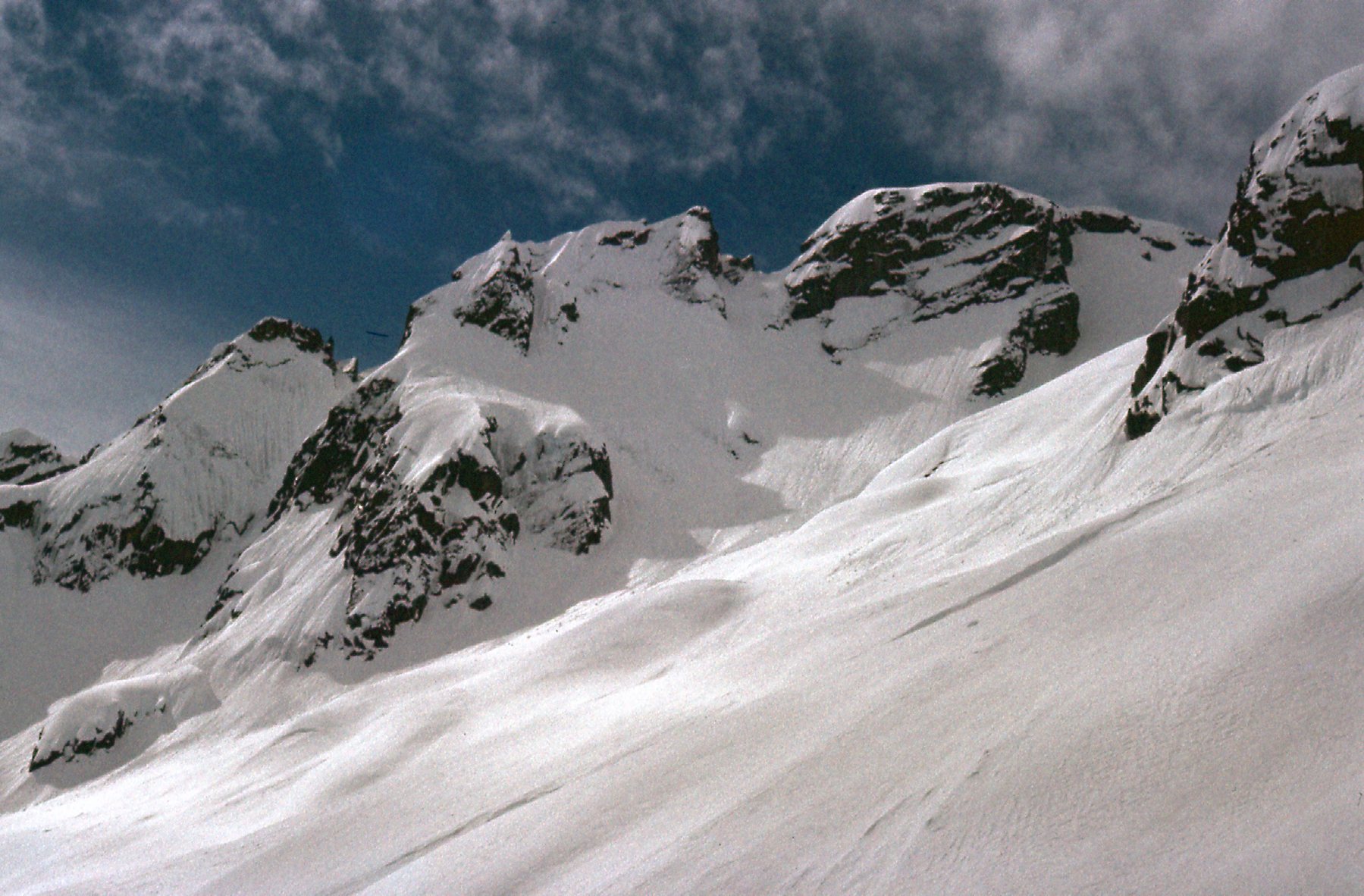
Part of the route – again, tell me it wasn’t winter!
Okay, now for another climb that sure as hell looked like winter, even though it wasn’t. In August of 1989, Brian, Scott and I spent 10 days on Mount Robson. Boy, did we get our asses kicked! I think it snowed every day.
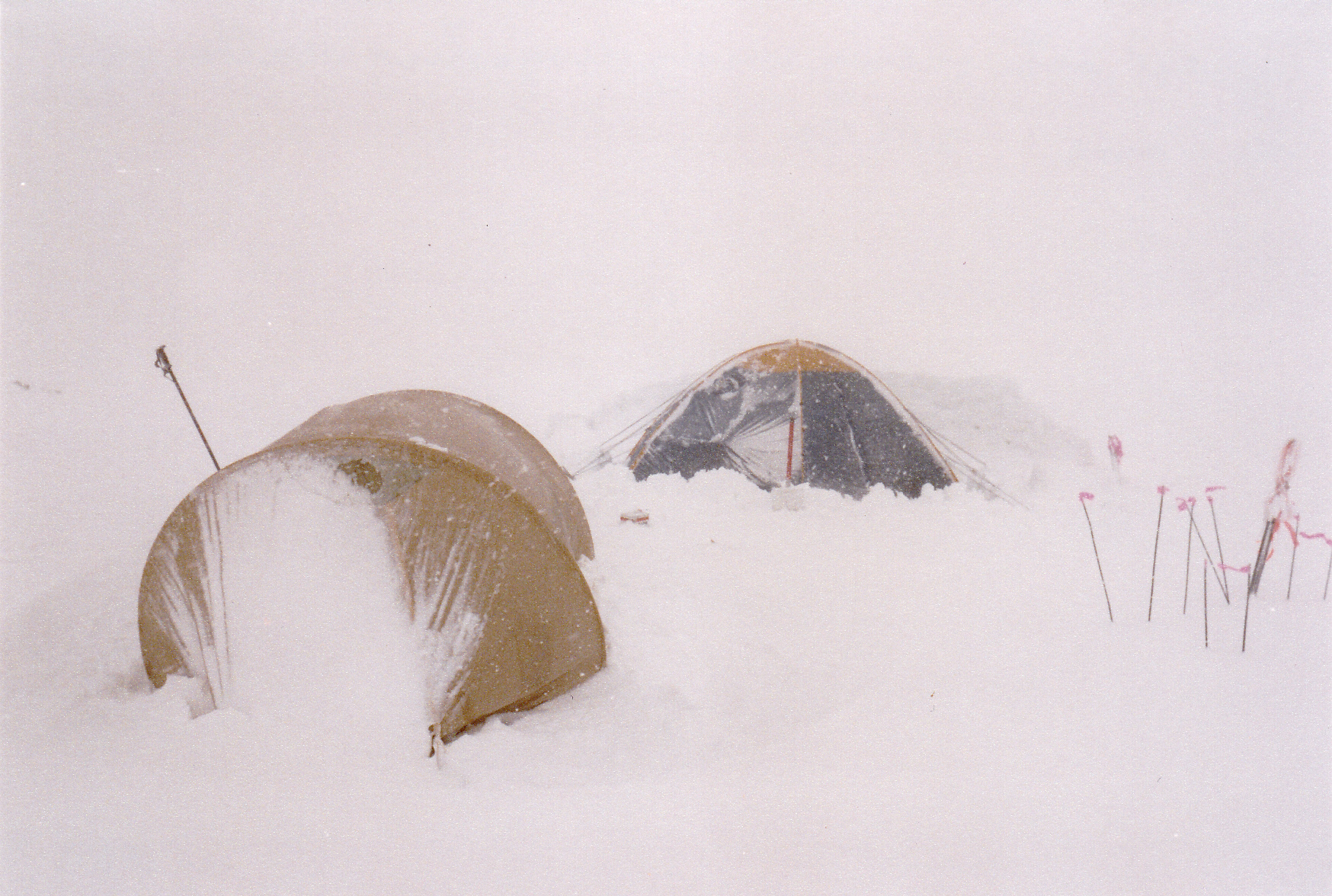
A typical summer day high up on Mount Robson.
Okay, this next one was a real winter climb, but in the southern hemisphere. I climbed Mount Kosciusko in Australia on July 16th of 1992. It was easy walking on consolidated snow. Not challenging at all.
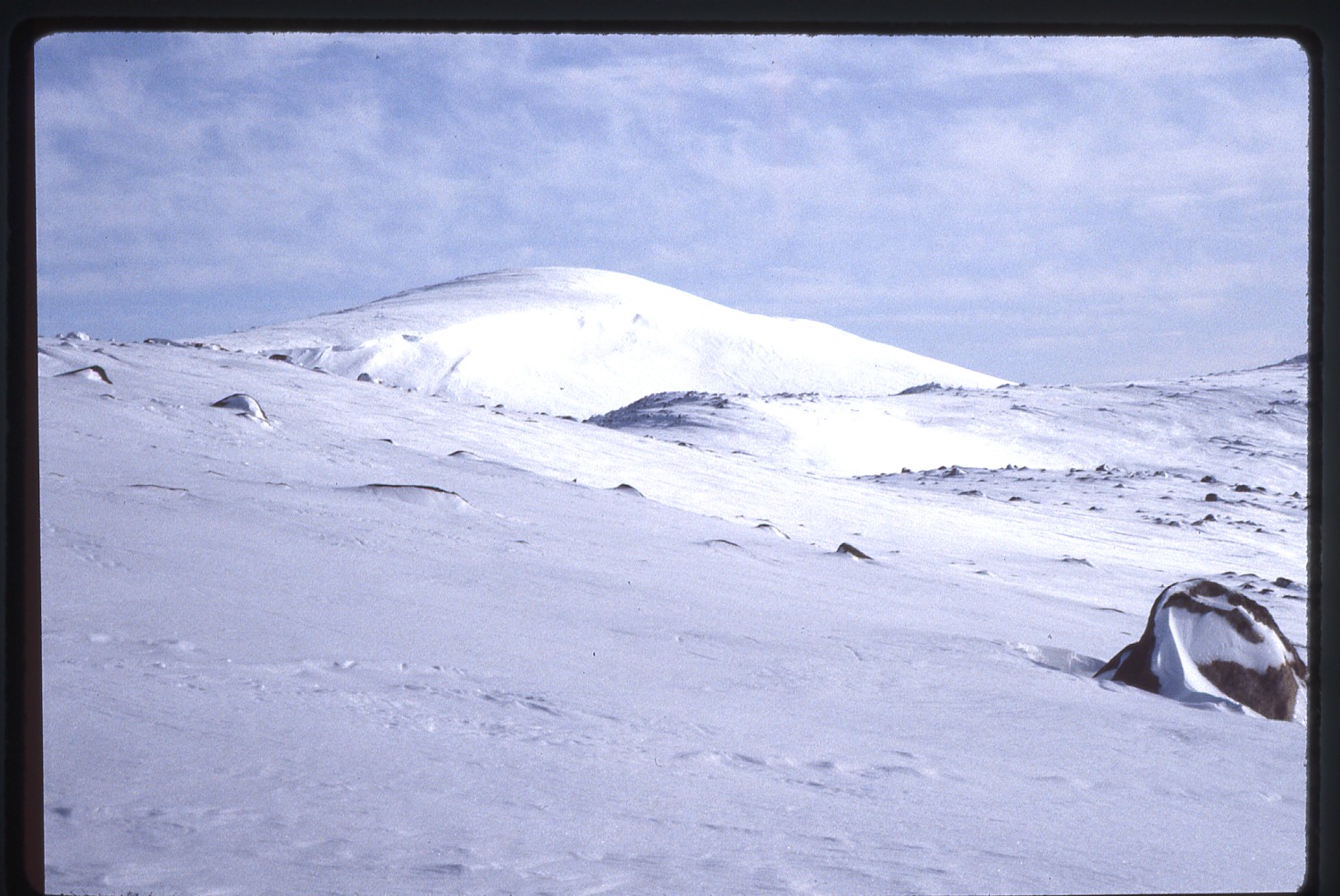
Mt. Kosciusko
Brian Rundle and I headed south of the equator to climb in Bolivia. On June 24th of 1996, we didn’t make it to the top of Nevado Sajama, the country’s highest peak, but did manage an easy climb of Cerro Chucarero, elevation 17,081 feet. We then moved from Bolivia into Chile. It was cold. The shelter where we stayed was +15°F. at sunset. On June 29th, we attempted Volcán Parinacota. We made it to the crater lip at 20,760 feet, just a few feet shy of the summit. The temperature was 0 degrees F. with a 50-mph wind. Of course, since we were in the southern hemisphere, this was true winter climbing.
I mentioned way earlier in this piece that some places, even in astronomical winter, don’t seem much like winter. A good example is the low desert of Arizona, my home. Because of the heat, the wisest among us try to avoid climbing in the summer months and instead turn our attention to winter. I sat down and pored through my climbing records covering 40 years of desert climbing. If I focused strictly on the period from December 21st to March 20th and added them all up, I found that I had climbed 846 peaks during our “winter”. But those of you who don’t live here need to know that our winter season is our “bragging weather”, the time of year when Snowbirds flock here from points north. They come to enjoy daytime temperatures in the 60s and 70s and escape the cold and snow for 5 or 6 months. I’m sure that many climbers who live in colder climes wouldn’t consider any of those 846 to be winter climbs at all, but hey, when do you adhere to the rules and then ignore them?
Of all of those 846 climbs, I can only think of a couple that would genuinely qualify as winter climbs. On January 5th of 1986, after camping out high on the shoulder of Browns Peak near Phoenix overnight, I made it to the summit in very icy conditions. Also, when I walked in to the summit of Mt. Graham on March 8th of the same year, I walked on deep snow the entire way. Both of those climbs were very wintery.
So there you have it, Folks, my take on winter climbing. I hope yours has been as much fun as mine.