Glaciers have always fascinated me, there was always something special and different about them. As a child, I saw pictures of them in books and wondered what it would be like to touch one, or even walk on one. By the time I was in university and working on a degree in geology, I still thought they were something I’d like to know more about. The thought even crossed my mind that I’d like to become a glaciologist, but then reality set in. First of all, with all the partying I did, my marks were too poor to ever get into grad school. Then I learned that there was a lot of math and physics involved to be a good glaciologist, and that was the final nail in the coffin – those were my weakest subjects. A bachelor’s degree in mining exploration wouldn’t have me studying too many glaciers. Oh well, I was still lucky enough to get near quite a few doing exploration work, and then throughout my life as a mountain climber I managed quite a few more. So, I thought I’d write a piece about glaciers in order to share them with you, the ones I’ve been fortunate enough to personally visit, mostly pictures I’ve taken over a 60-year period.
Before that, though, here are a few impressive facts about glaciers. On the earth’s surface, there are 57.5 million square miles of land, which is 29% of the our planet’s surface, while 71% of our planet’s surface is water. The ice sheets of Antarctica cover 5.4 million square miles, enough ice that if it all melted it would raise sea levels by 200 feet. The ice sheets of Greenland cover 660,200 square miles, enough ice that if it all melted it would raise sea levels by 24 feet. The rest of the world’s glaciers cover 270,000 square miles, an area bigger than Texas, and there are about 275,000 glaciers in the world. If you add up all of the world’s ice, it amounts to 4,500,000 cubic miles. It may surprise you that ice covers a whopping 11% of the earth’s surface.
Here is a breakdown of the different types of glaciers:
-
- Cirque: Bowl-shaped glaciers in mountain hollows.
- Valley: Flow down former stream valleys, confined by walls.
- Piedmont: Spread out onto flat land at a mountain’s base.
- Hanging: Cling to steep mountain slopes.
- Ice Field: Vast, irregular ice masses covering highland terrain, feeding valley glaciers.
- Continental Glacier (Ice Sheets/Caps): Massive, dome-shaped ice masses covering large land areas, flowing outwards.
- Ice Sheet: Enormous continental glaciers (e.g., Greenland, Antarctica).
- Ice Cap: Smaller than ice sheets, covering highland areas.
- Tidewater Glaciers: Alpine or outlet glaciers that flow into the sea, calving icebergs.
- Freshwater Glaciers: Glaciers ending on land.
The first glacier I ever visited was the Athabasca Glacier. Due to its ease of access, it is the most-highly-visited glacier in North America, perhaps even the world. I had a motorcycle that summer of 1966 and used it to travel the Canadian Rockies extensively.
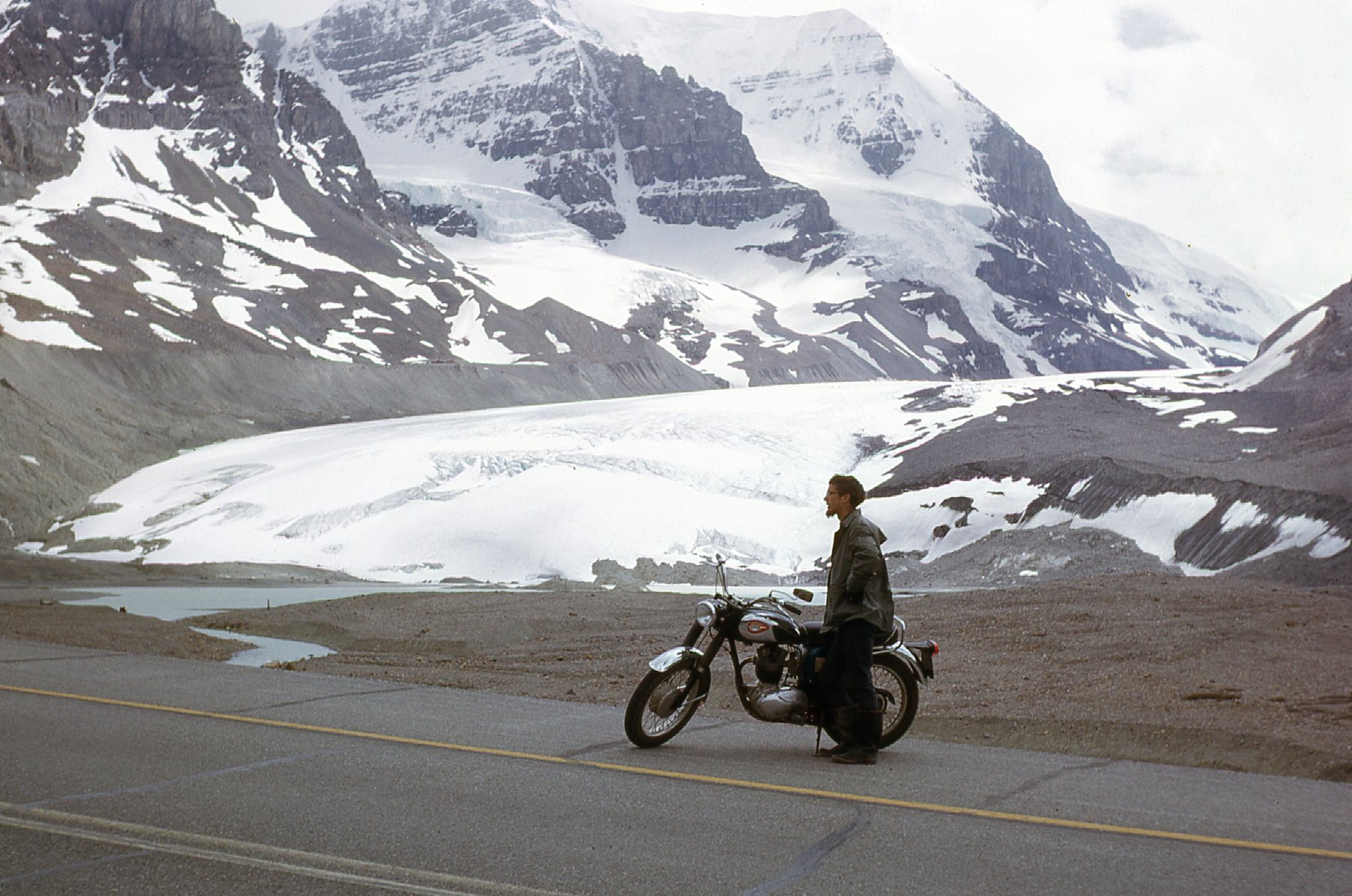
Yours Truly at the Columbia Icefields.
There was a path for the curious to walk right up to the toe of the glacier and even walk on it (discouraged). Signs along the path showed where the toe of the glacier had been in previous years as it had receded.
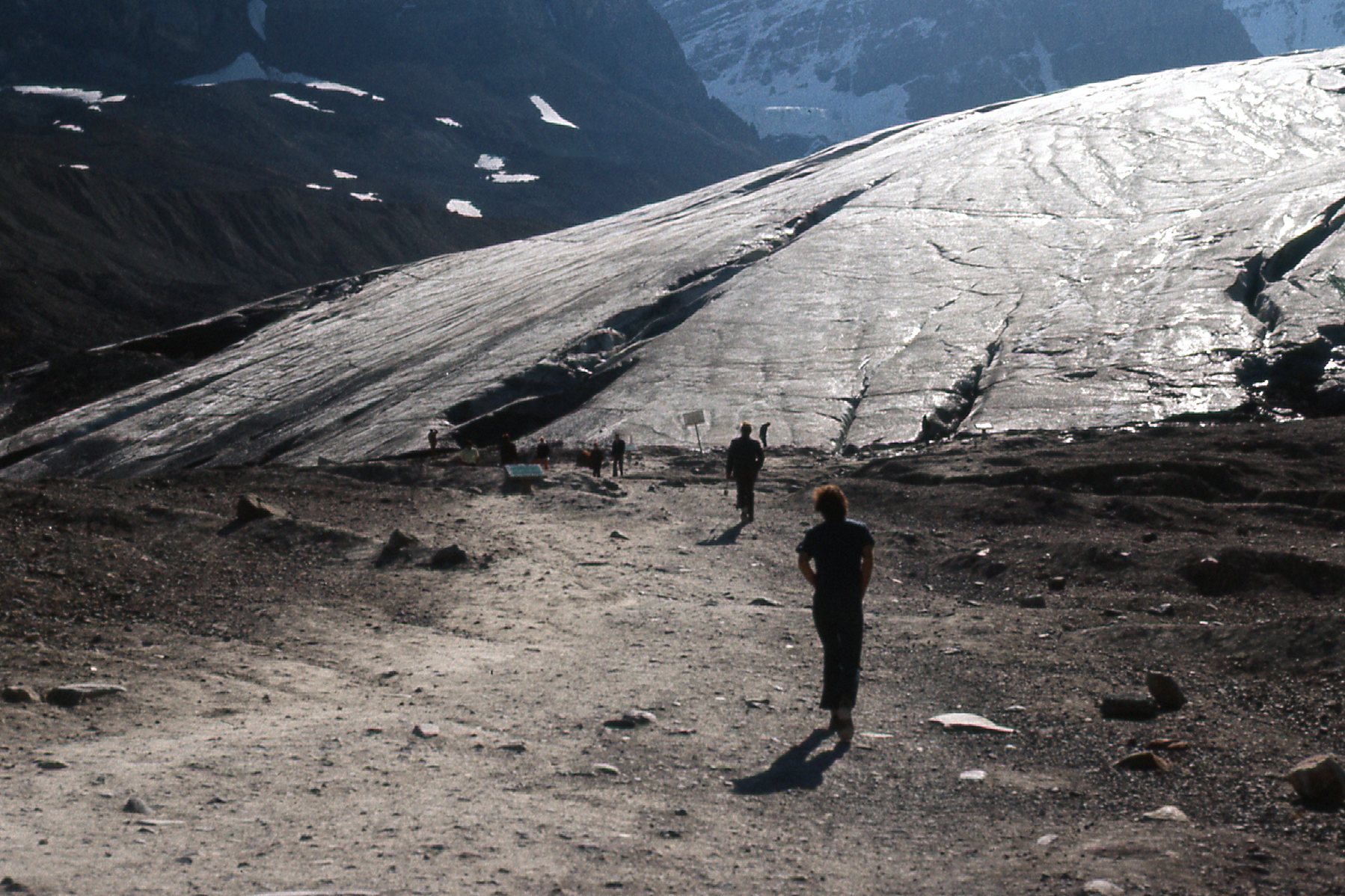
Approaching the glacier.
I also traveled to others that summer, such as the Angel Glacier on the north side of Mount Edith Cavell.
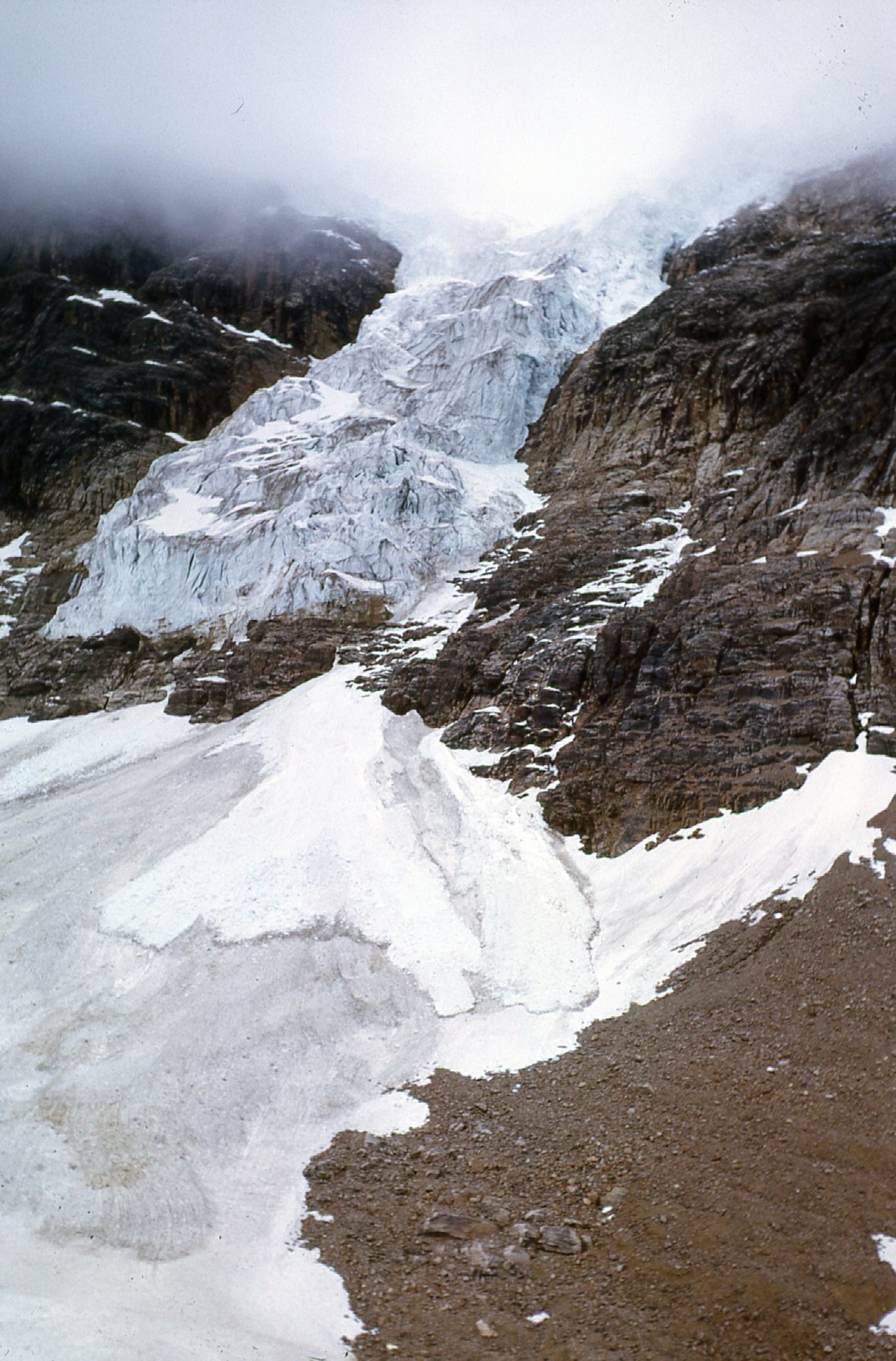
The Angel Glacier
At Lake Louise, I could see the Victoria Glacier just below the clouds in the distance.
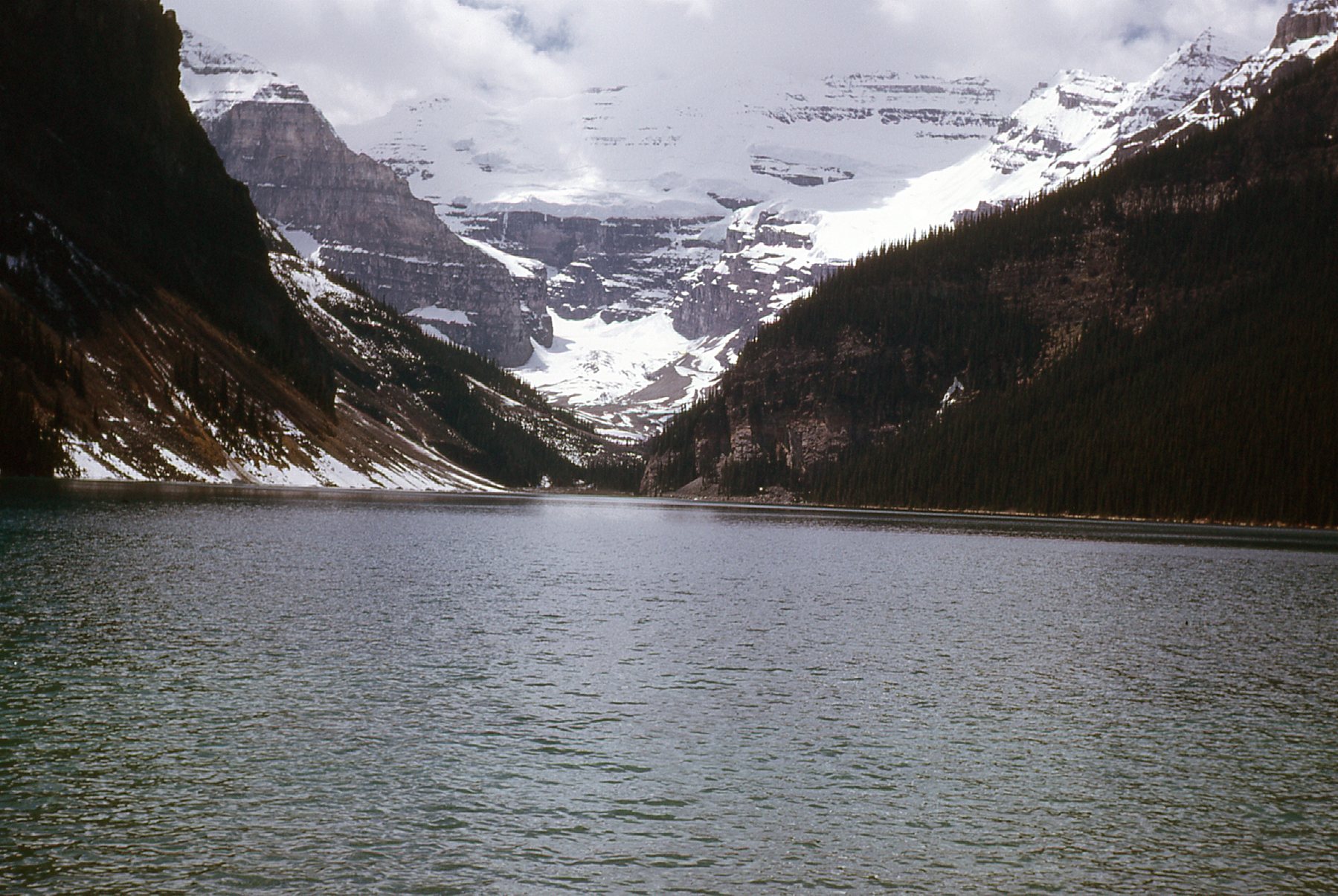
Looking south along Lake Louise.
I spent the summer of 1967 doing mining exploration in northern British Columbia. My dream of setting foot on glaciers was certainly realized. In order to reach our camp at Yeheniko Lake, we flew in a single-engine Otter aircraft. It was a 3-hour trip over the icefields along the BC-Alaska boundary. I mean, talk about glaciers, have a look at these photos taken along the way.
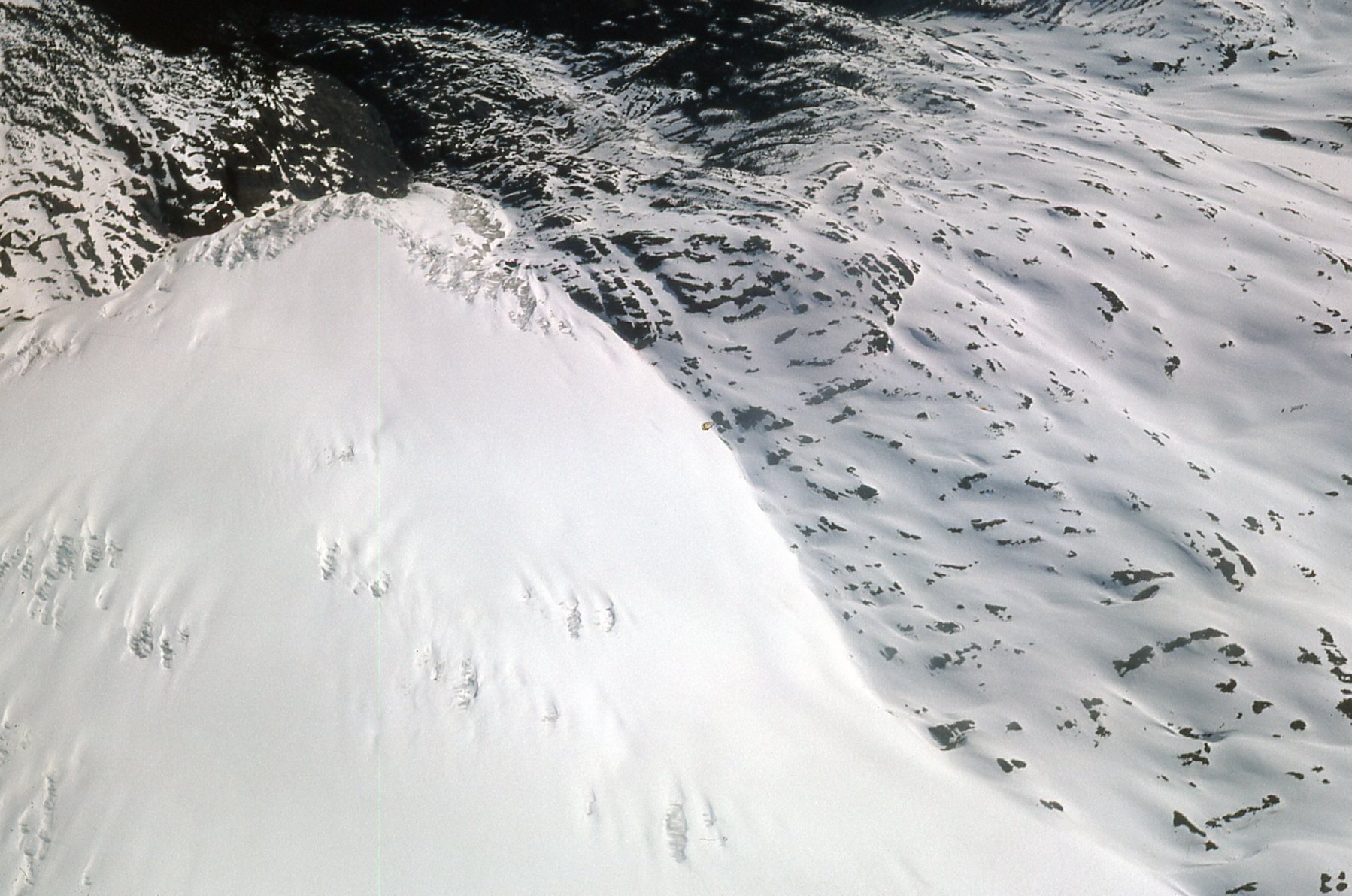
Between the Nass River and Alice Arm.
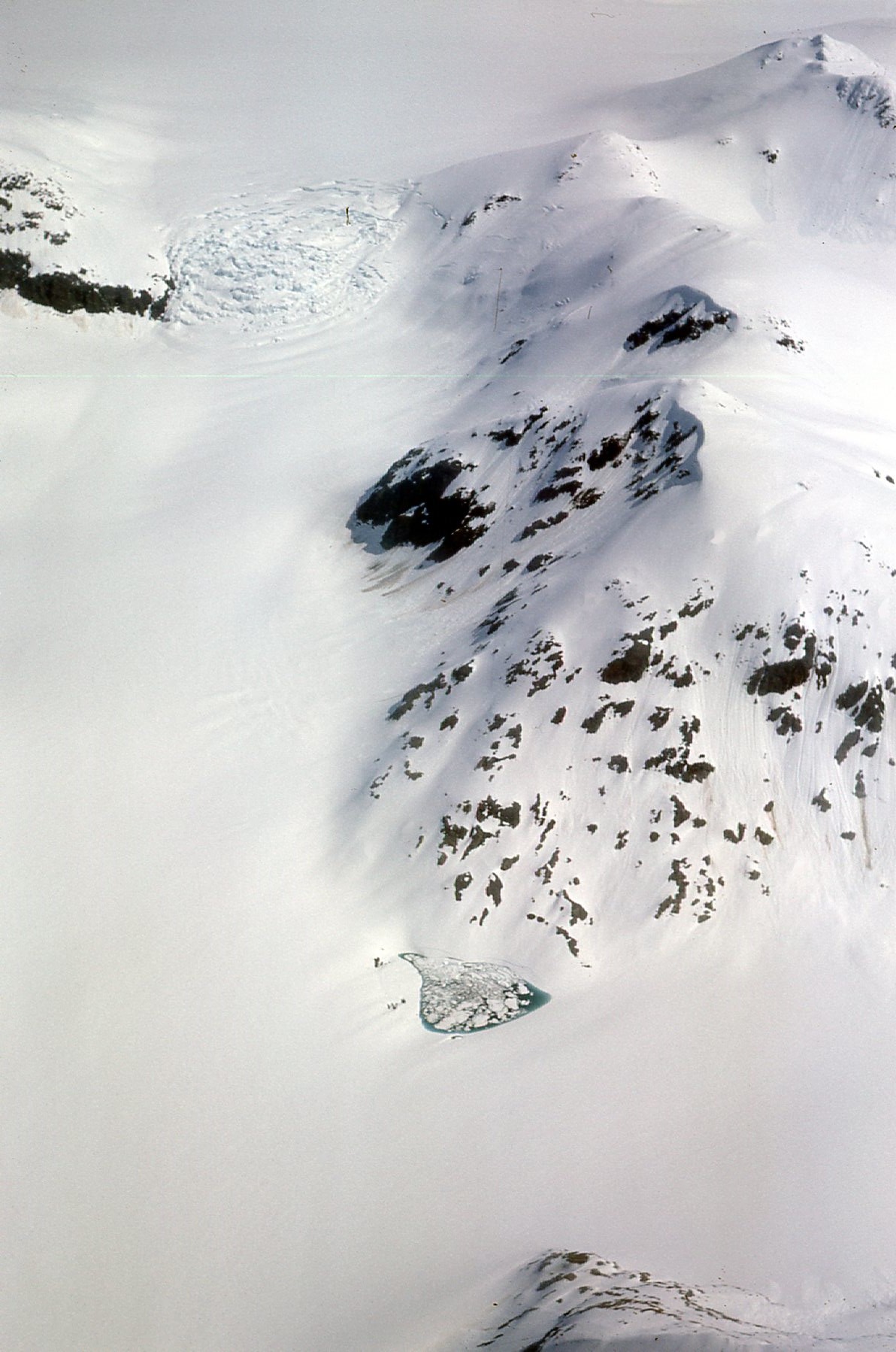
North of Stewart, BC
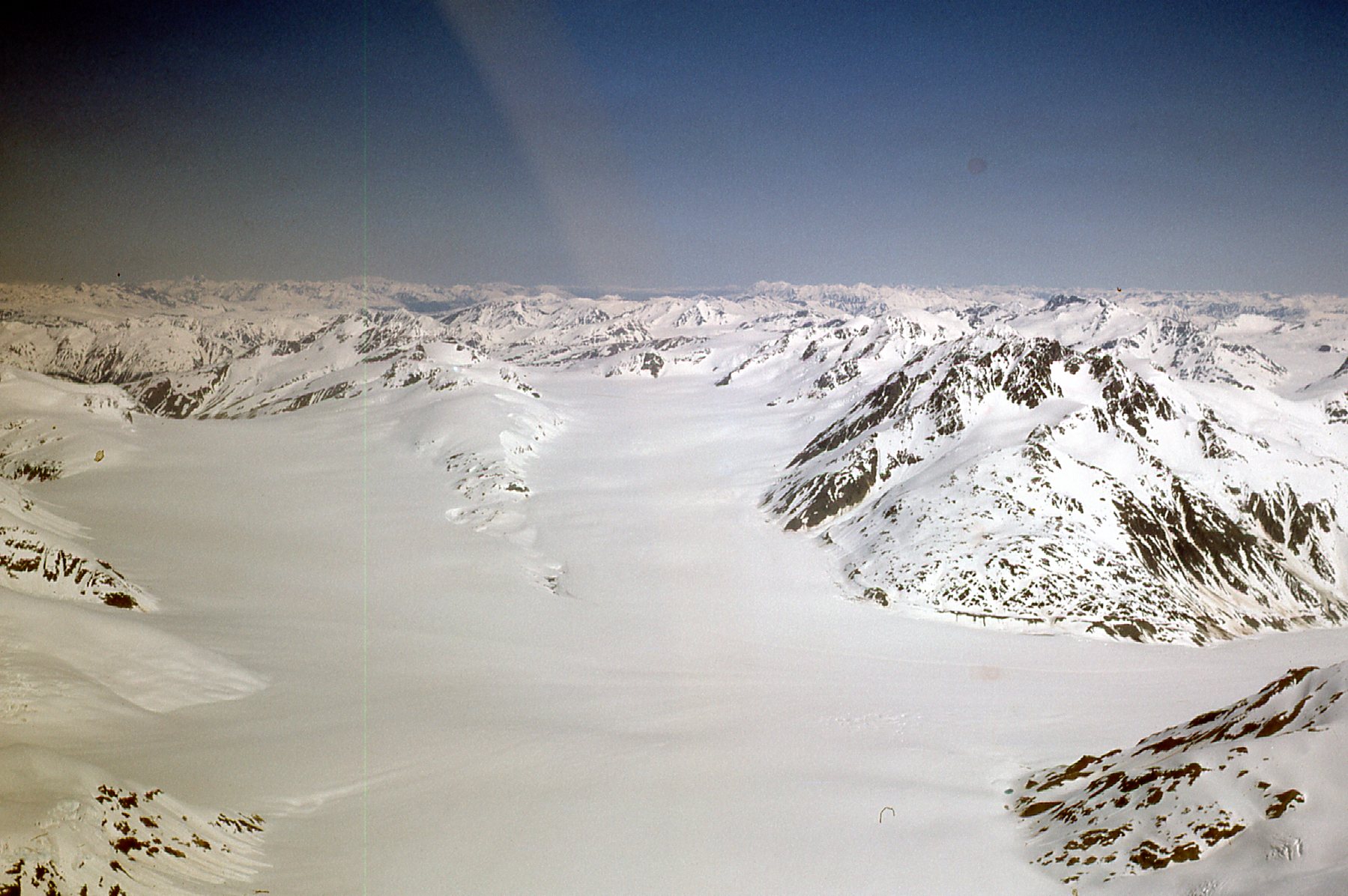
North of Alice Arm, looking north.
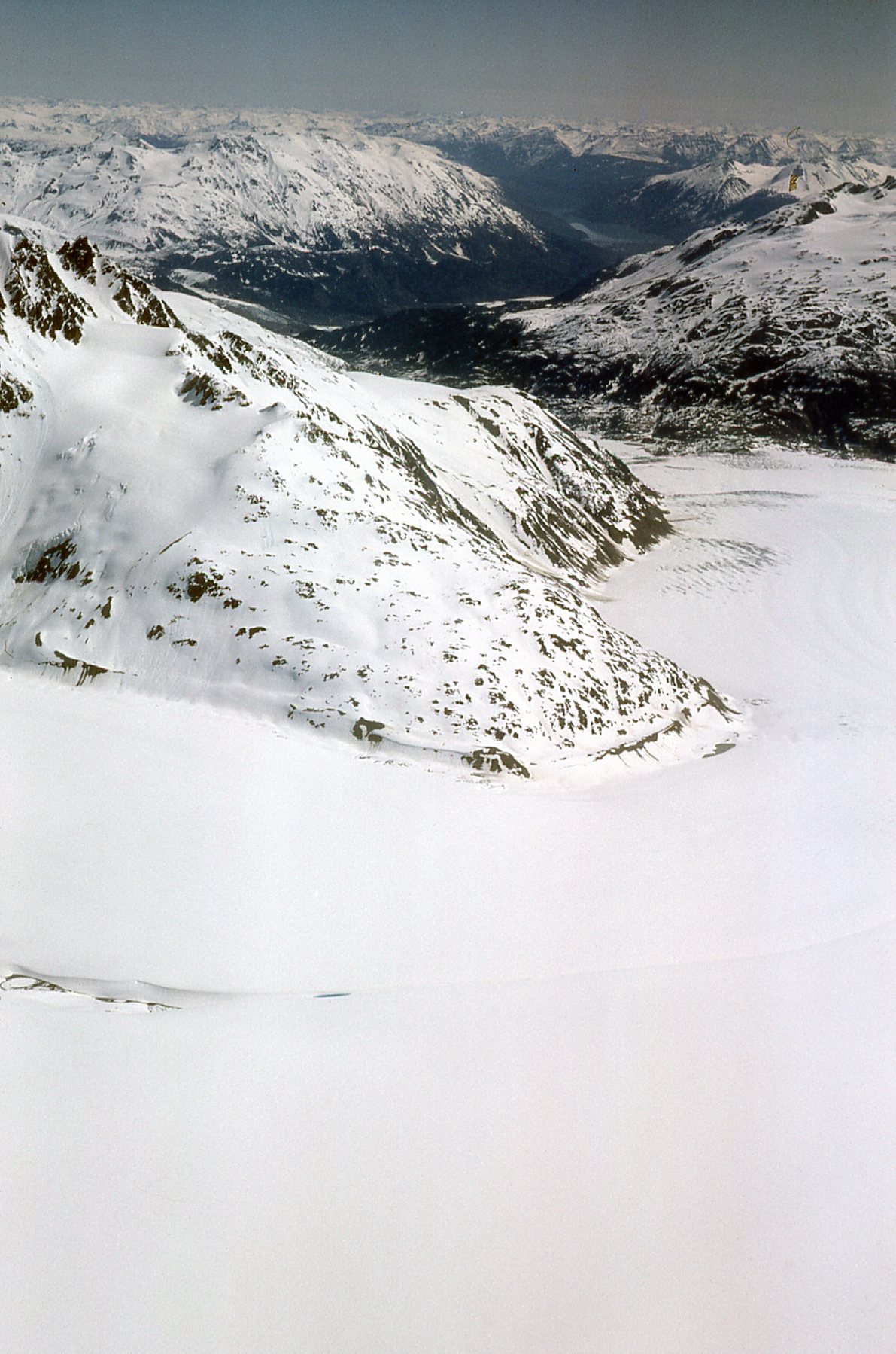
North of Stewart, BC looking north
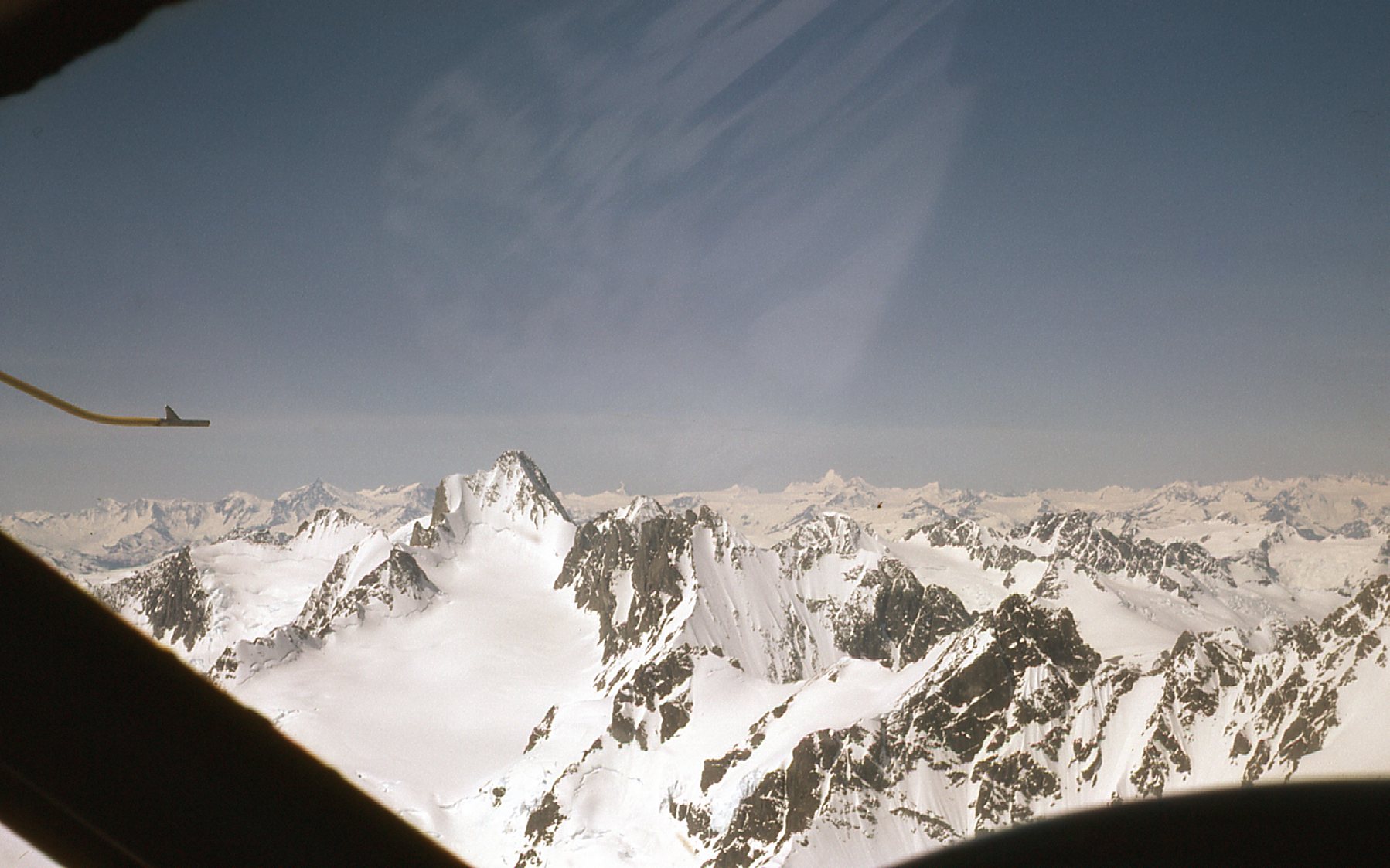
The southern peaks of the Yeheniko group.
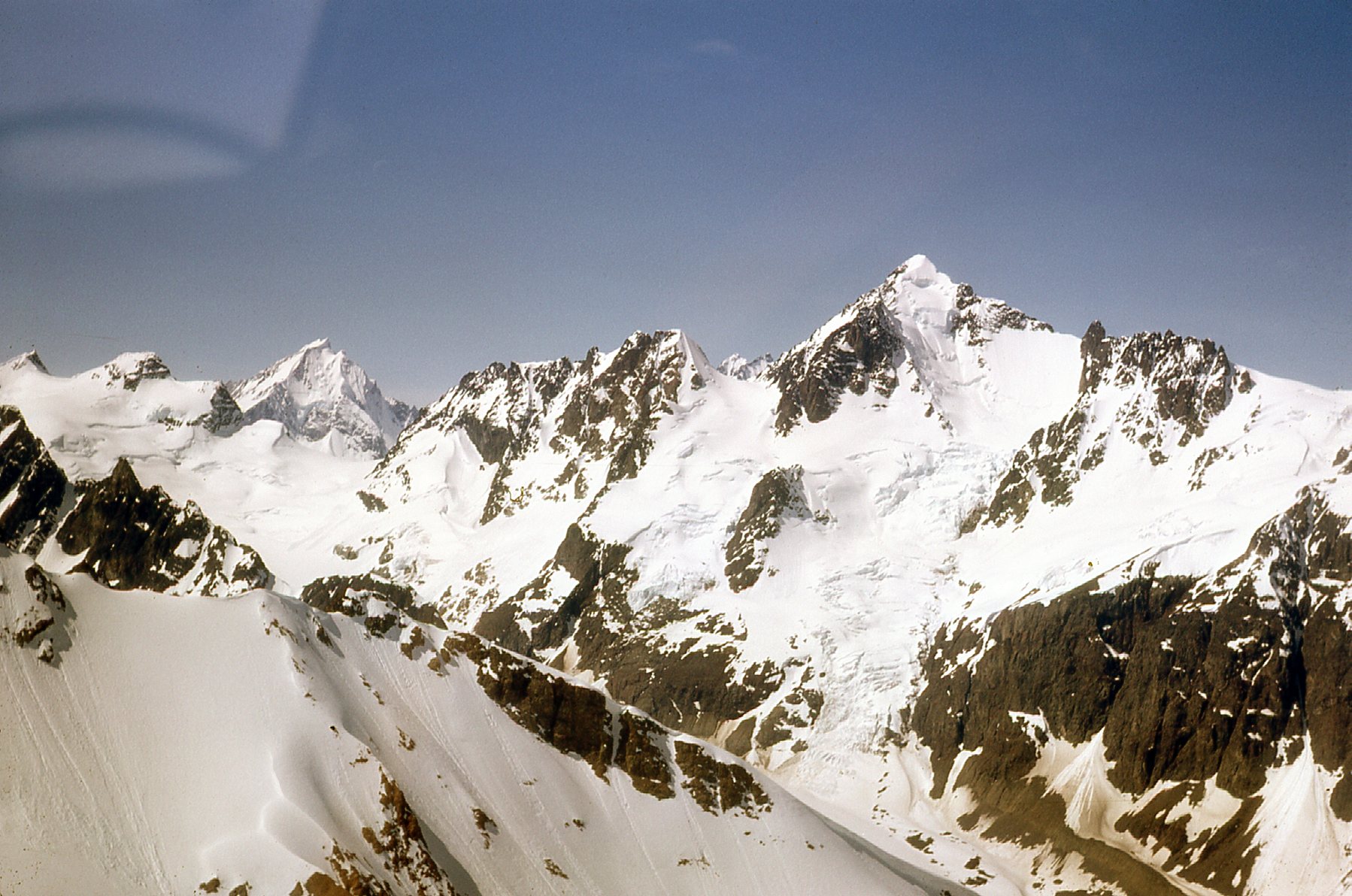
Looking east to the southern peaks of the Yeheniko group
That flight was just a taste of things to come, though. The entire summer of 1967 was spent in a wilderness of icy peaks, and I managed to get up close and personal with a lot of glaciers.
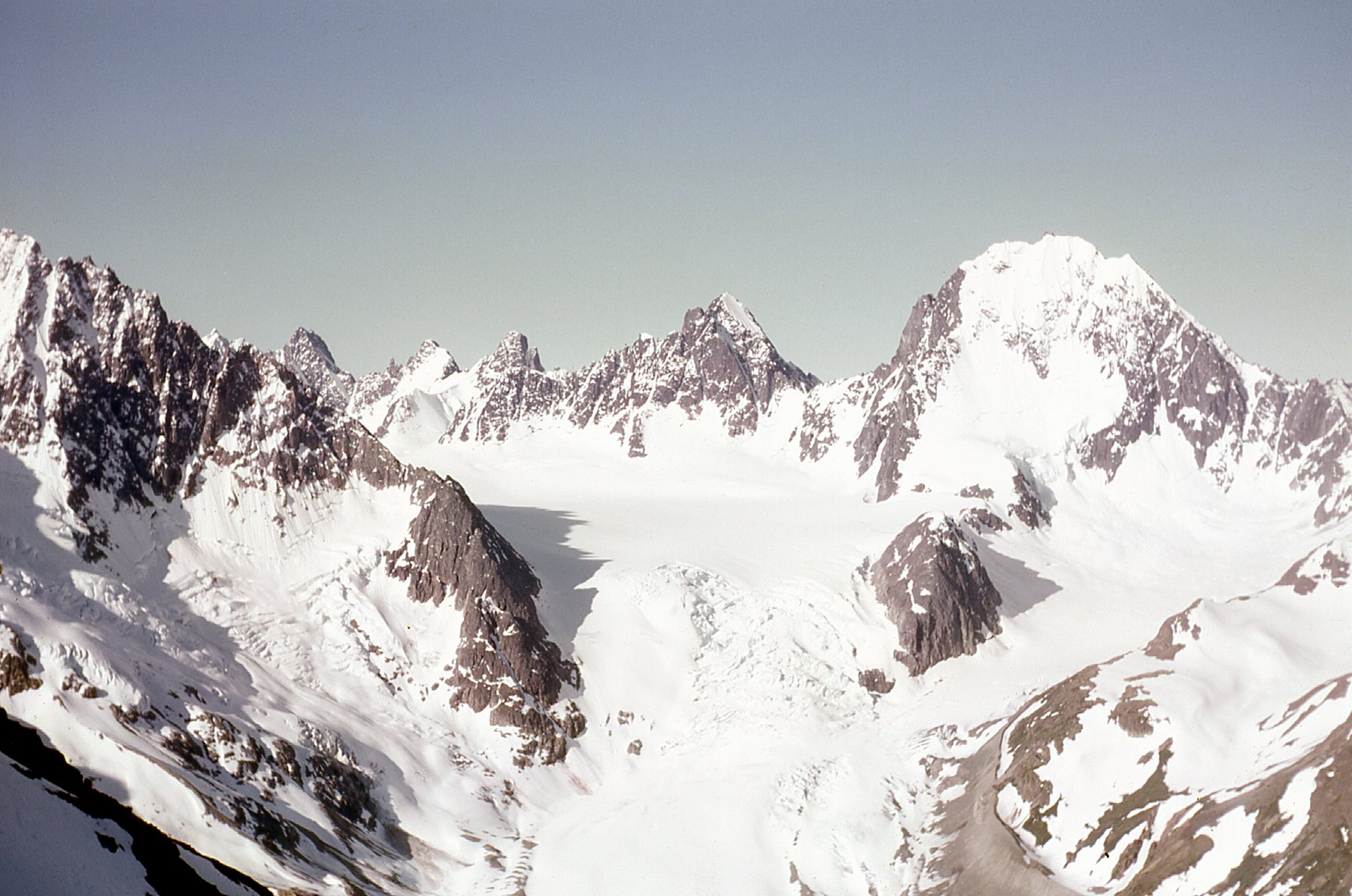
From 6,800 feet, looking south to Dokdaon Mountain (8,500′)
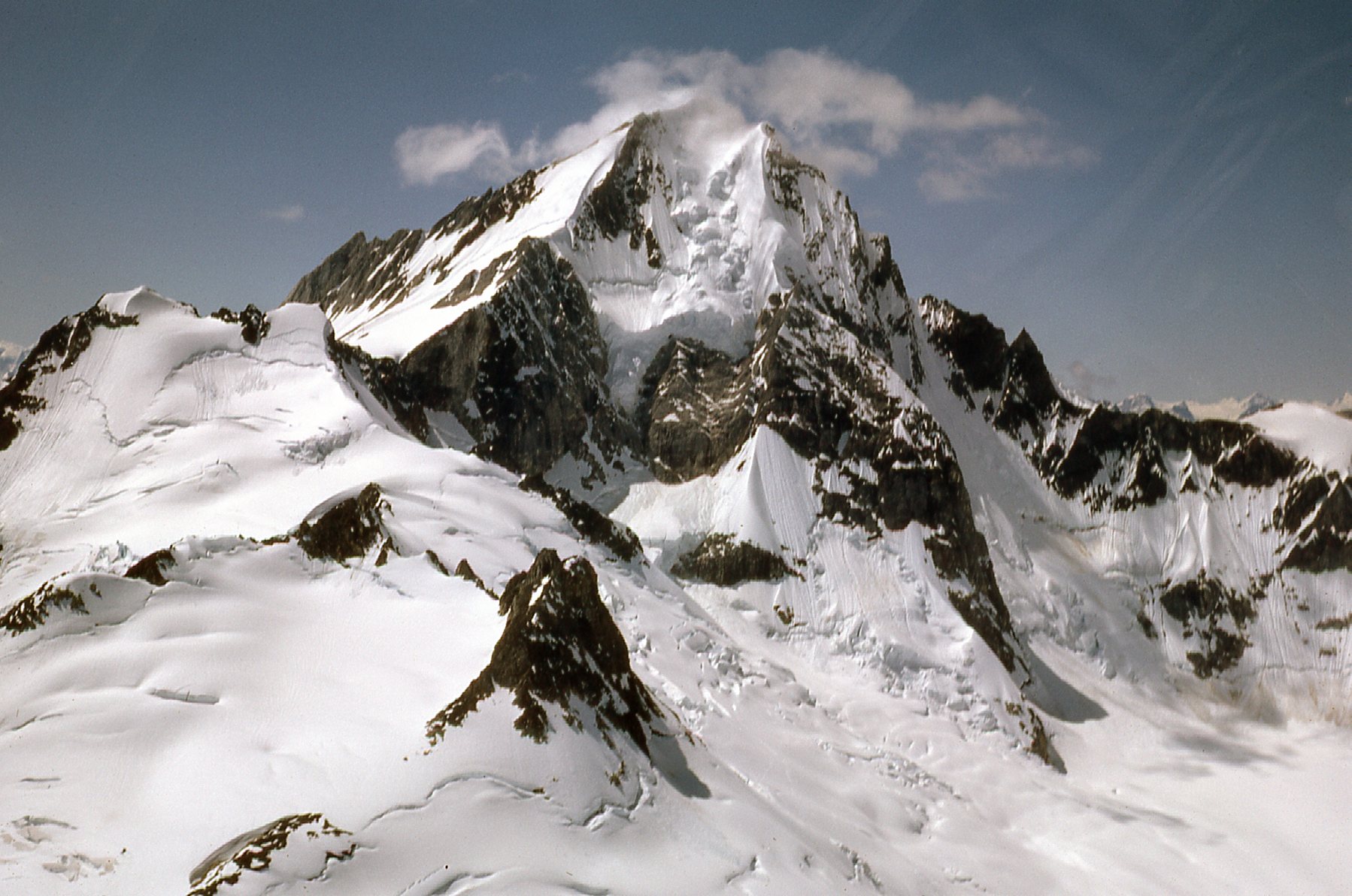
Looking west to Ambition Mountain.
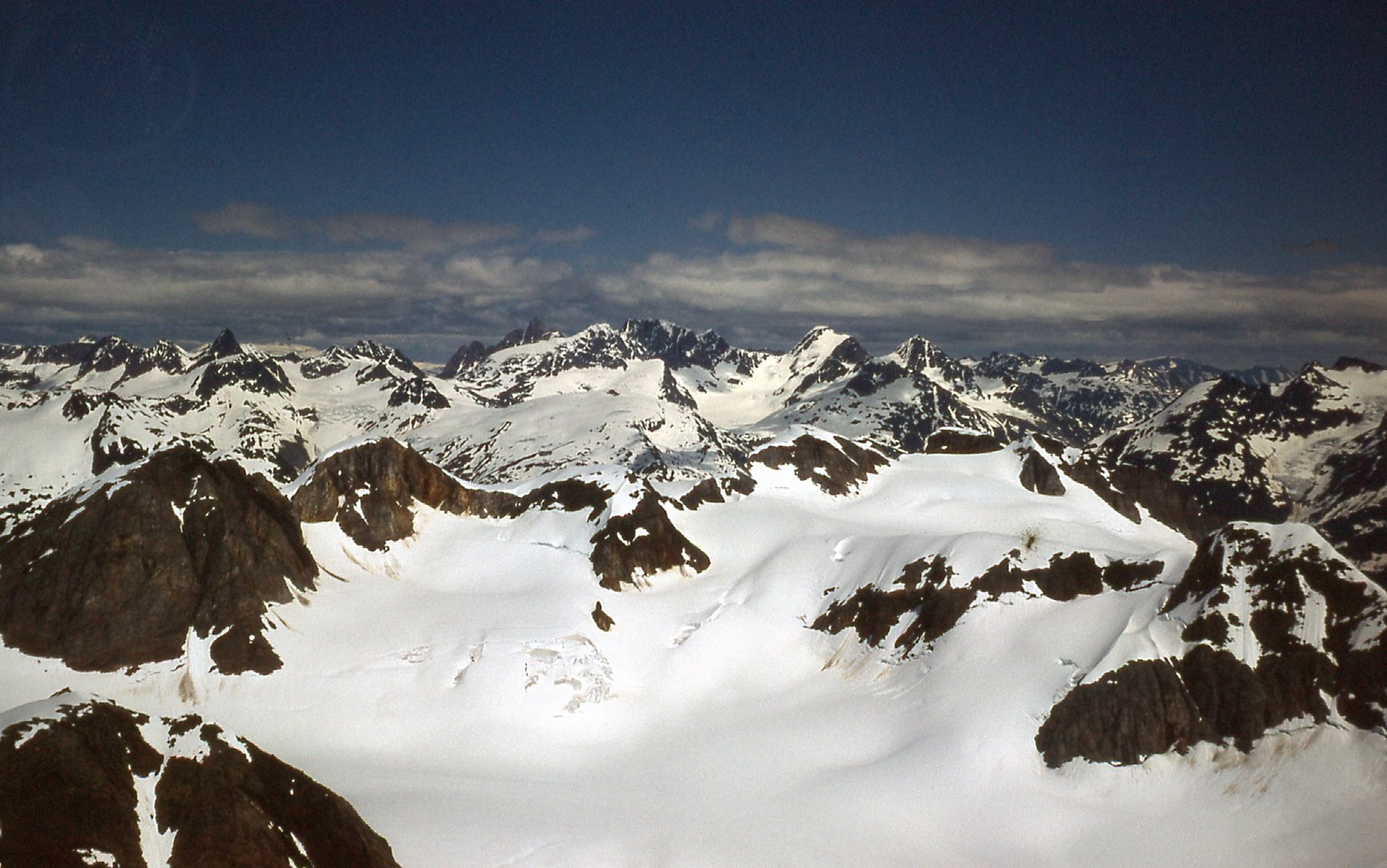
From 8,000 feet, looking NNE towards Scud Glacier
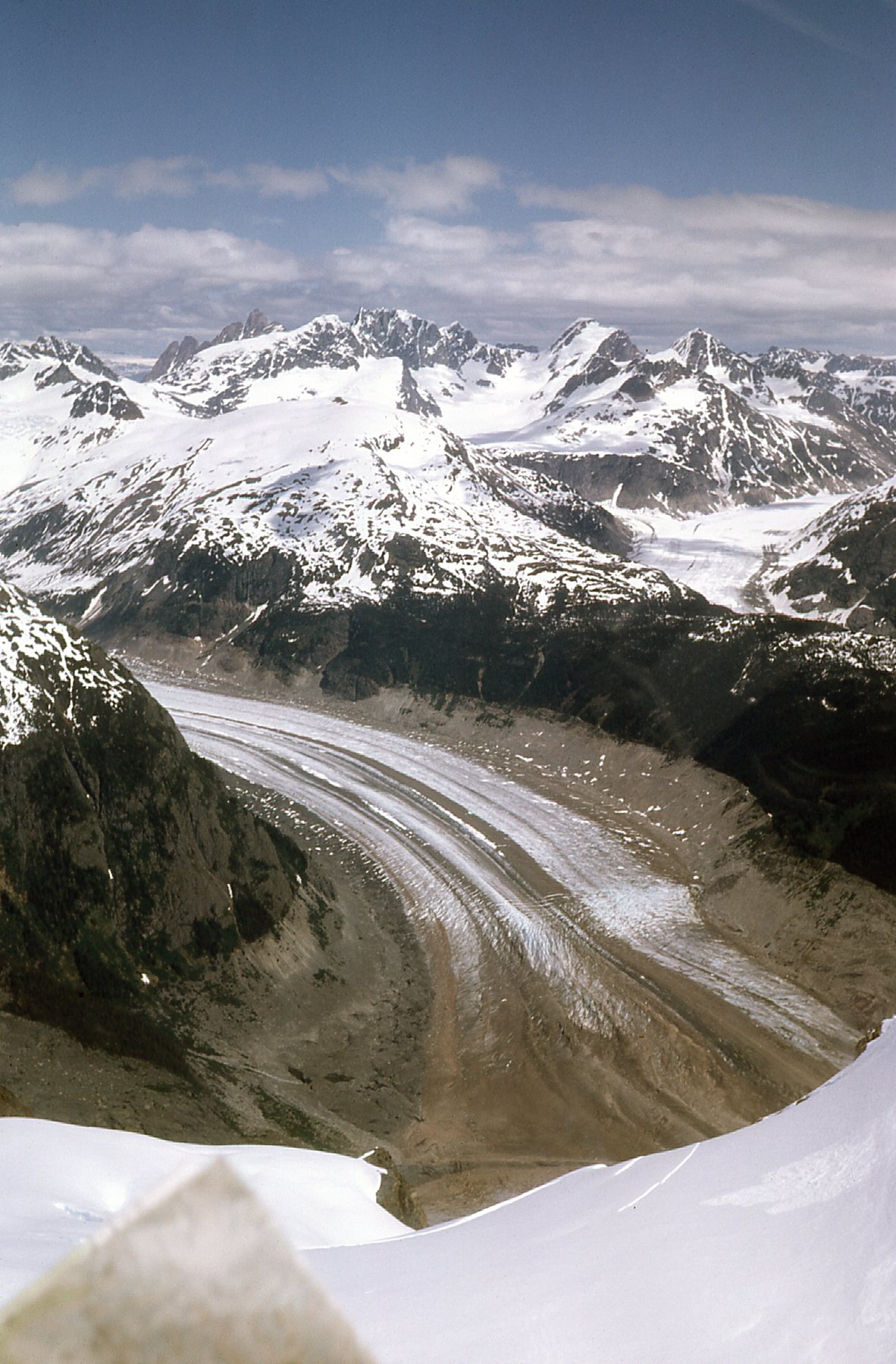
Looking northwest up the Scud Glacier
In the above photo, you can see the dirty stripes down the middle of the glacier. Each of those shows where two glaciers came together farther upstream. The stripes are called medial moraines.
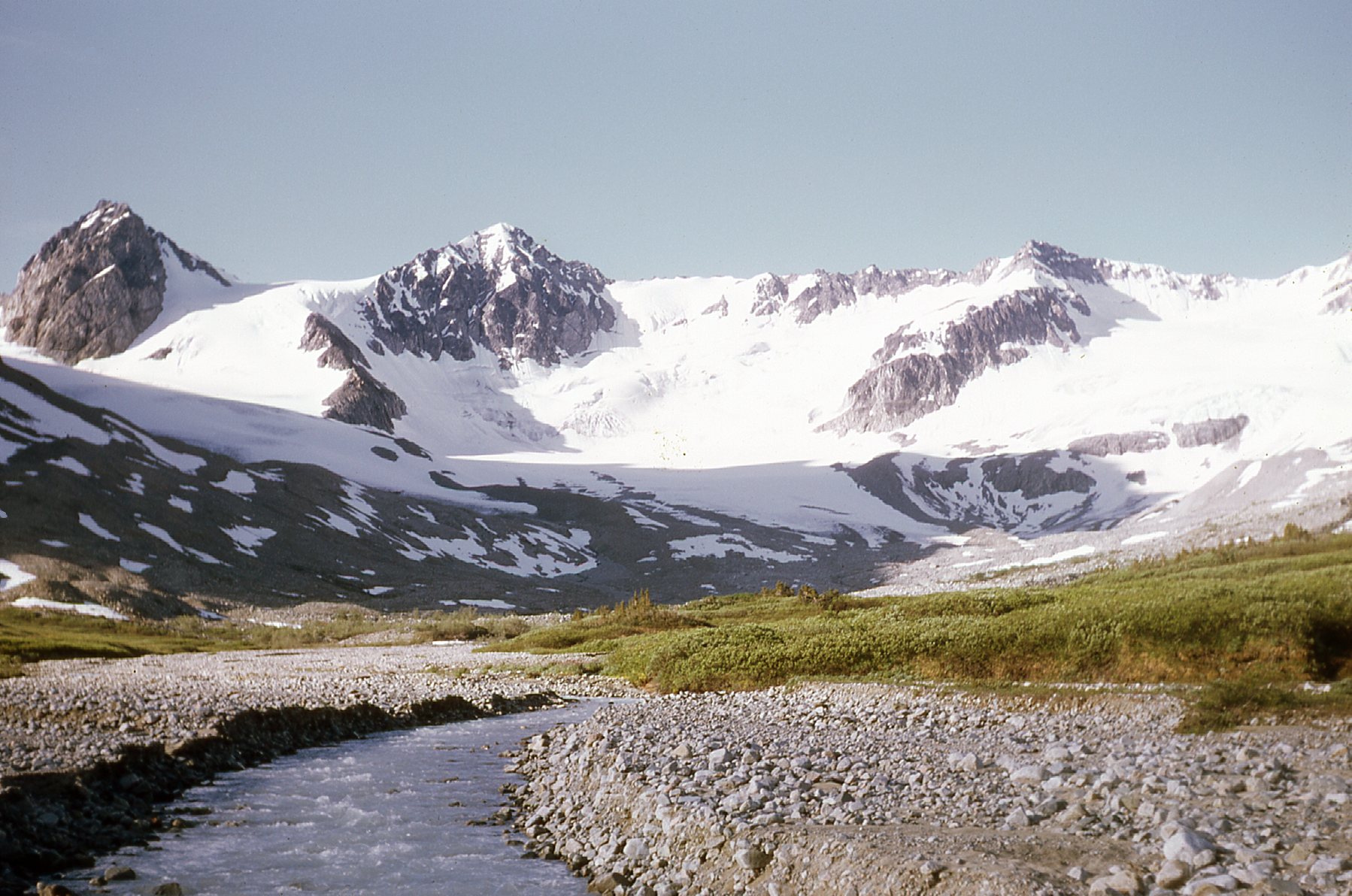
The farther north you go (in the Northern Hemisphere), the colder it gets. The snowline is lower, and glaciers can be found at lower elevations. In this pleasant valley, the glaciers come down to about 2,000 feet above sea level.
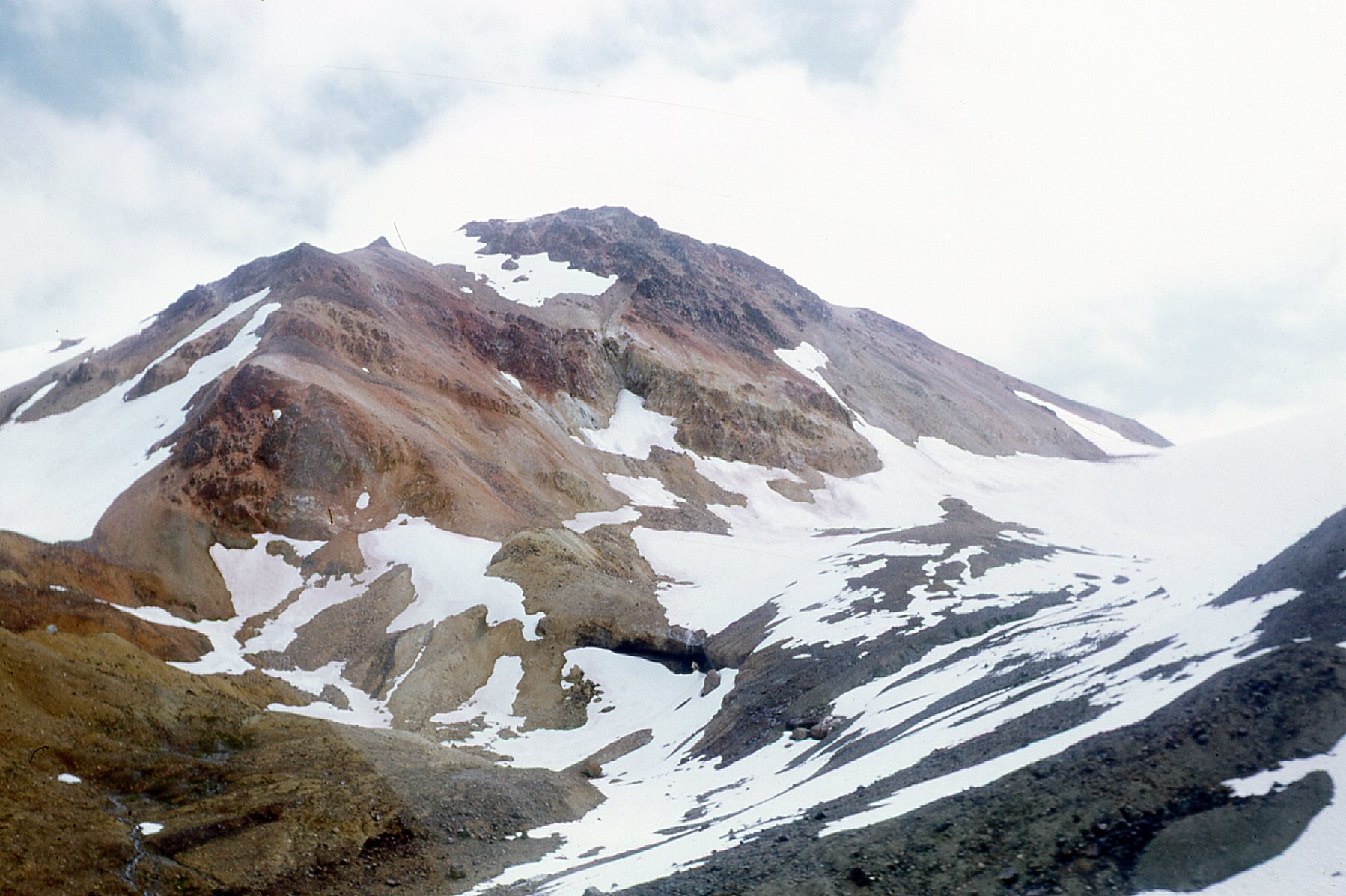
Small glaciers on the far left and far right in July.
Glaciers can be quite flat in places. Here, we are at 5,000 feet elevation on Mount Oksa.
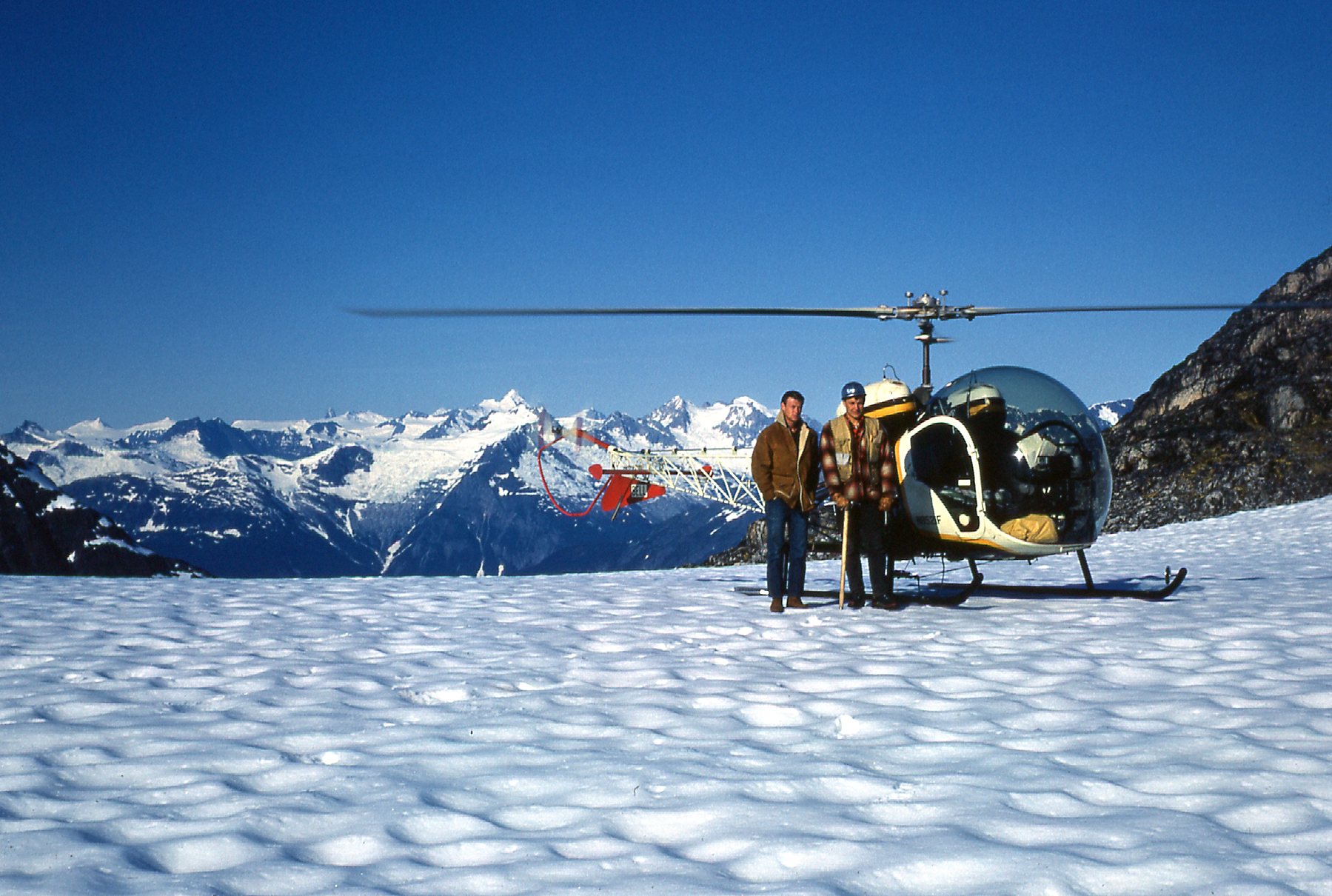
Looking southwest to Kate’s Needle, 25 miles away on the BC-Alaska border.
Notice the ice axe with the overly-long ash handle – at least our crampons had lobster-claws!
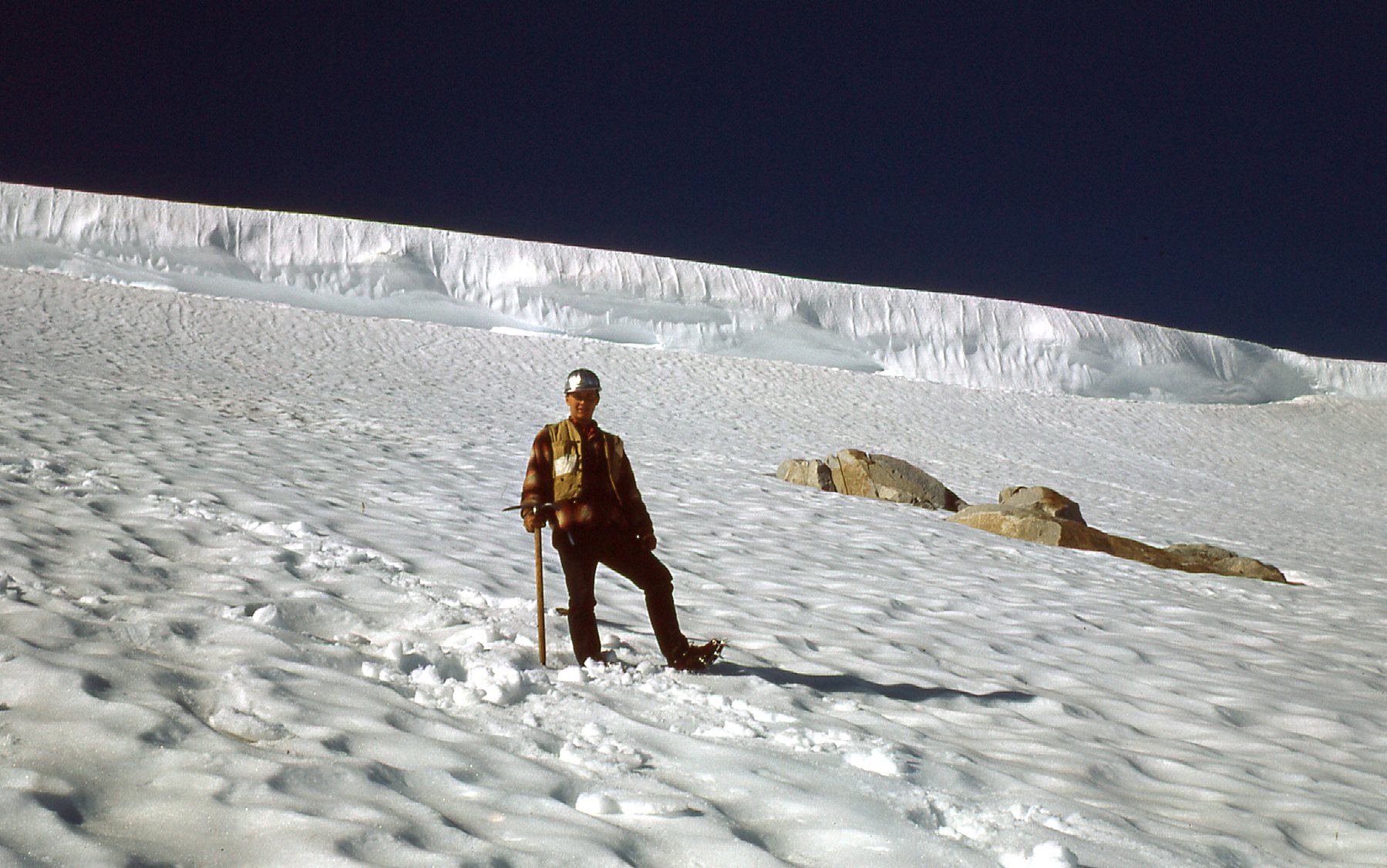
We walked on many glaciers that summer.
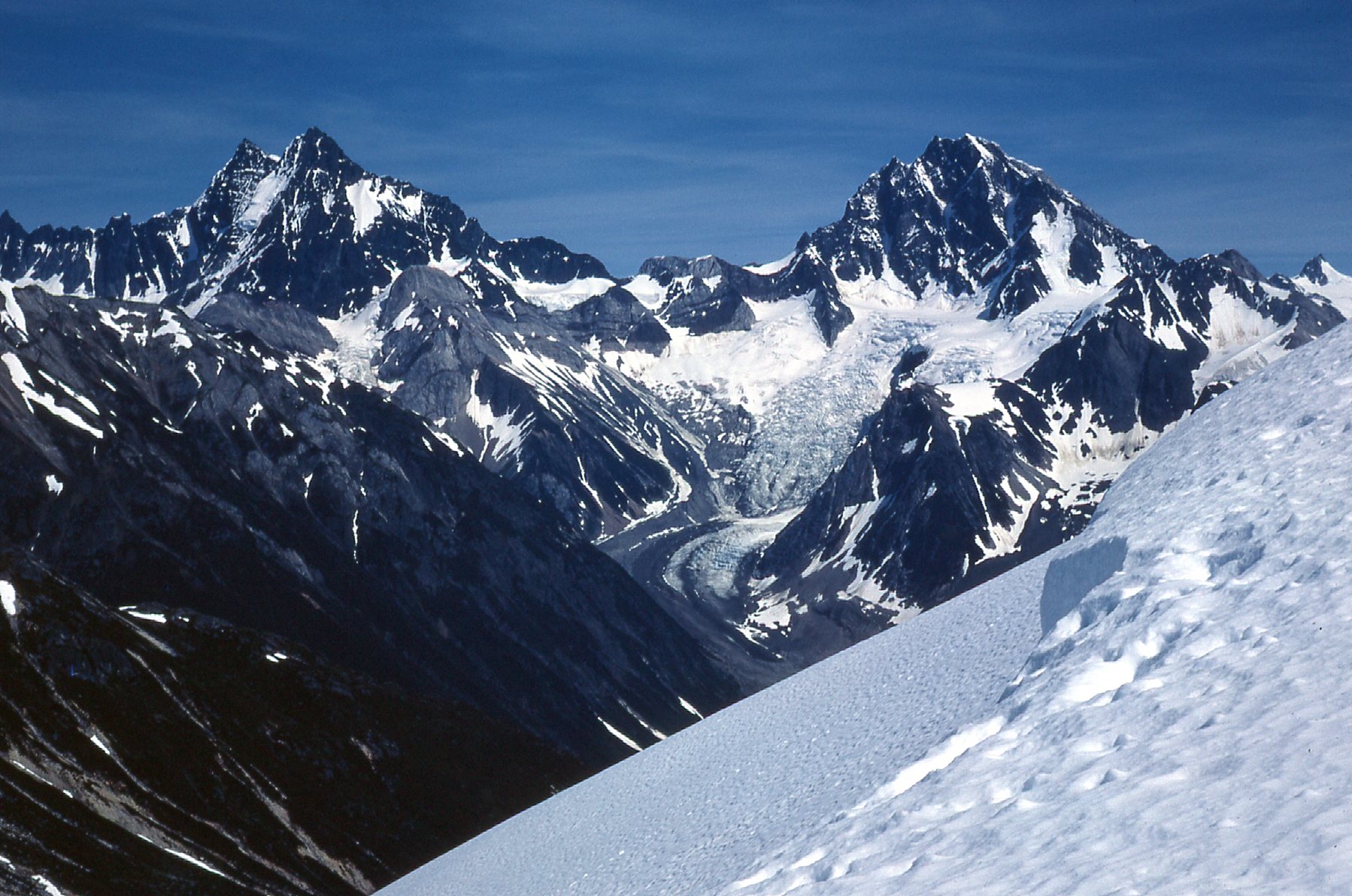
The wild mountains of the Stikine were truly spectacular, and dripping with glaciers.
Stopping to take a picture on a snowy slope.
Here, in July, deep snow still covered this glacier.
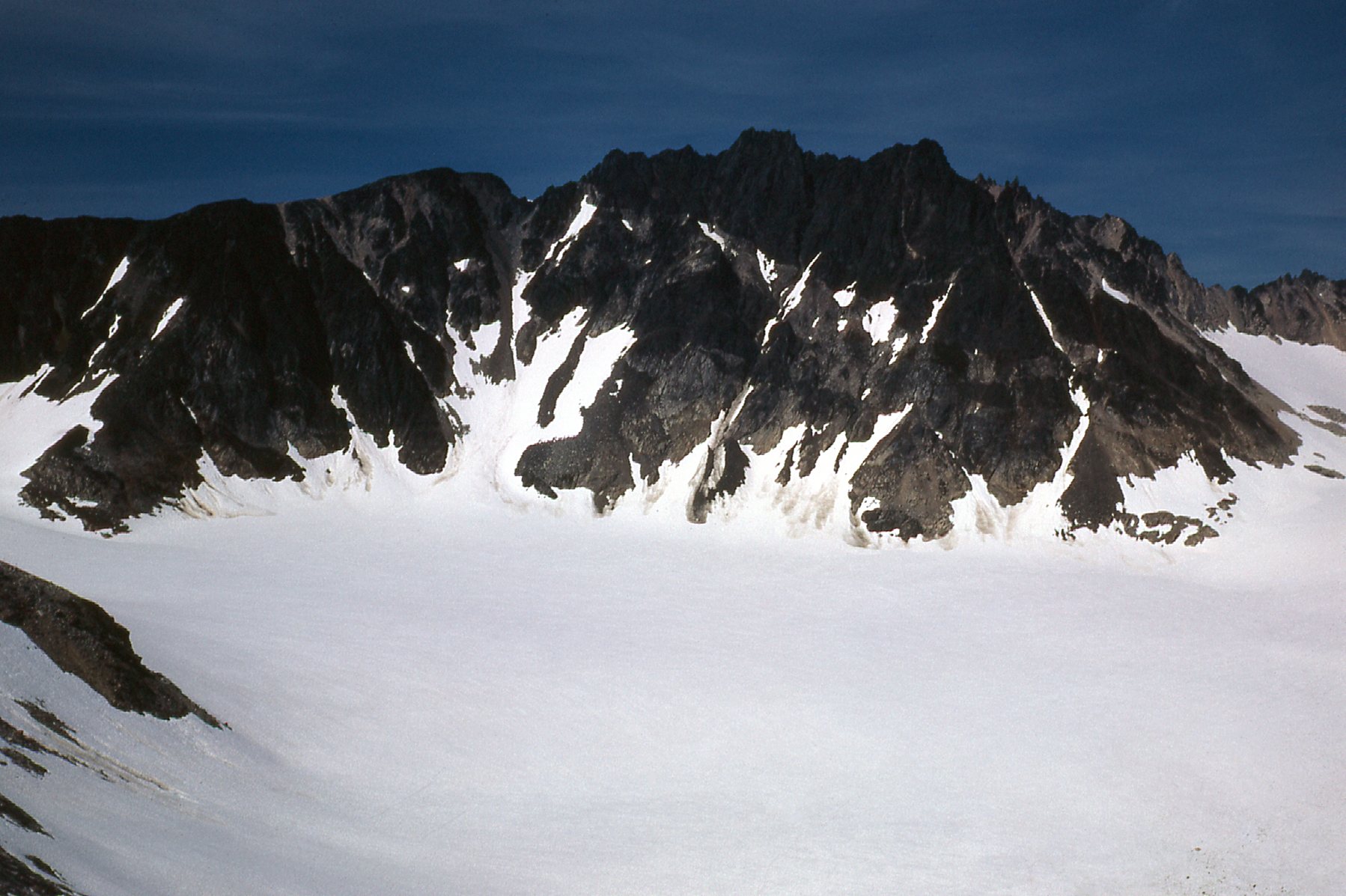
Snow on top of ice.
During a climb of Ambition Mountain, I took this picture from 8,700 feet. The peak is surrounded by a sea of ice.
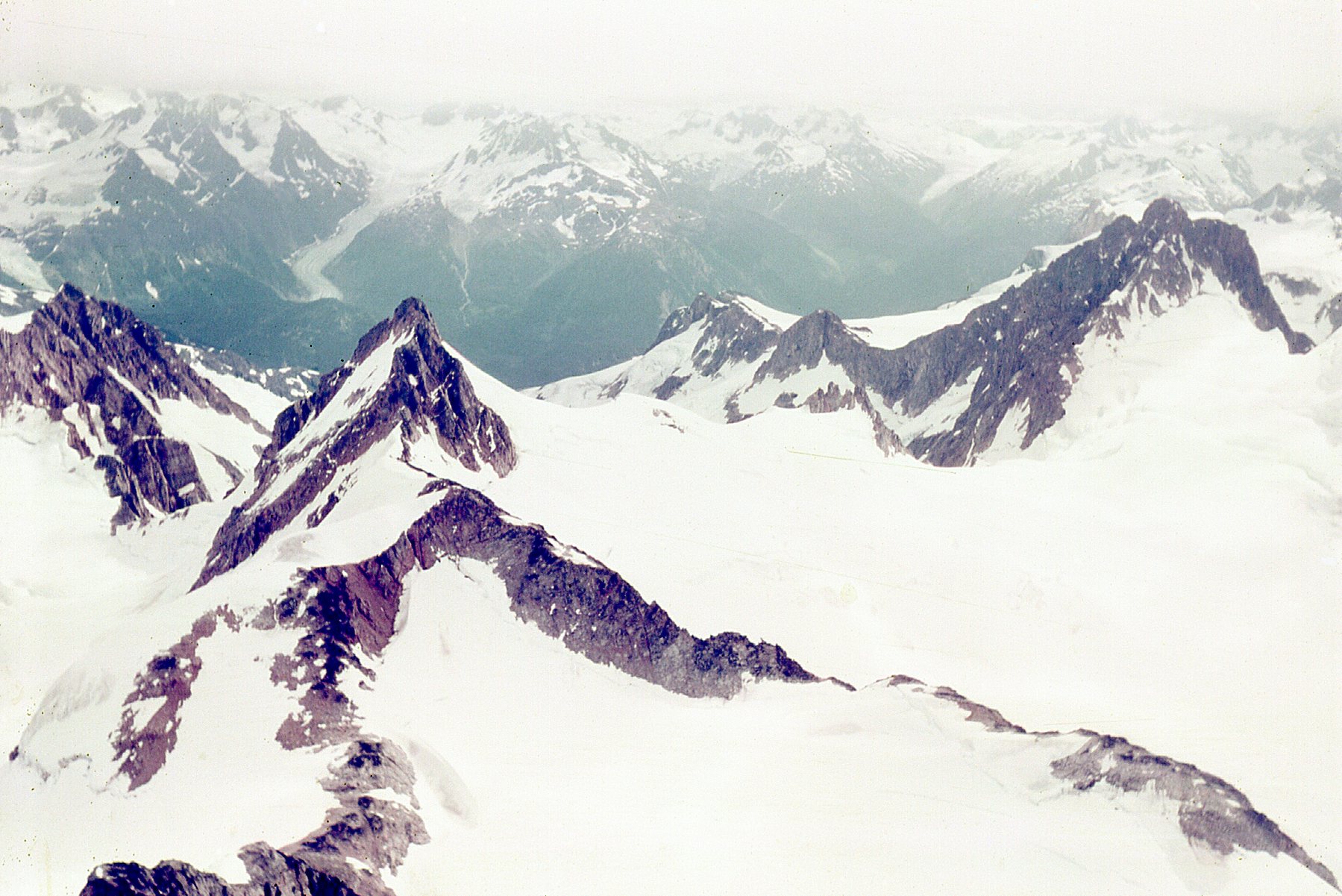
Glaciers everywhere. Notice the glaciers in the distant valleys.
Here’s another view from the same spot. Ice, ice and more ice.
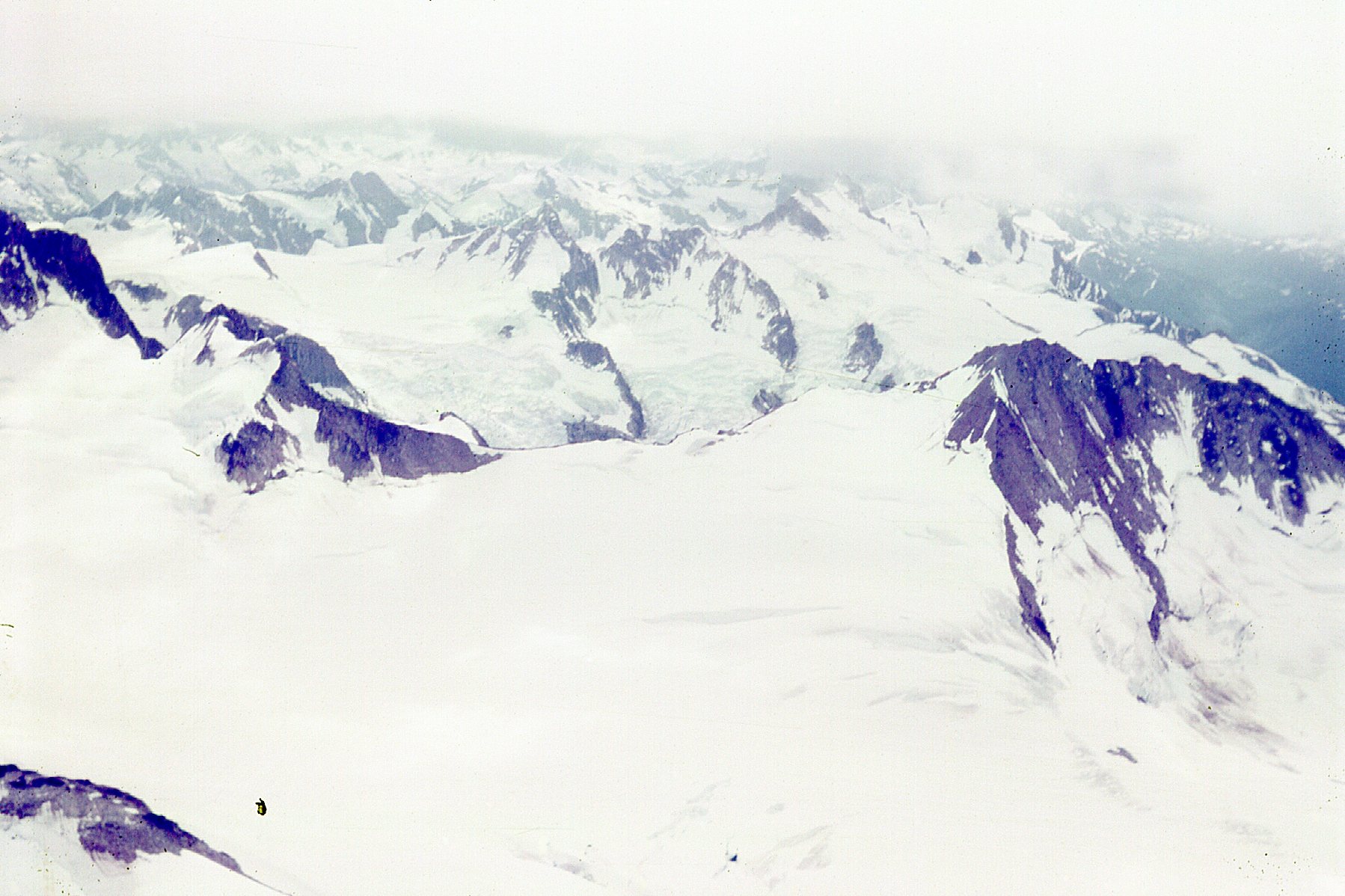
A world of ice. Glaciers everywhere. This photo was taken on August 6th, so the summer was well advanced. A lot of snow has already melted off.
Here’s a good example of how the toe of a glacier can look.
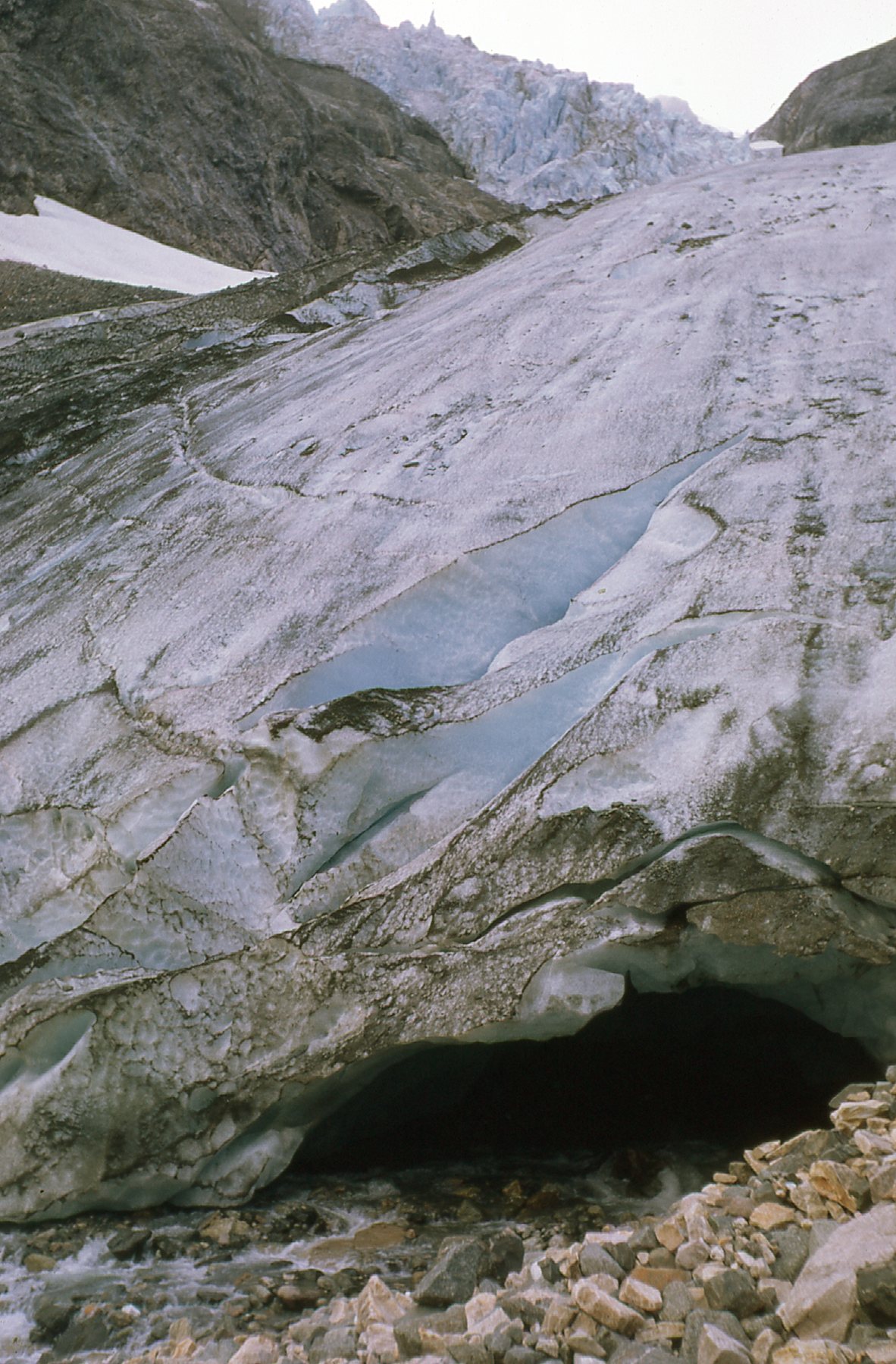
At the head of Deeker Creek. You can see an icefall at the top of the picture.
Another view of the same glacier. The elevation here is only 300 feet above sea level.
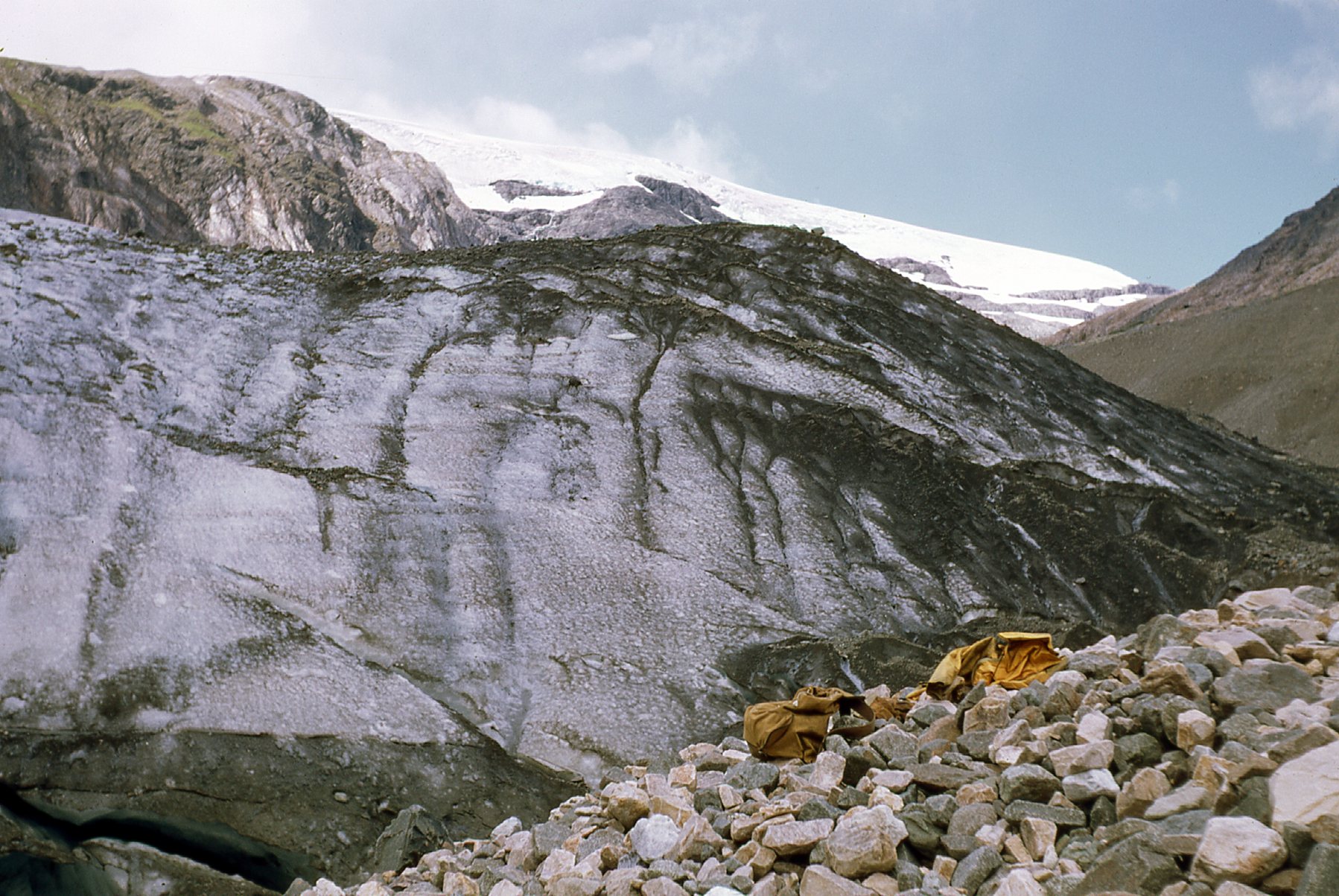
Alaska is only 15 miles away
I spent the summer of 1968 on an exploration crew in the Telkwa Range. That’s also in British Columbia, but hundreds of miles farther south than the Stikine. Even so, the mountains there had plenty of glaciers, albeit smaller and at higher elevations.
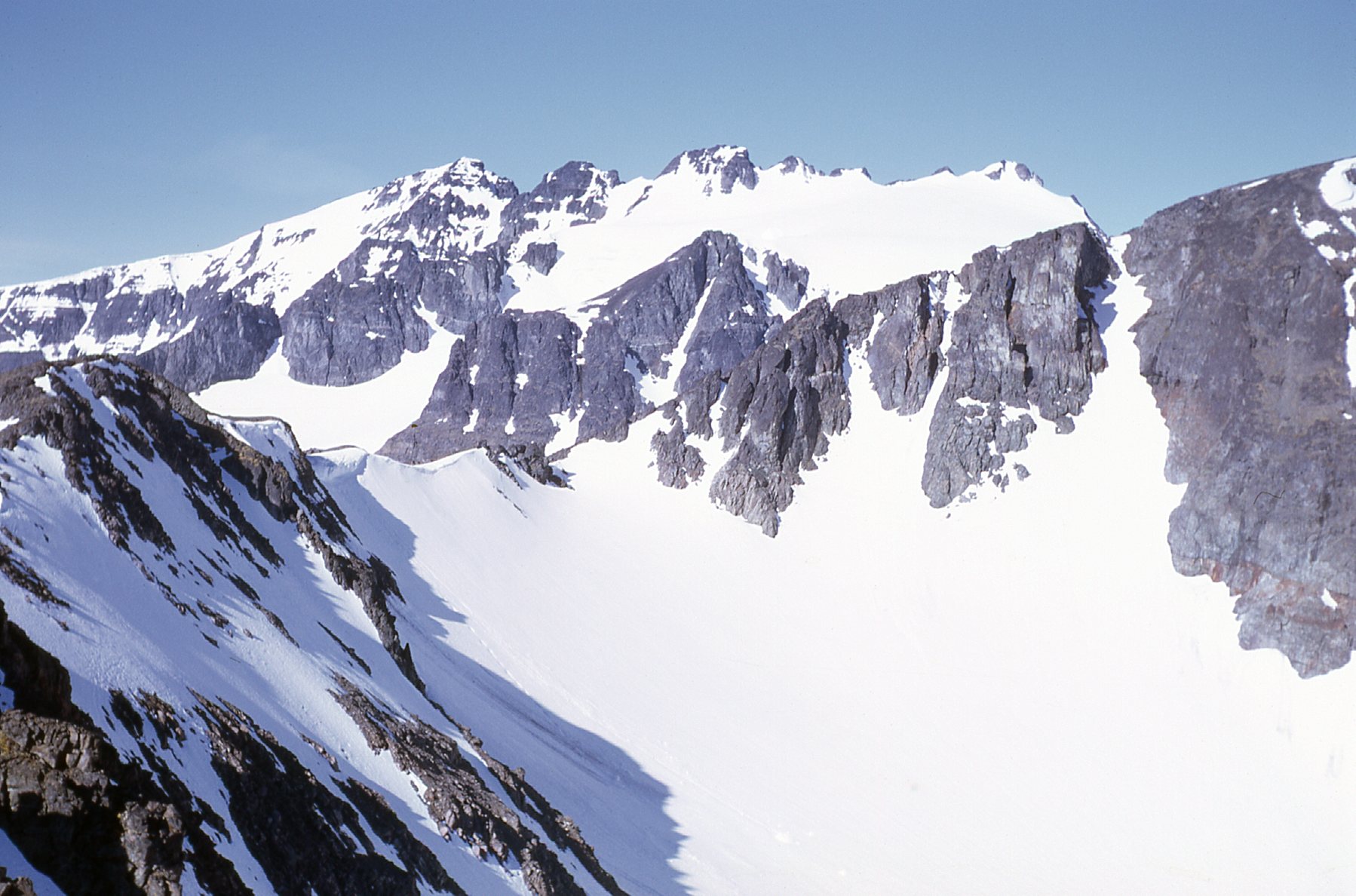
These peaks are about 7,700 feet but had plenty of glaciers. This was in early July.
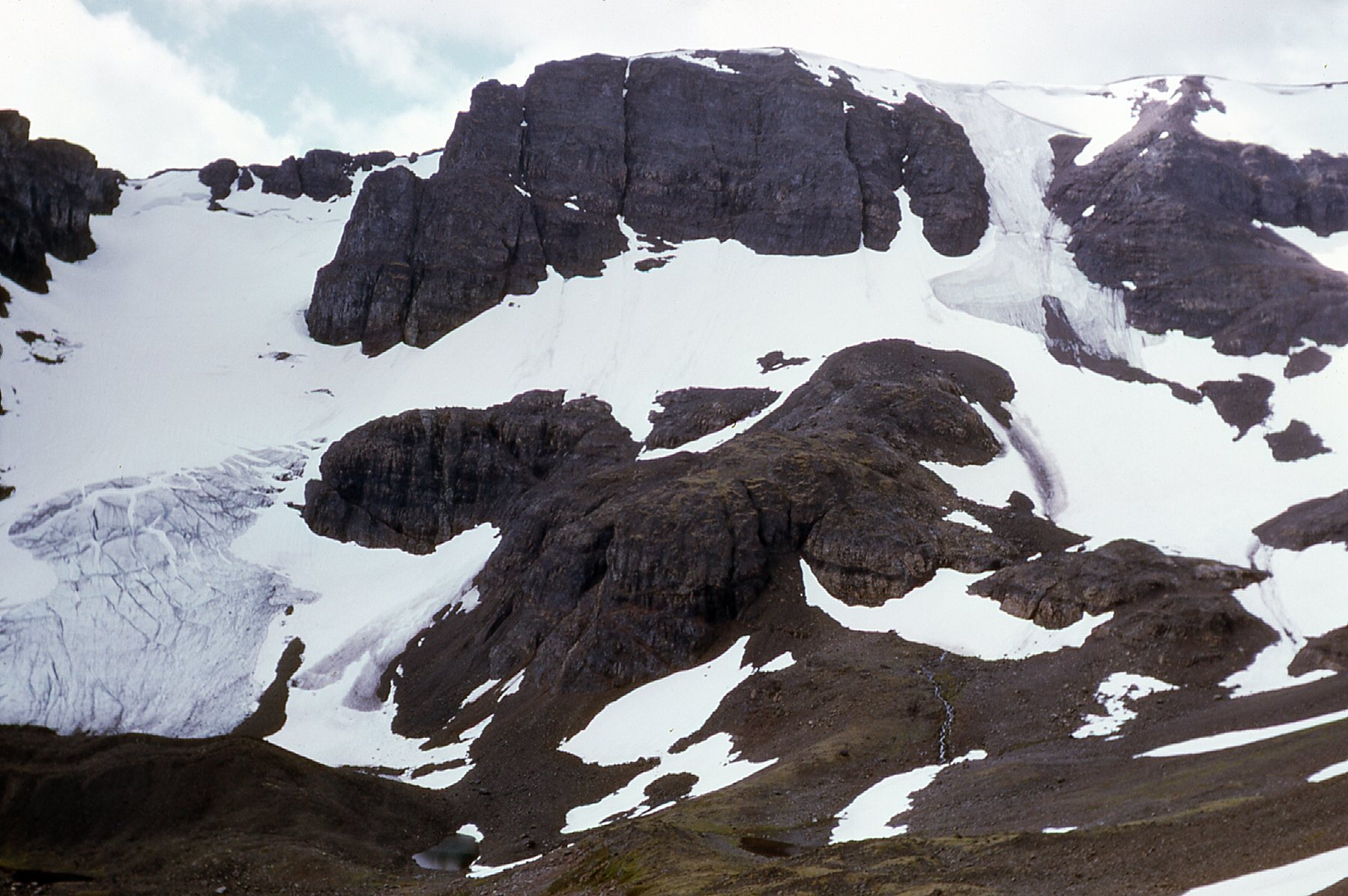
Plenty of small glaciers could be found in the Telkwa Range
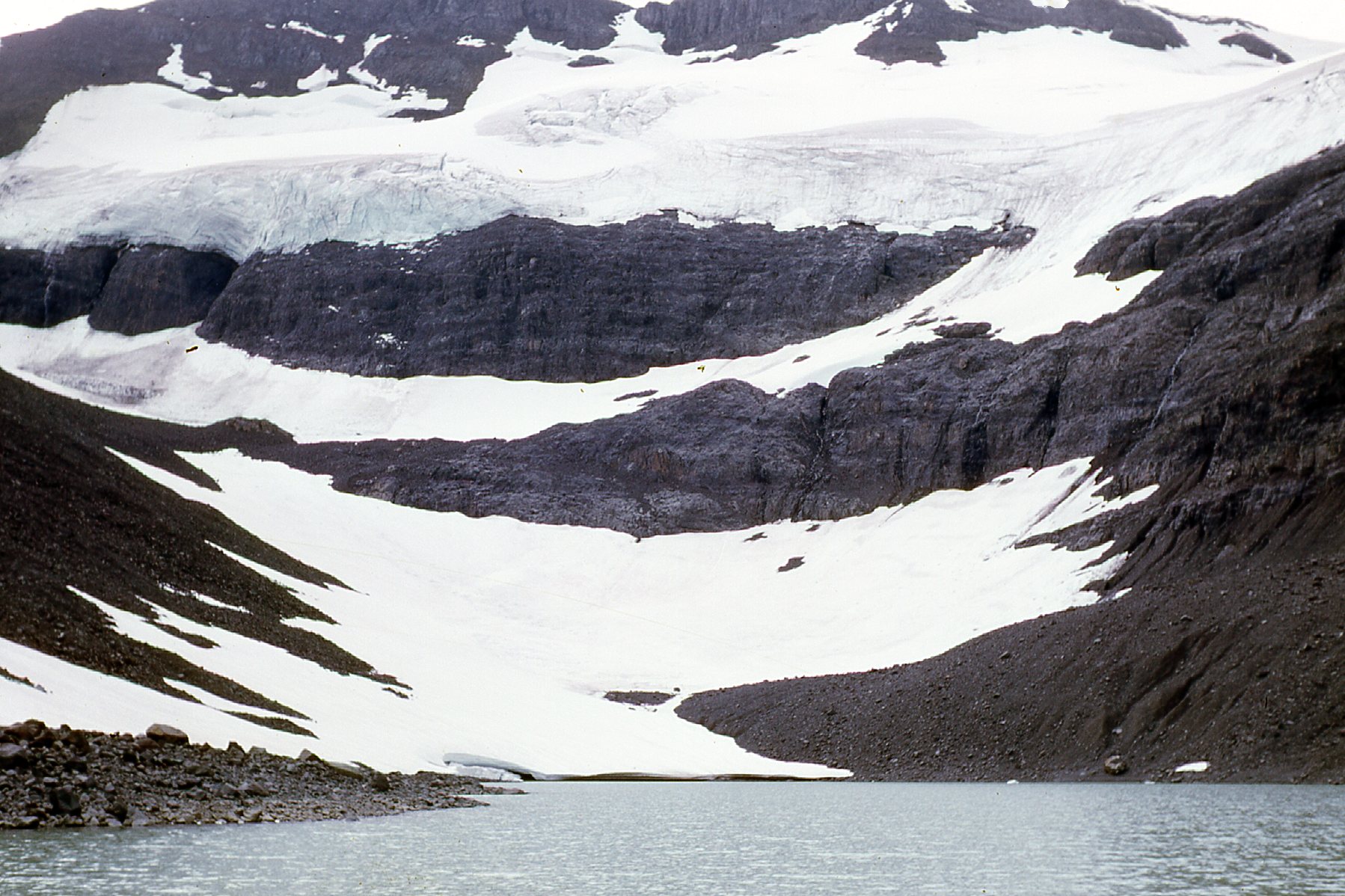
Glaciers were never far from our remote campsites.
One of my favorite places to get close to glaciers has been Mt. Baker in the Cascade Mountains of northern Washington state. The peak could be easily seen from my home town of Mission, BC a few miles north of the border, and I went there plenty of times. Here are some of the photos I took at those times. These first ones are from a visit in 1969.
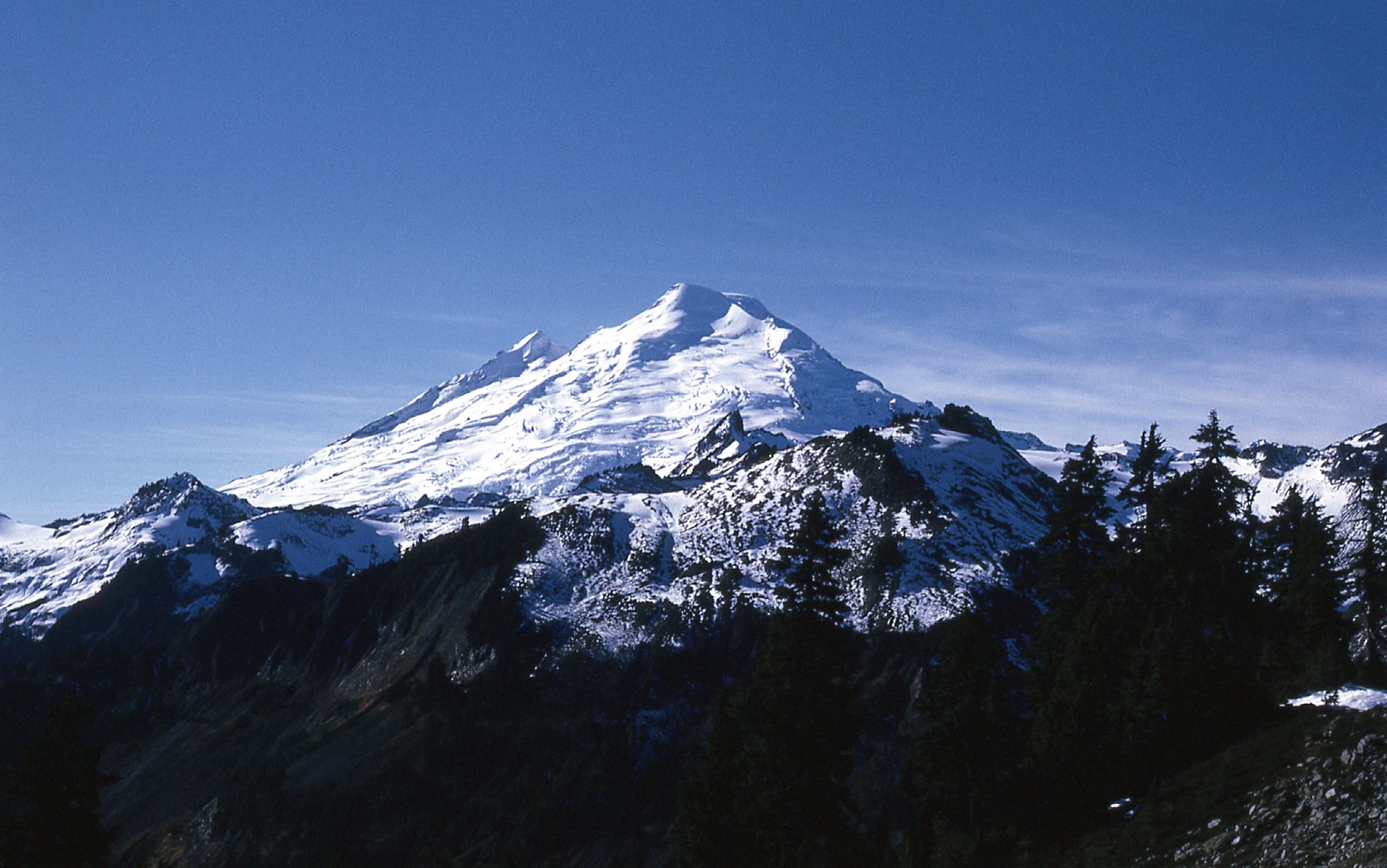
The northeast side of Mt. Baker
Here is a view from 3,000 feet in October.
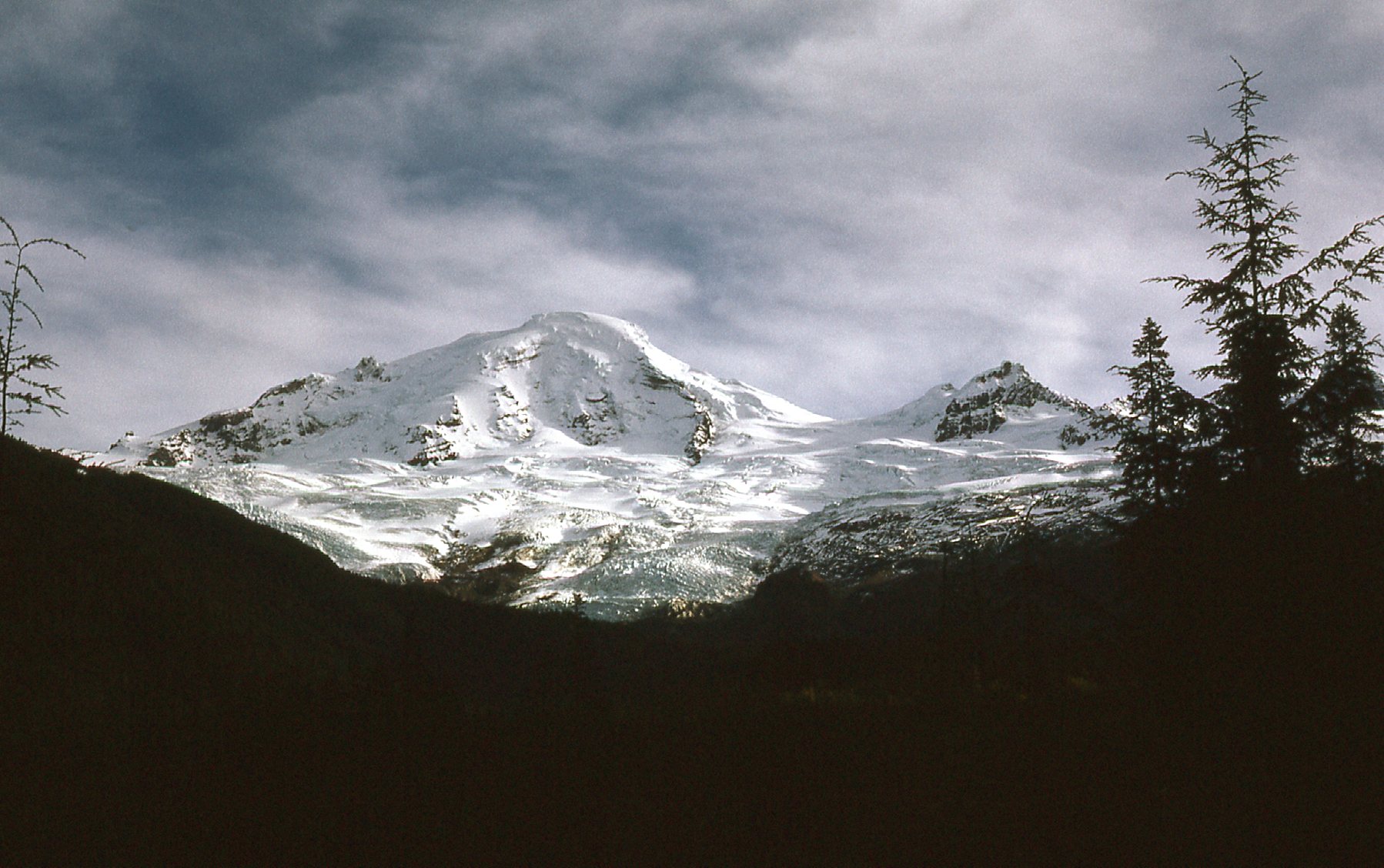
A view from lower down.
In this next photo, the play of light on the glaciers shows how heavily crevassed and broken they are, best seen like this late in the season once most of the previous winter’s snow has melted off.
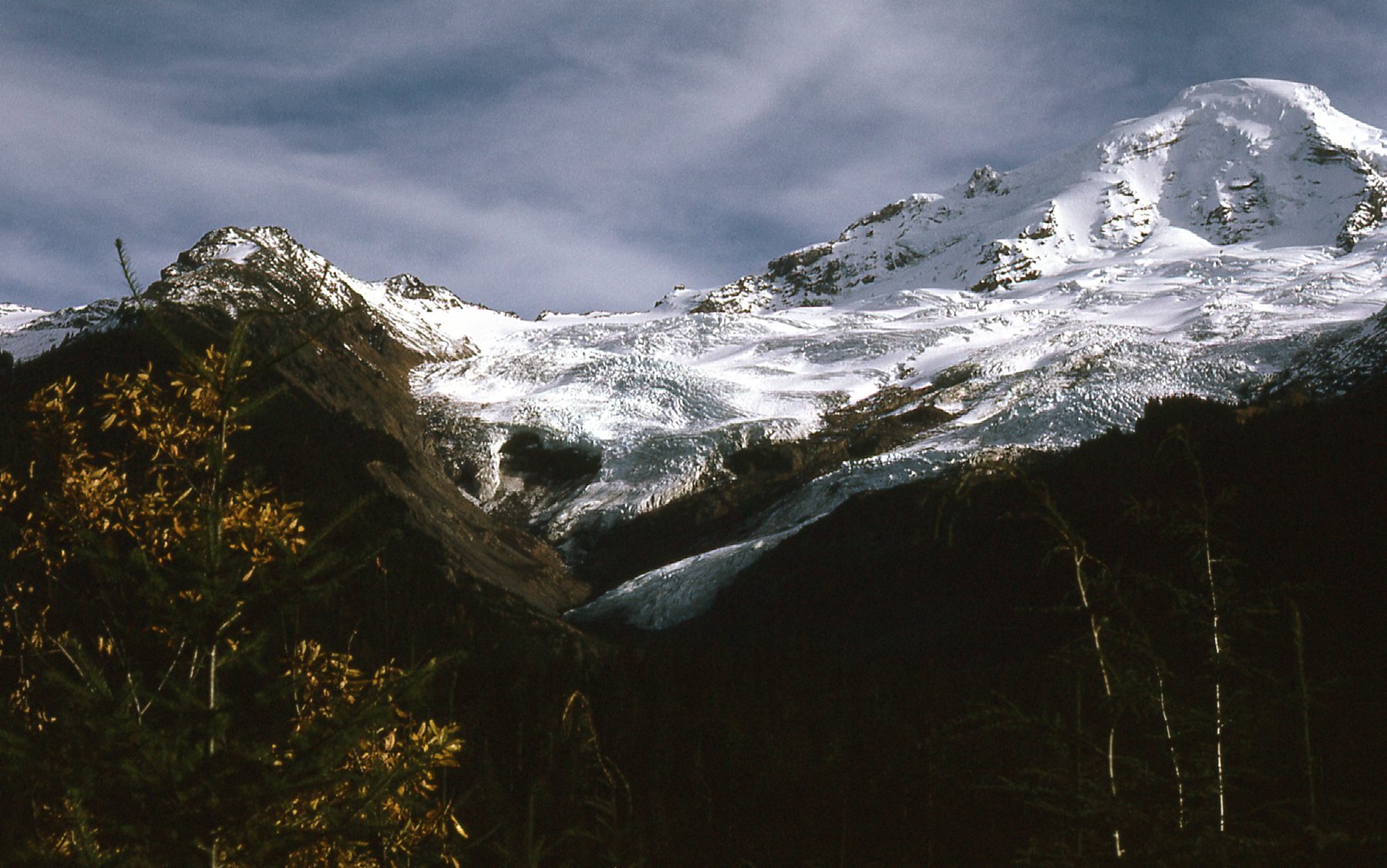
Late in the season.
Here are some photos taken in 1974, which will show different views on Mt. Baker.
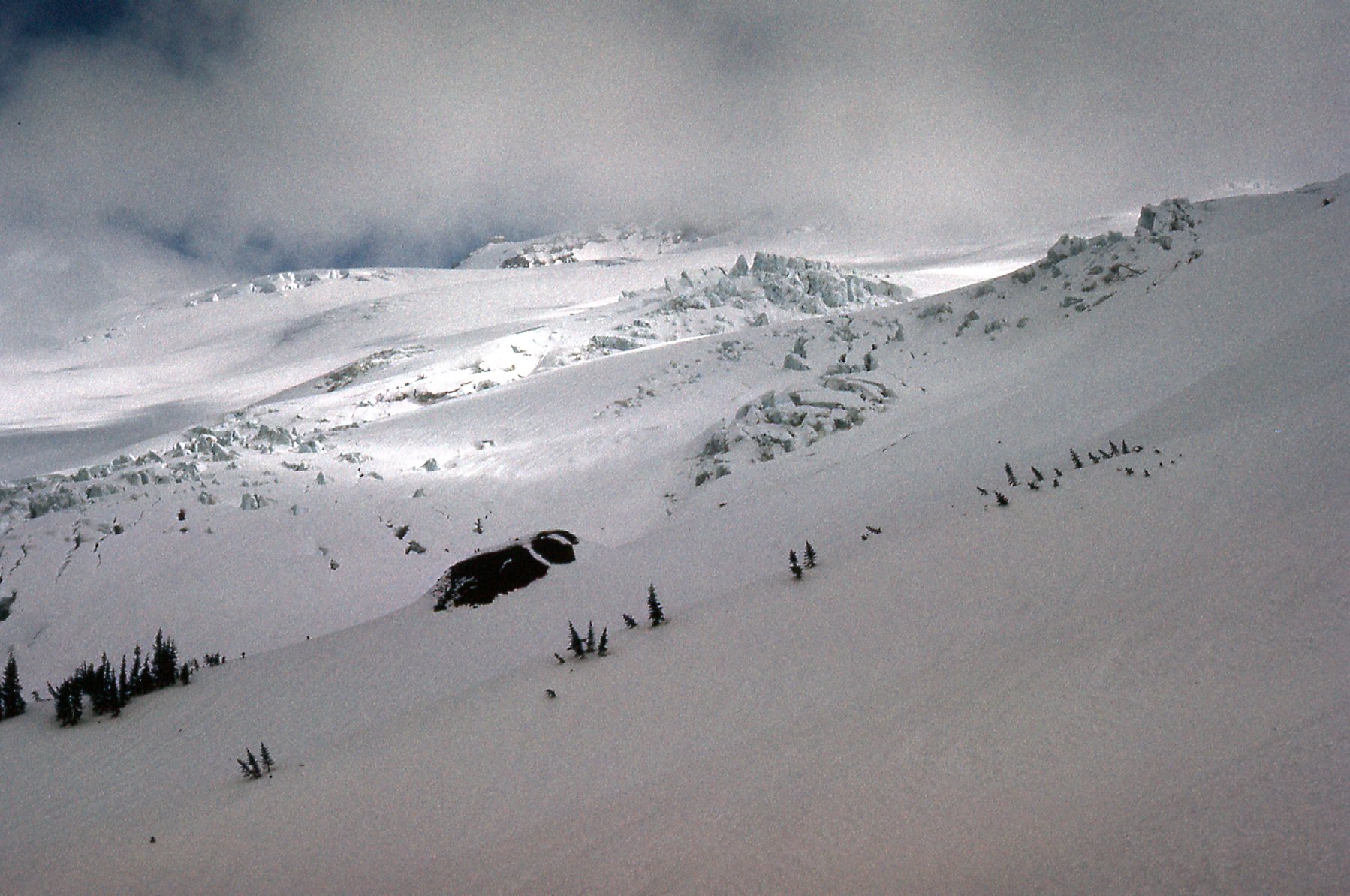
Just above treeline in late March.
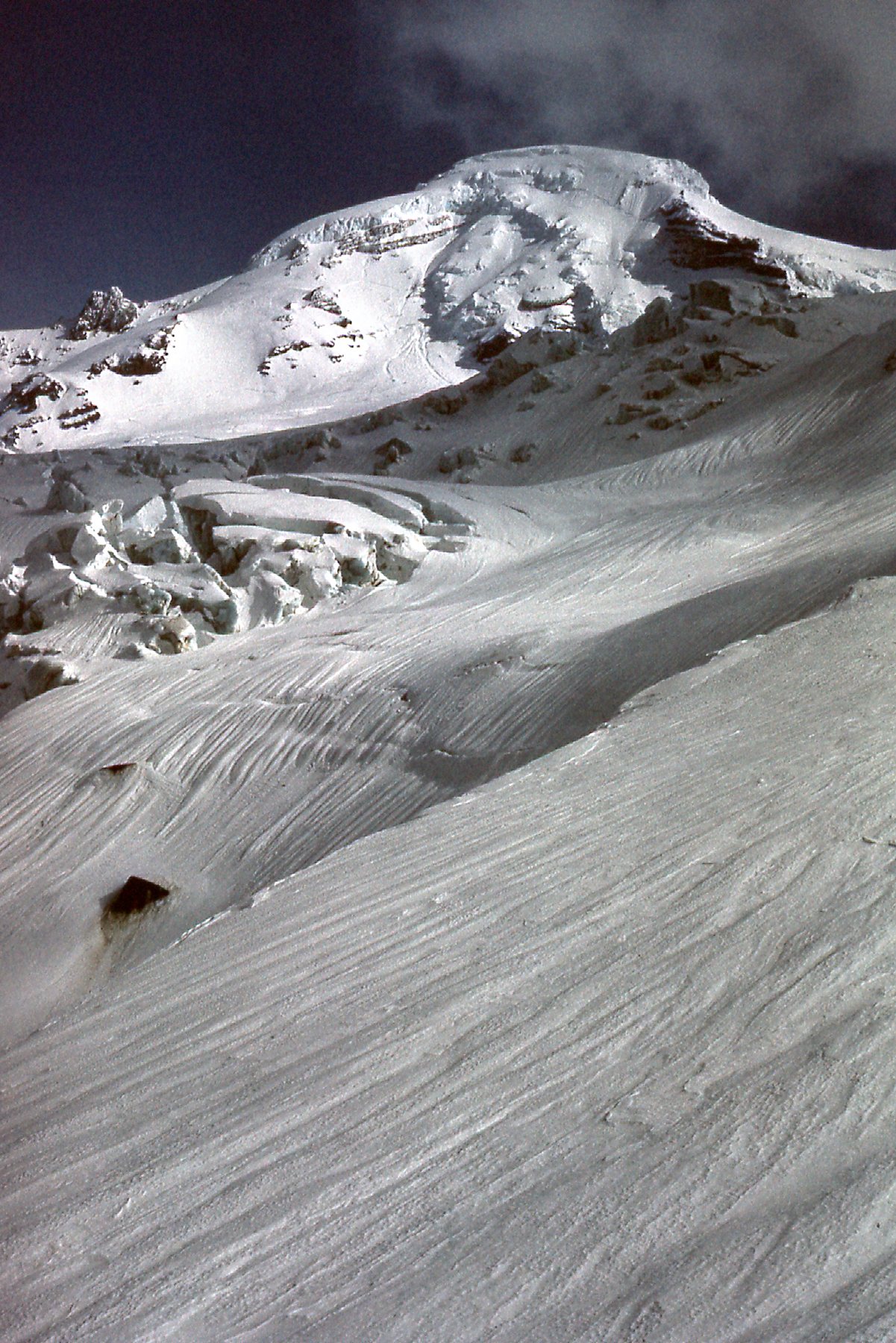
Looking up the mountain.
In this next photo, taken in late March, the snow still lies heavily on the mountain. Except for a few visible at the top, crevasses are covered. You can plainly see how the wind has sculptured the surface of the snow.
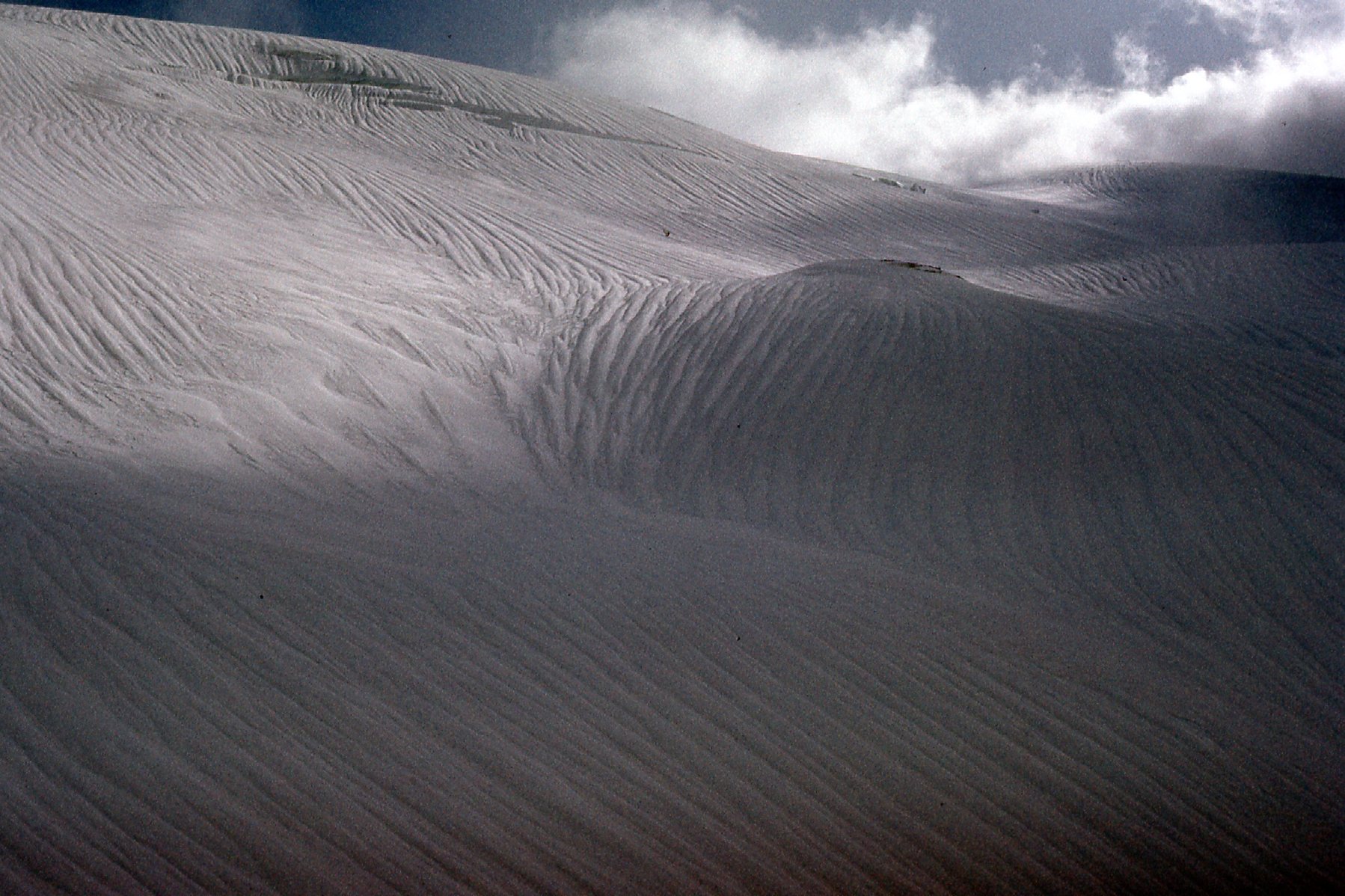
Sculptured by the wind.
This next photo is looking steeply downhill towards the toe of the Coleman Glacier. You can see large chunks of ice which have broken off as the glacier creeps downhill.
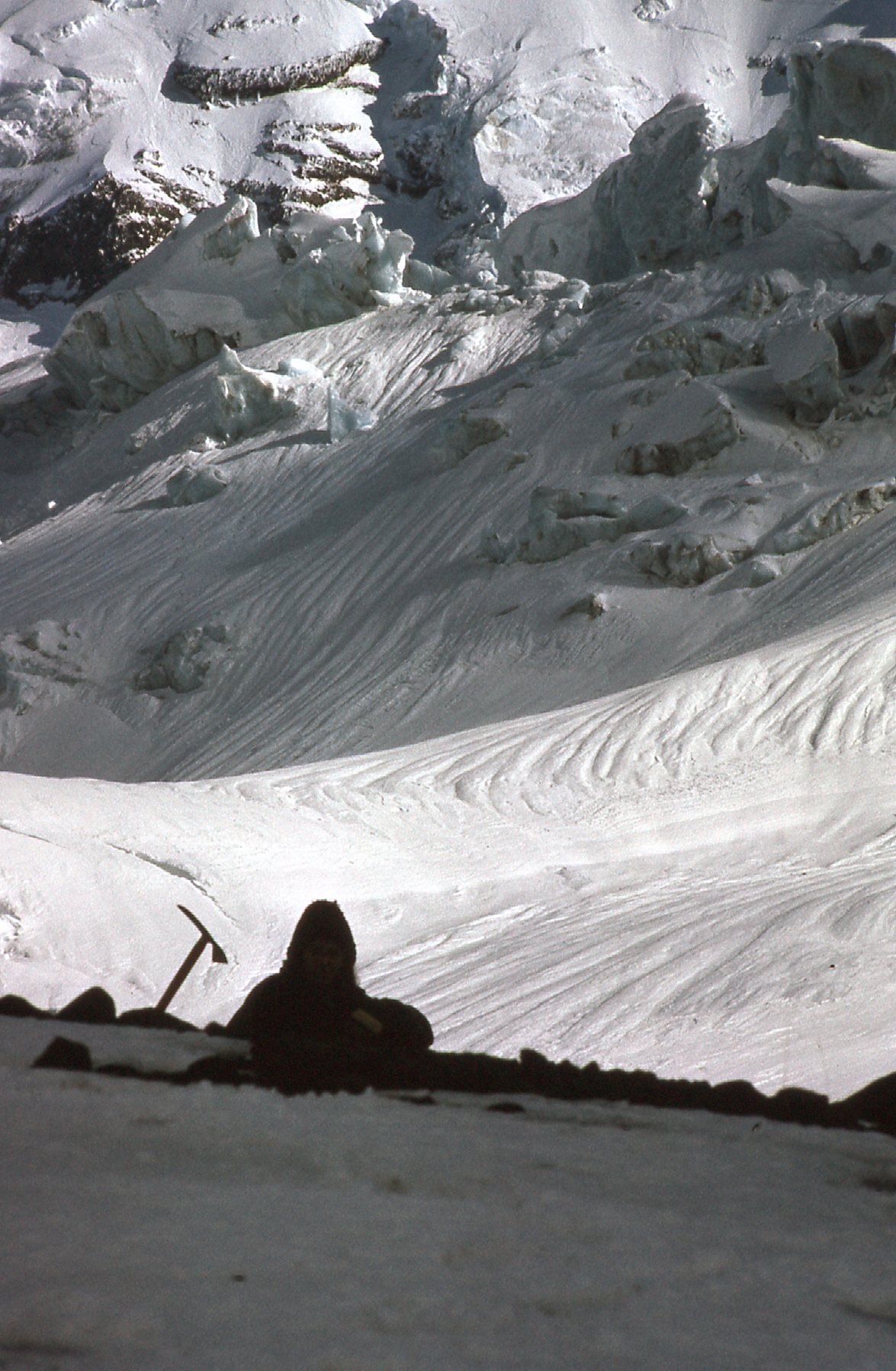
Looking down.
Here is what the mountain looked like in late March. Compare this photo to the one 6 photos back. Here, most of the crevasses are still covered by a deep blanket of snow.
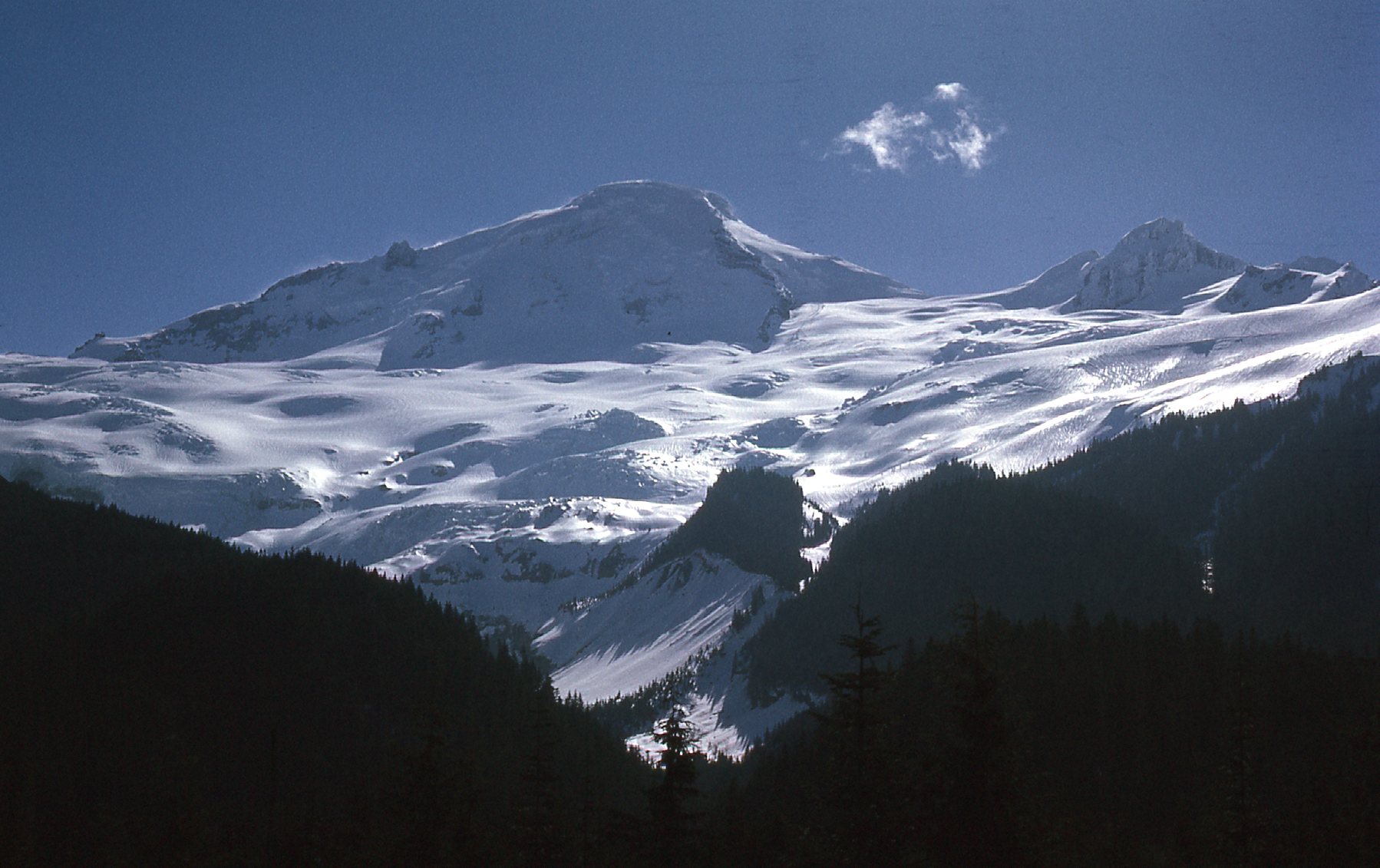
Here, still covered.
In July of 1976 I visited the mountain again and took this picture. You can see how, once much of the winter snow has melted off, the true crevassed nature of the glacier is revealed higher up the mountain.
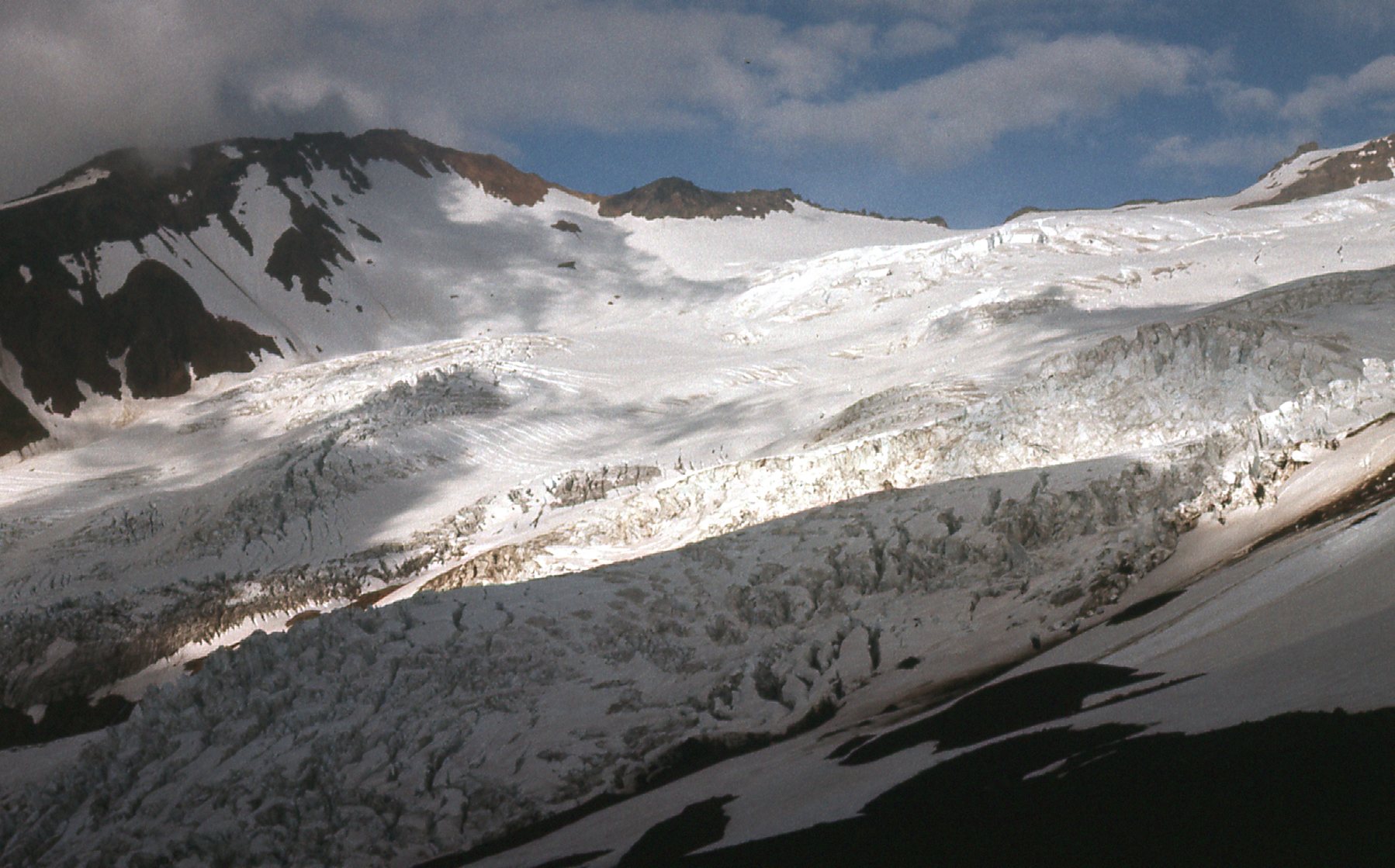
A July photo.
In December of 1976, I finally climbed Mt. Baker after several false starts over the years. On that climb, I had some close-up views of glacier features on the upper part of the mountain which I share with you here. My partner and I spent the night at 8,850 feet in what was known at the time as the Great Crevasse. It could be as much as half a mile long and at times presented quite an obstacle for climbers heading to the summit. When we were there, it was mostly filled in with winter snow so it presented no problem..
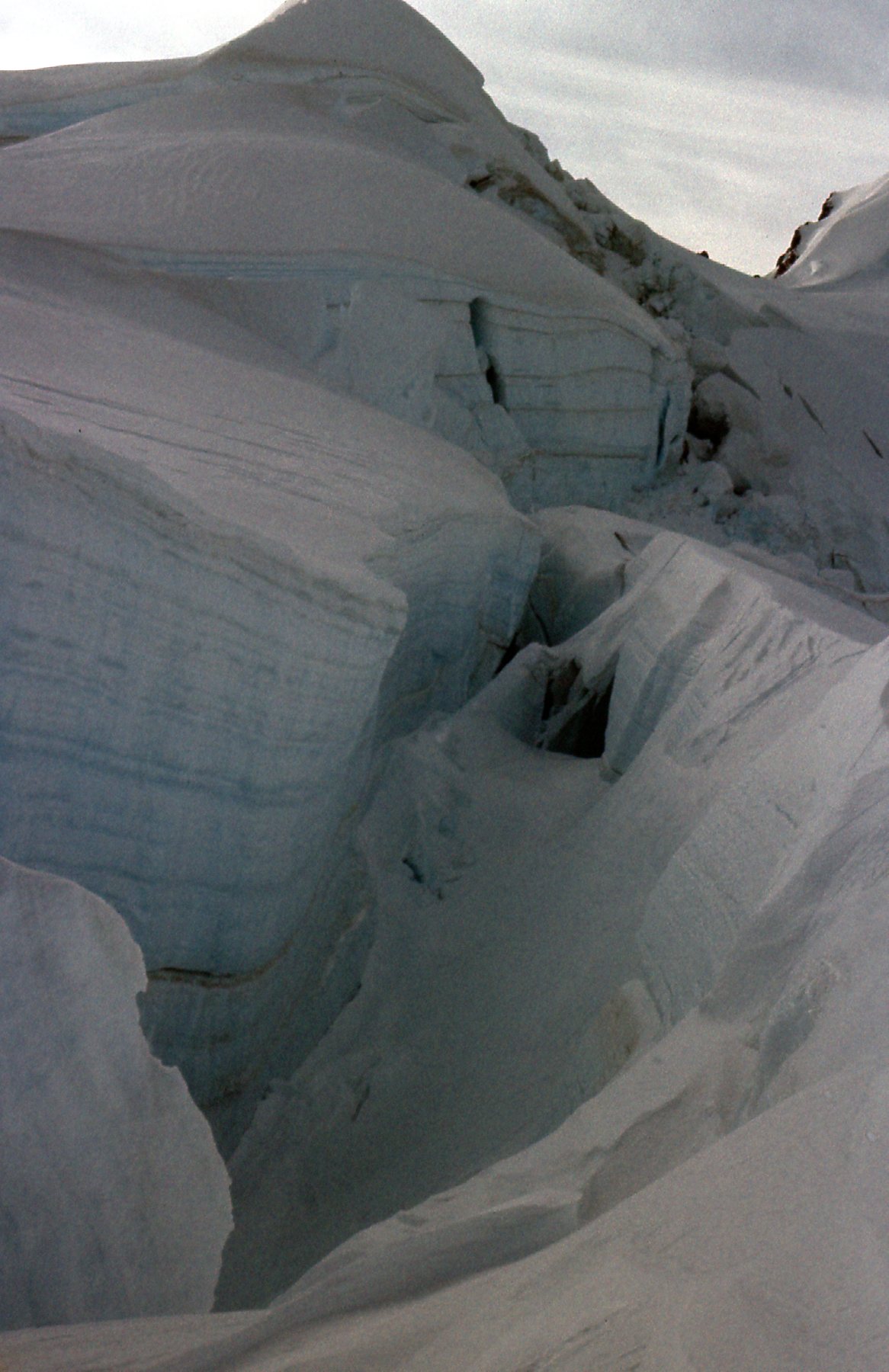
We spent the night in there.
The next morning, we escaped our crevasse campsite and soon climbed up to a major saddle where our route started up the Deming Glacier. Sunrise of December 3rd had us looking over to nearby Colfax Peak, elevation 9,460 feet. Plenty of ice there.
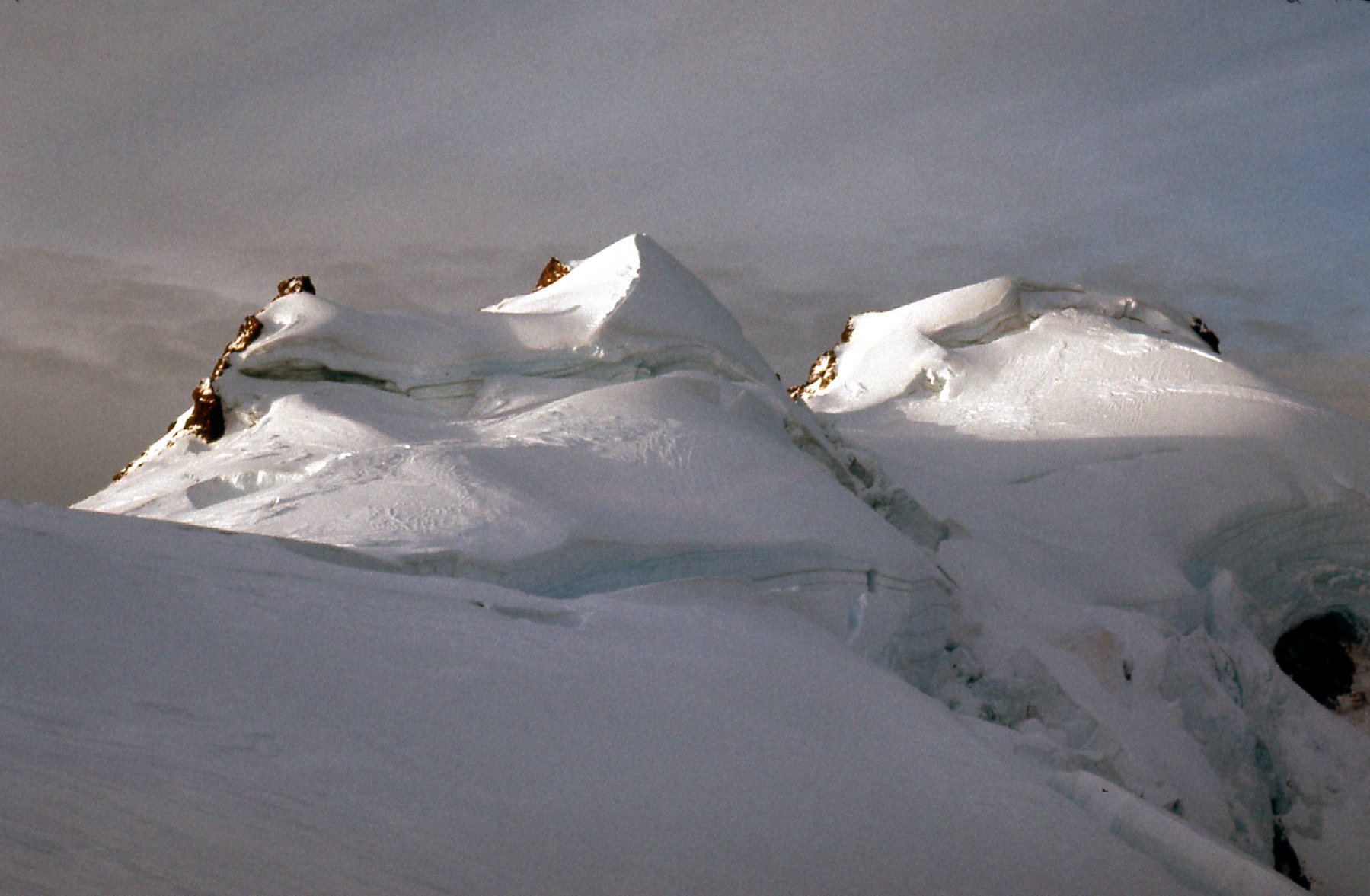
Looking over to Colfax Peak.
It was easy going up the Deming Glacier, where any crevasses were deeply covered in snow.
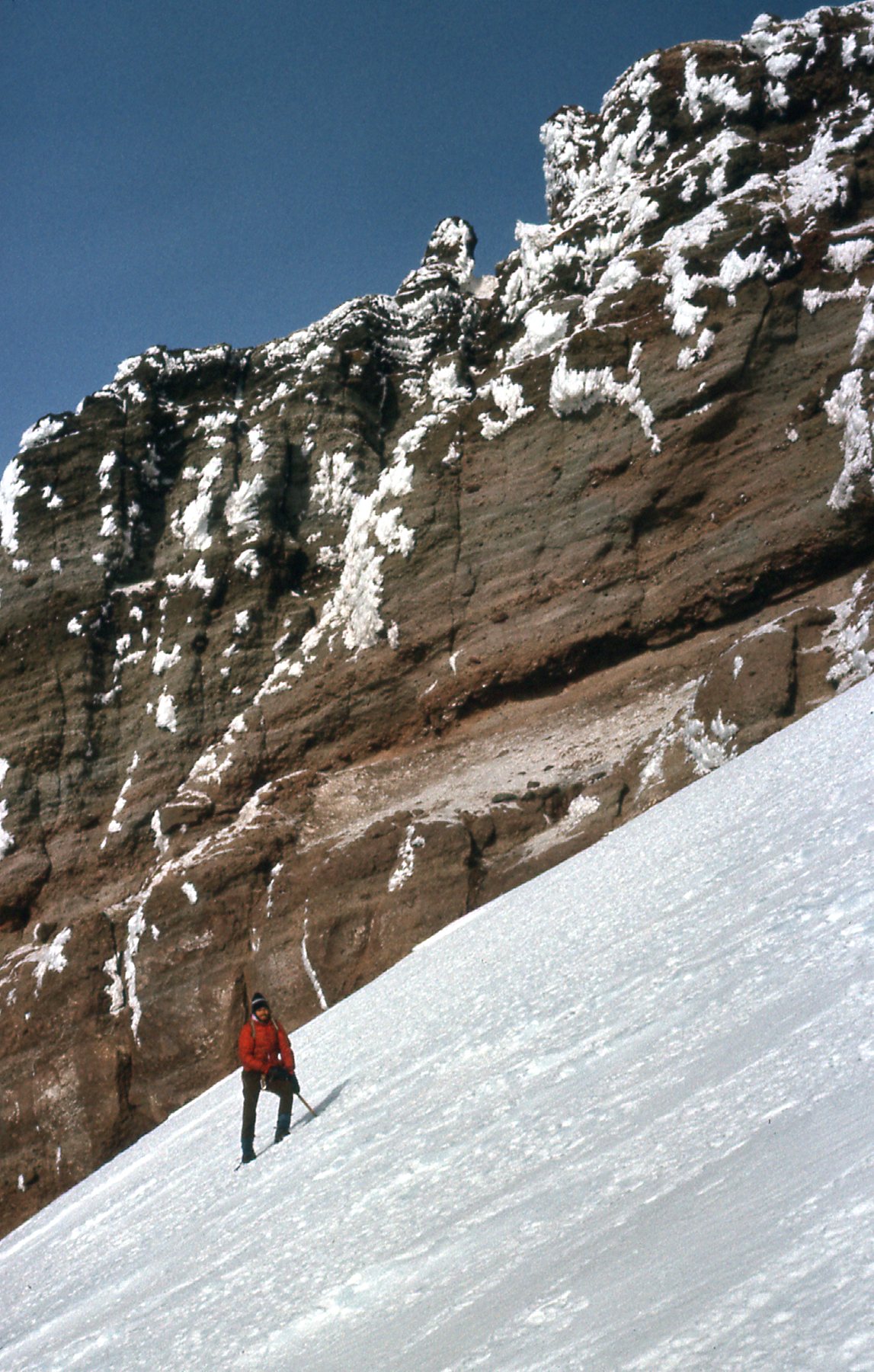
Just below the Roman Wall
The top of Mt. Baker is pretty flat. It is a volcano, but the summit crater is filled with ice.
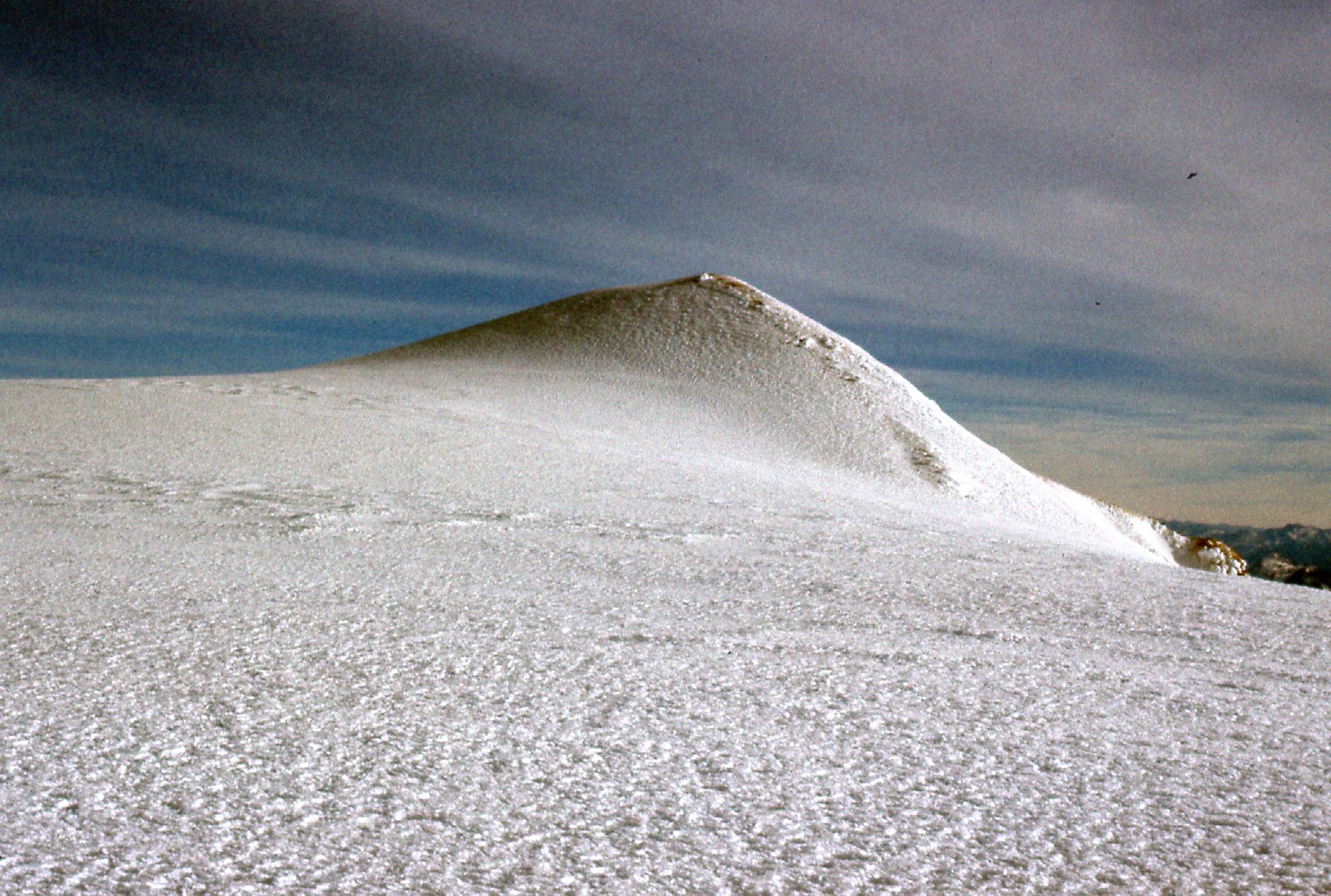
The summit of Mt. Baker, elevation 10,781 feet.
From the summit, you can look steeply down to an active crater. That’s steam rising up.
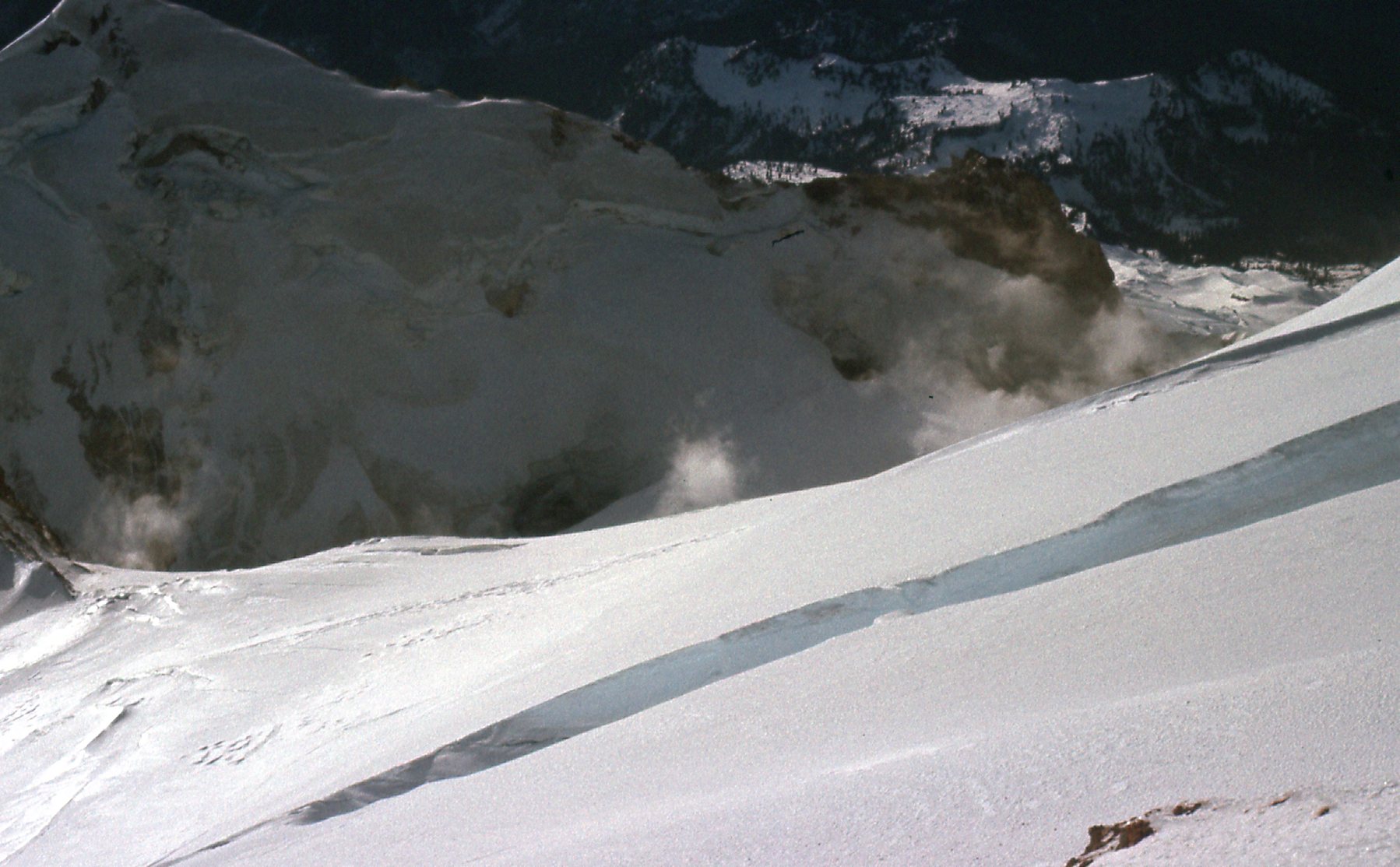
Steam coming from the crater.
Heading back down the mountain, there were good views of glaciers everywhere.
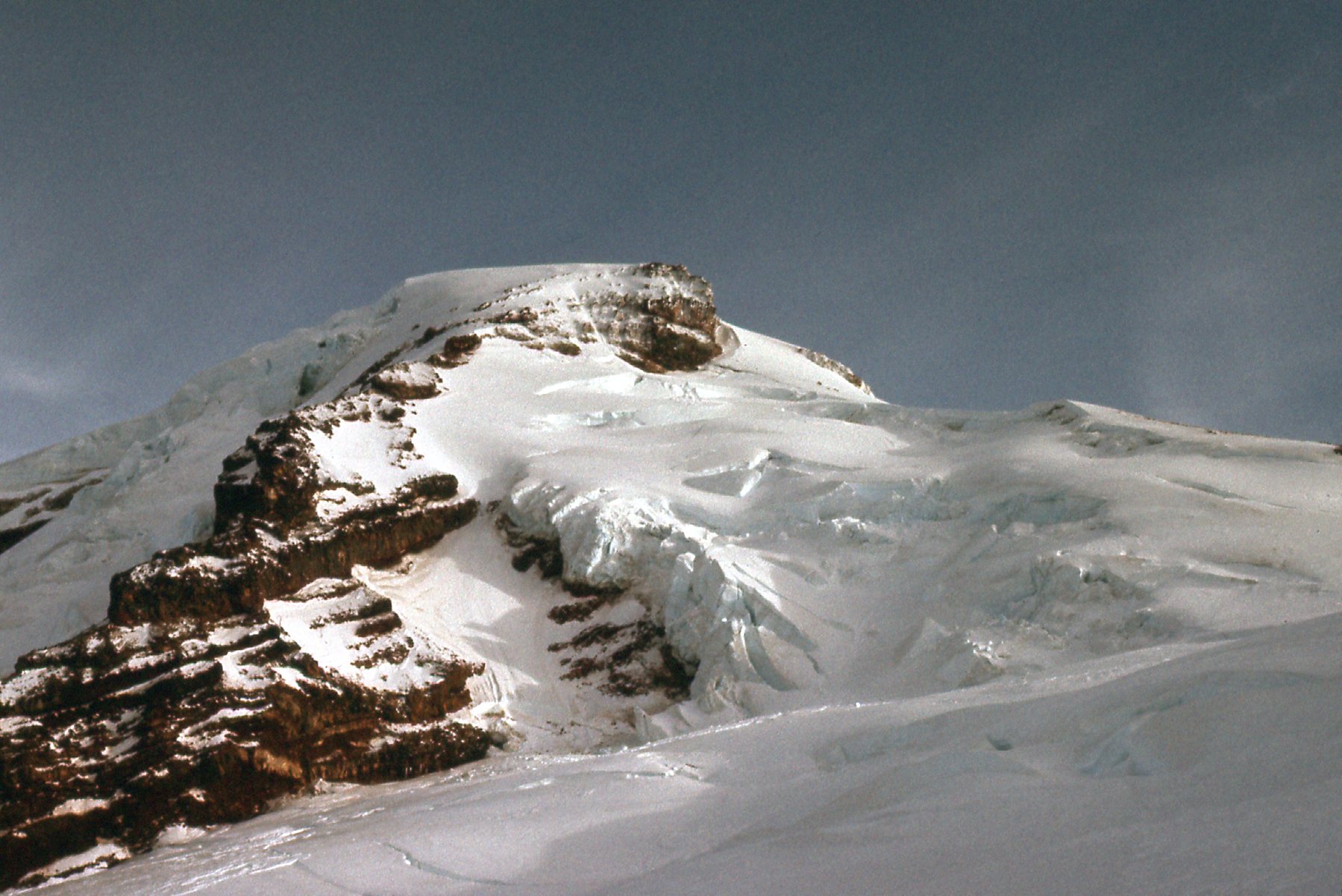
Looking east.
Here is a view of Heliotrope Ridge – you can see some open crevasses. Just to be safe, it’s good to be roped up. Falling into one is bad business.
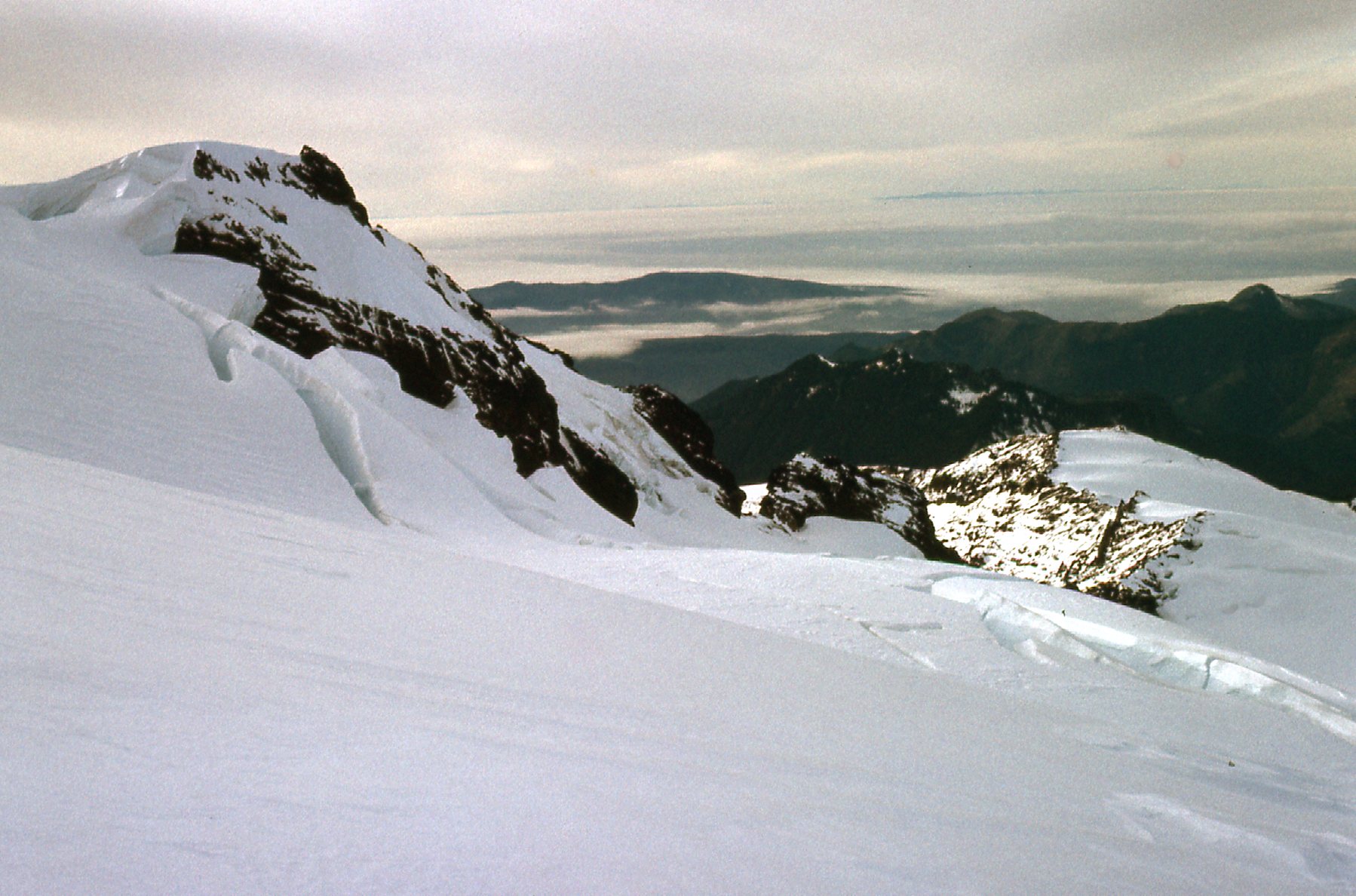
Lower Heliotrope Ridge
Here you can see a deep hole in a crevasse. Looks like a bottomless pit.
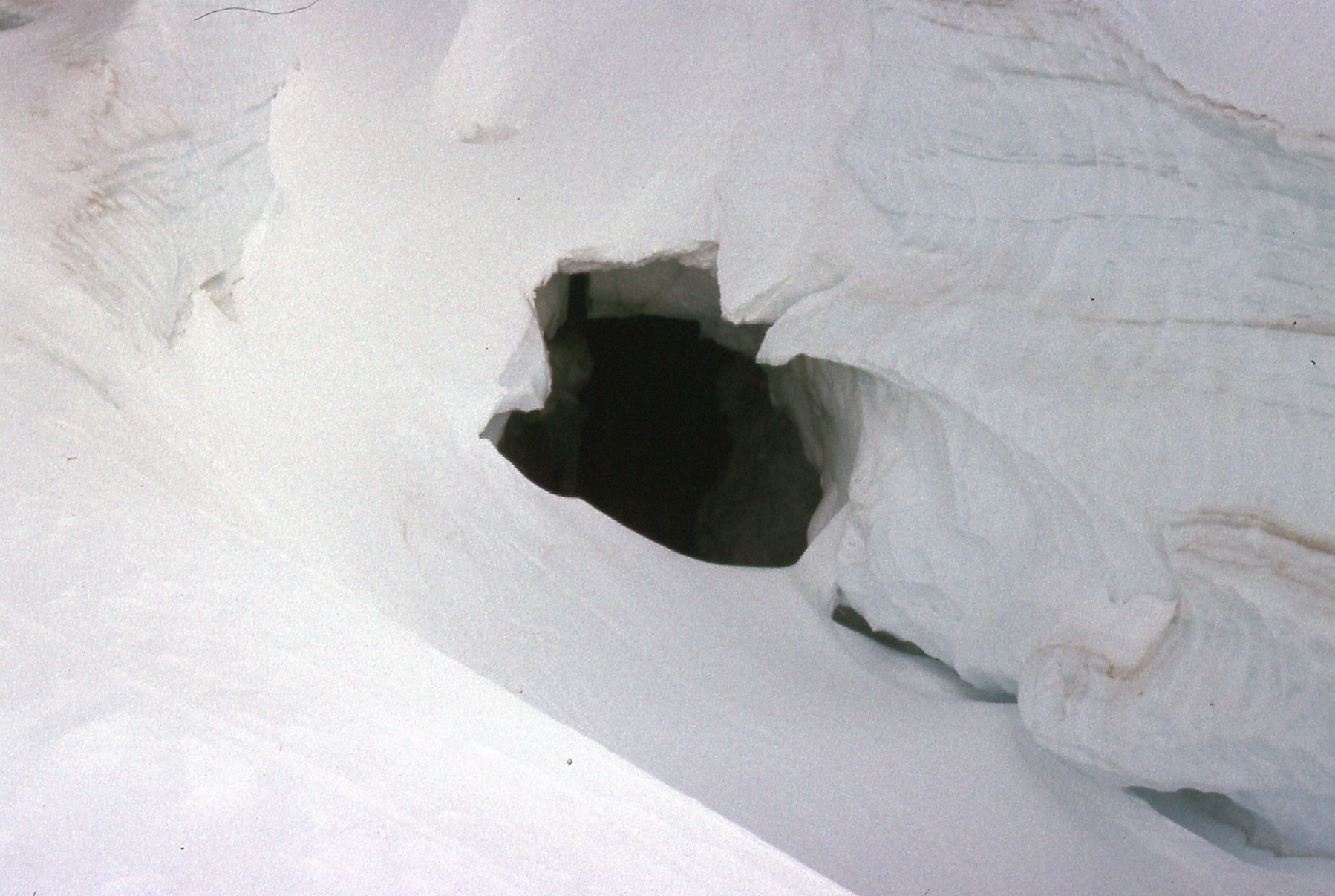
A deep hole – stay away!
Okay, I know I’ve shown you a lot of pictures taken at Mt. Baker. It’s just that it has such a variety of glacial features, I couldn’t resist. But there are plenty of other good ones to come, so let’s continue.
Glaciers come in all shapes and sizes. Have a look at this one. The picture was taken from a Cessna, and we are looking east up to the edge of the Washmawapta Icefield in the Canadian Rockies. The rest of it is higher up and out of sight over the horizon.
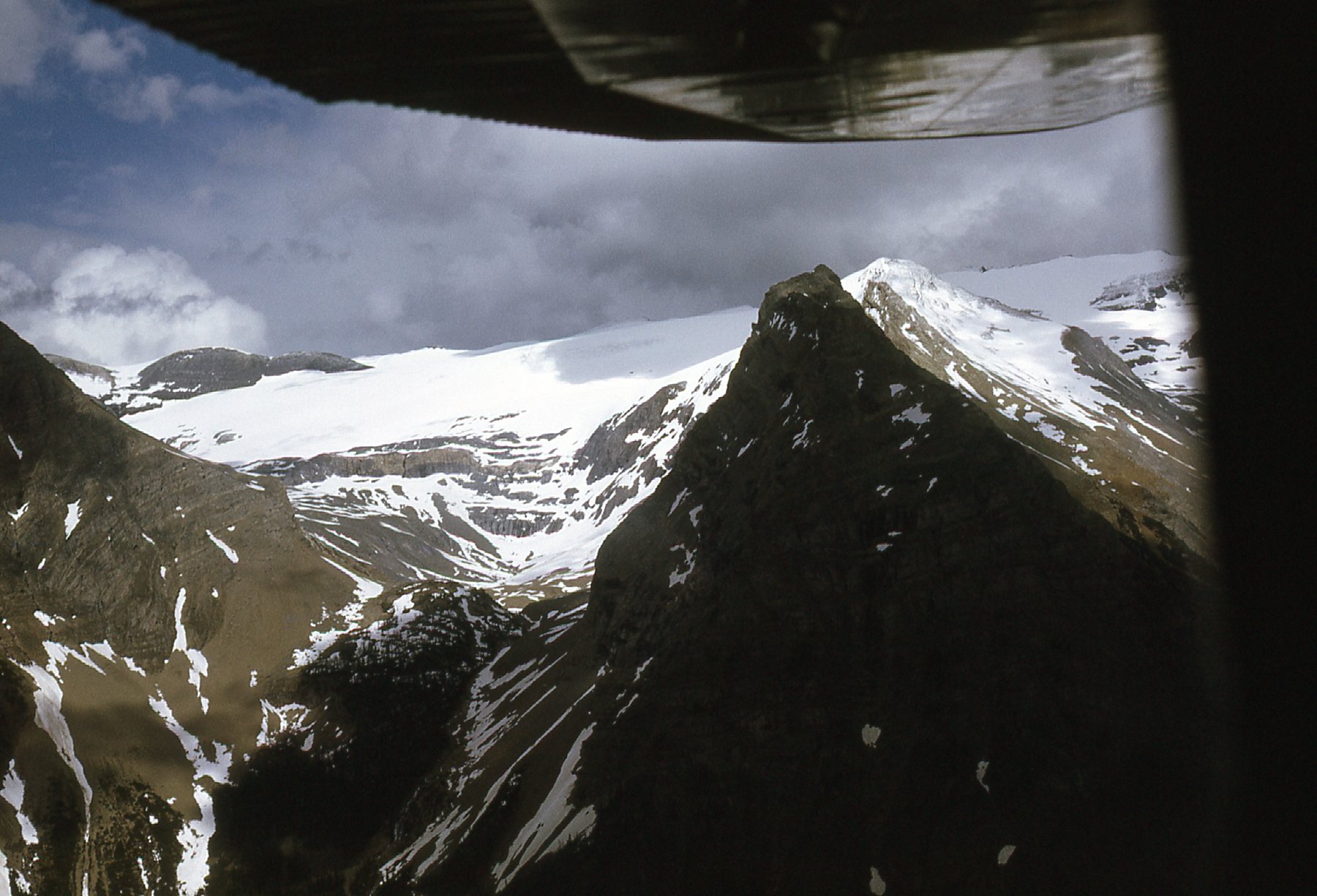
We can see only the east side of the icefield as it creeps downhill towards us.
In the winter of 1972, I took this picture of Mount Temple. Near the top, we can see a small glacier perched on the northeast side of the summit.
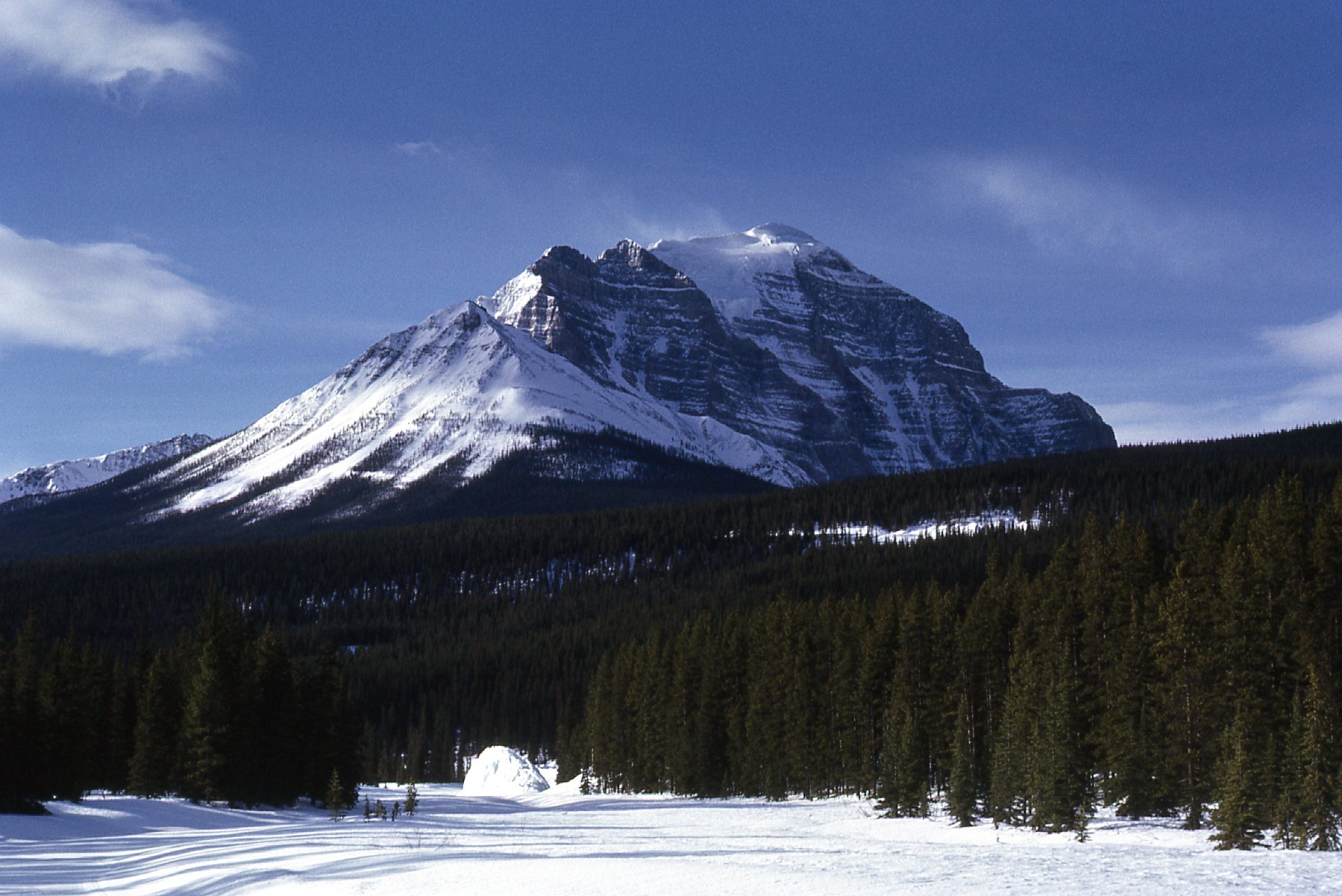
Mt. Temple is an ultra-prominence peak in Banff National Park.
This next picture was taken from atop Black Tusk – we are looking east towards Helm Peak. Plenty of glaciers out there, but that’s pretty typical for Garibaldi Park.
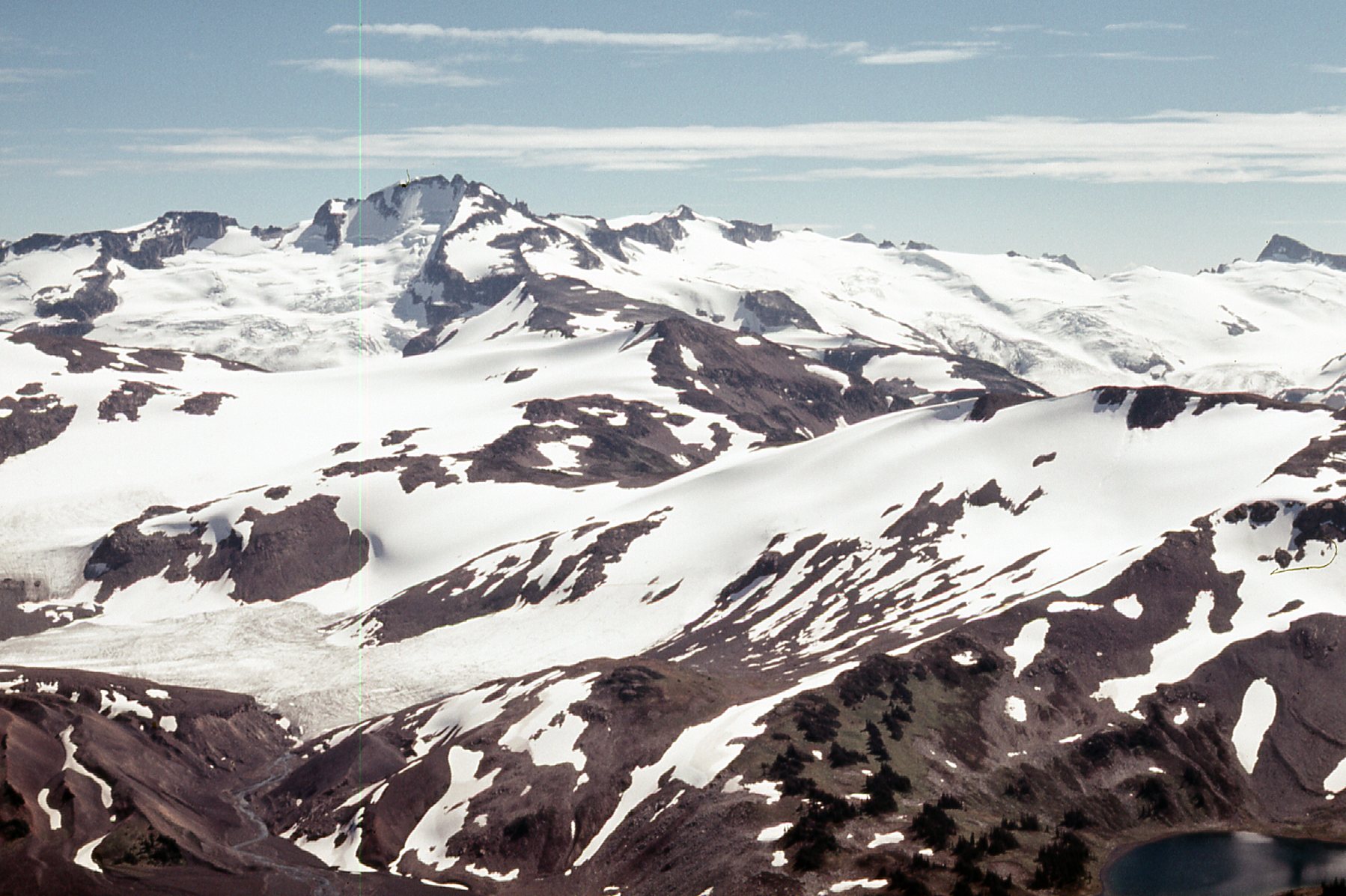
Looking towards Helm Peak in 1973.
Glacier Peak in the Cascade Mountains of Washington state is aptly named. Eleven significant glaciers grace its flanks. Although it is the fourth-highest peak in the state, and is also an ultra, it is more remote than some of the others and is less-visited. It was the first of the state’s big volcanic peaks that I climbed, and that was in 1974. A lot of the climb was on glaciers, and I wanted to share some of those pictures with you.
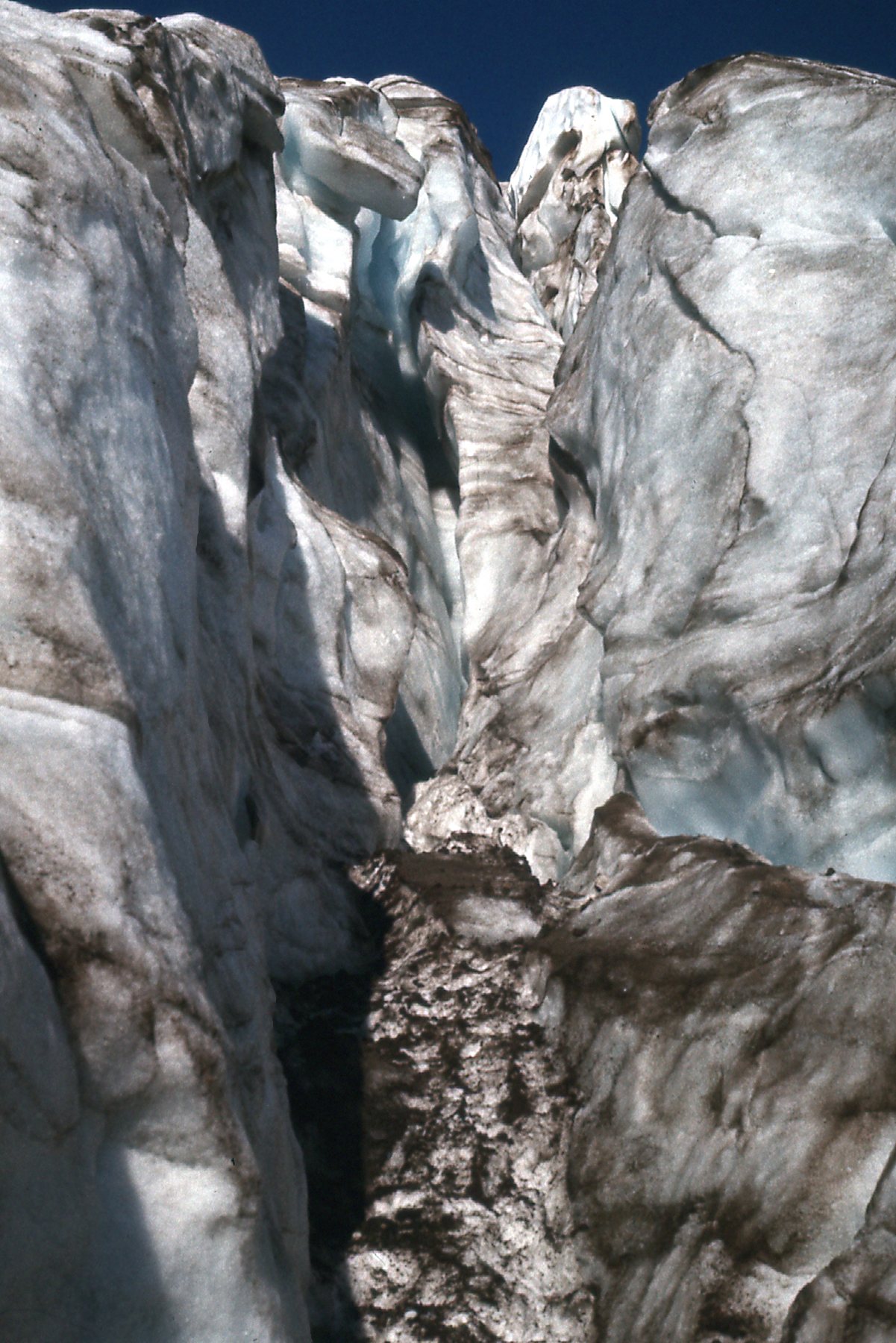
A detail on the upper Sitkum Glacier.
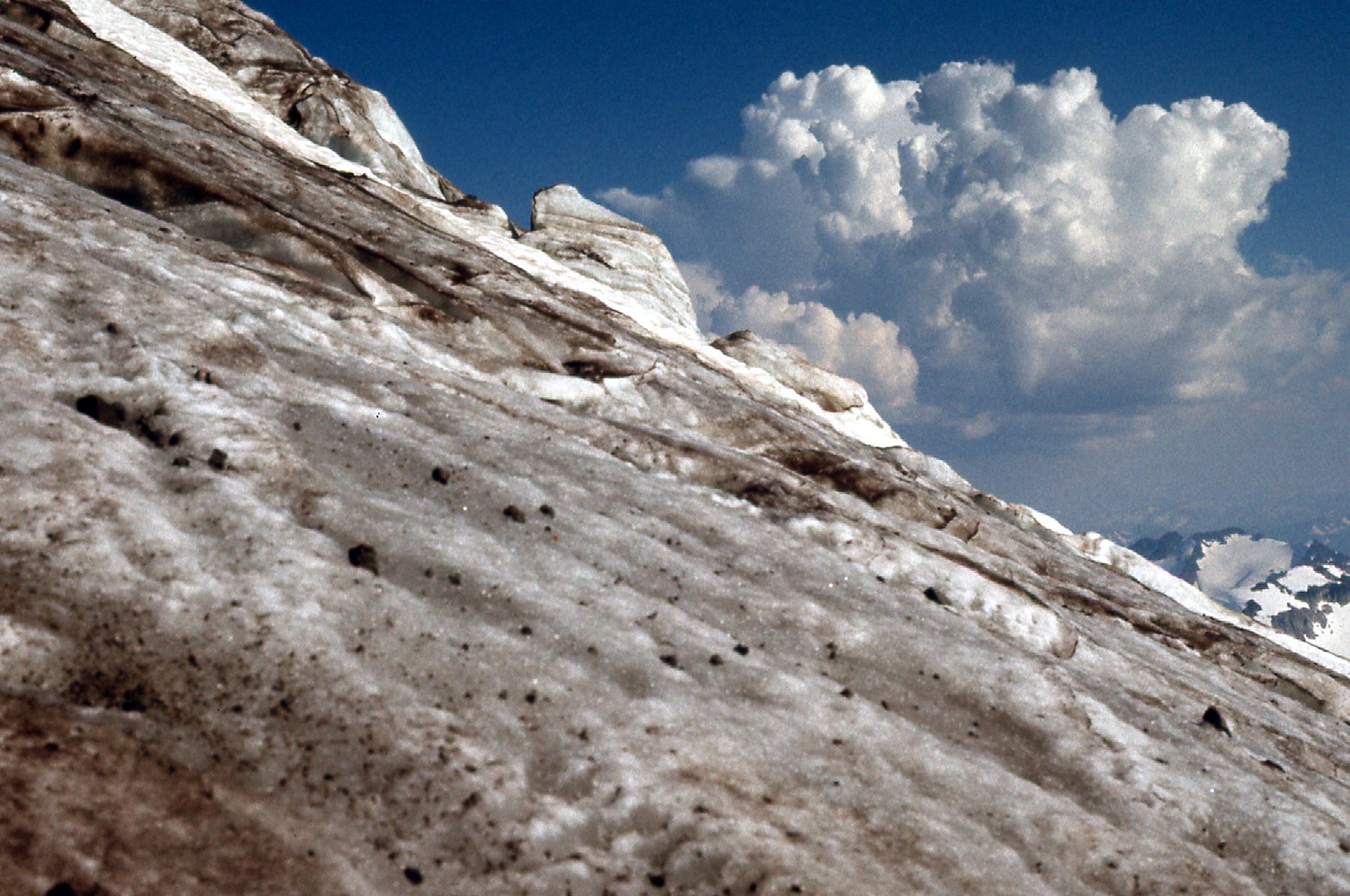
On the upper Sitkum Glacier, you can see rocks and dirt which have been deposited. Some of it falls down, some of it is blown in by the wind.
This was my overnight bivi site, between the upper and lower Sitkum glaciers.
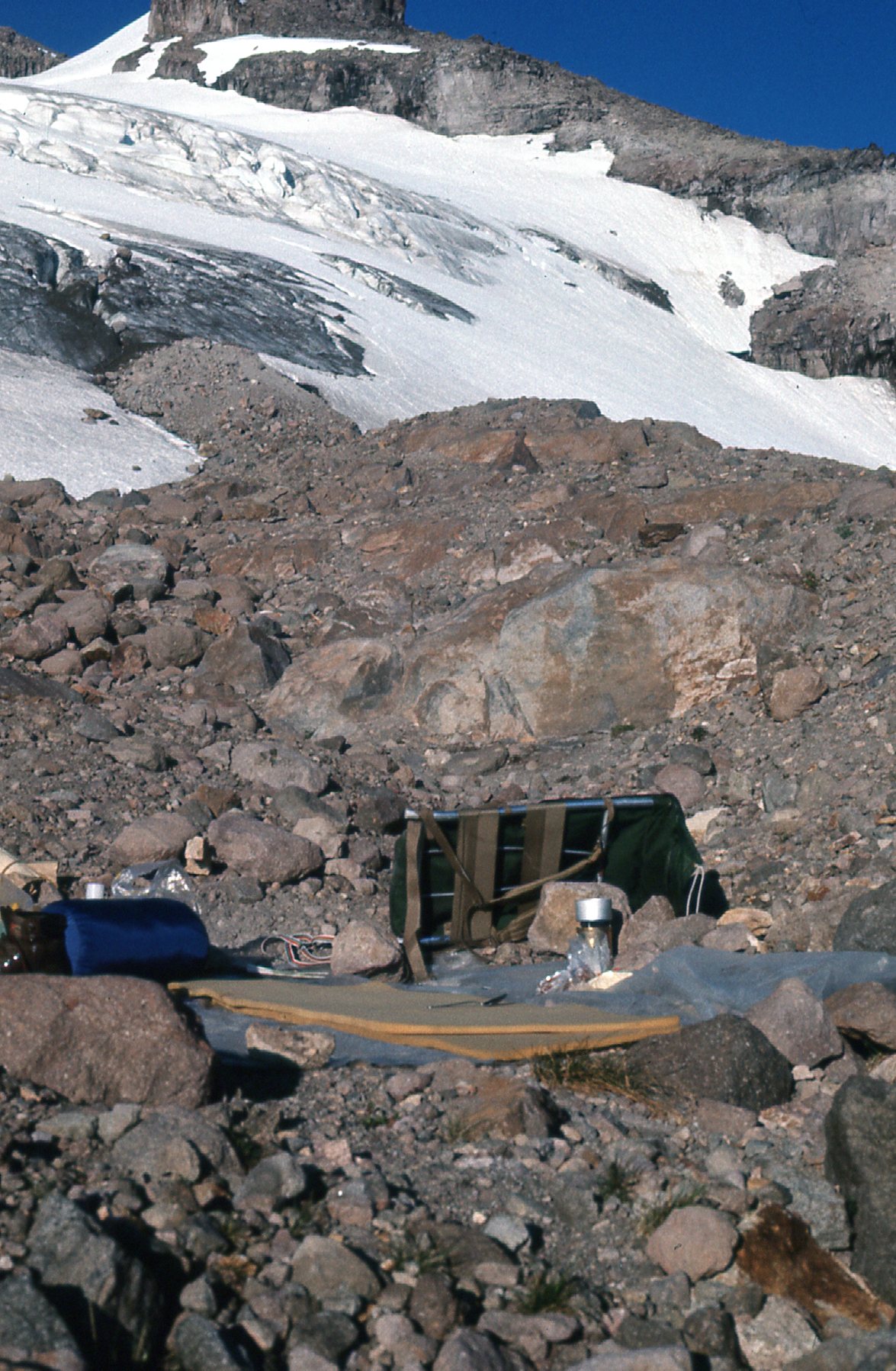
My gear at my campsite.
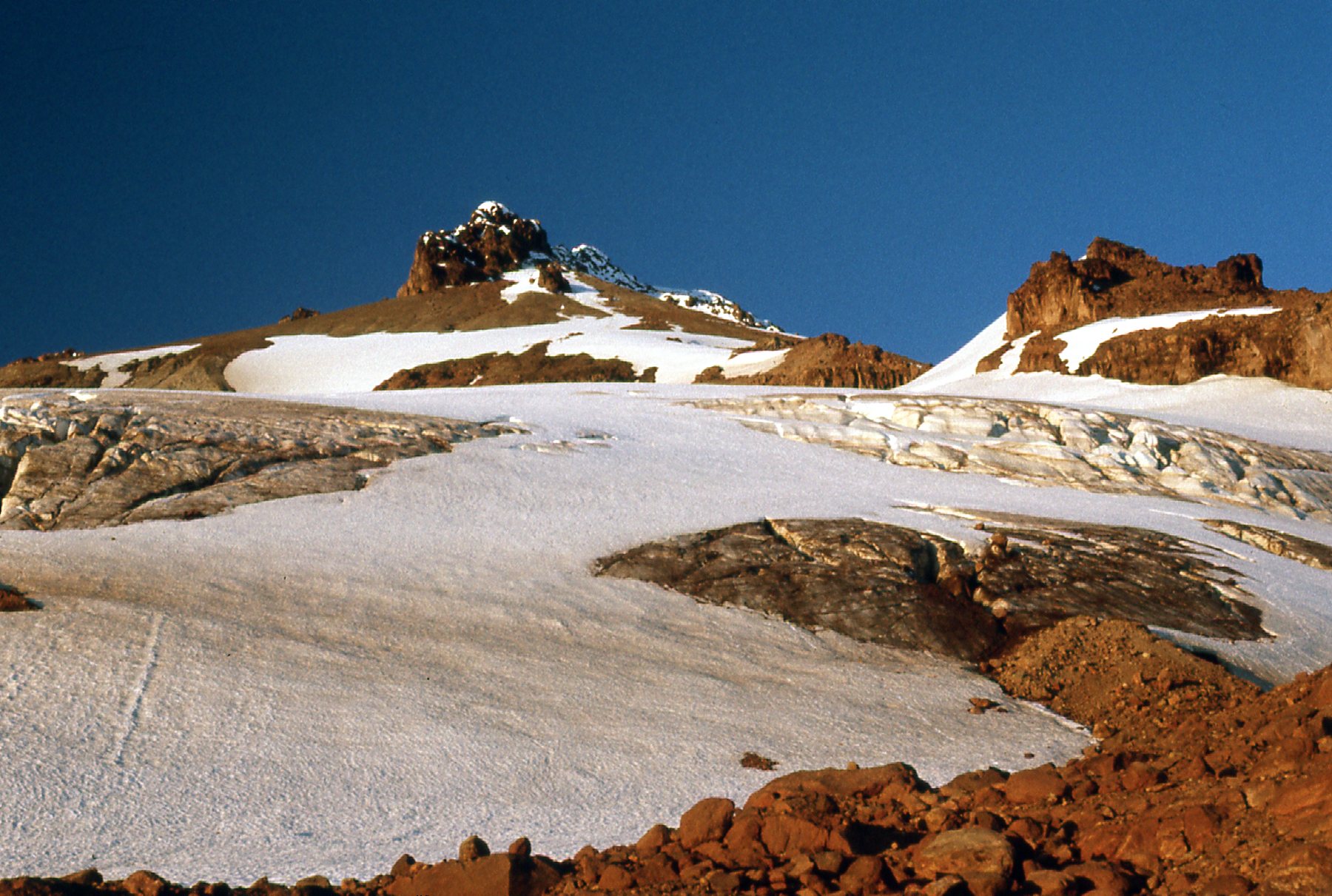
Sunset
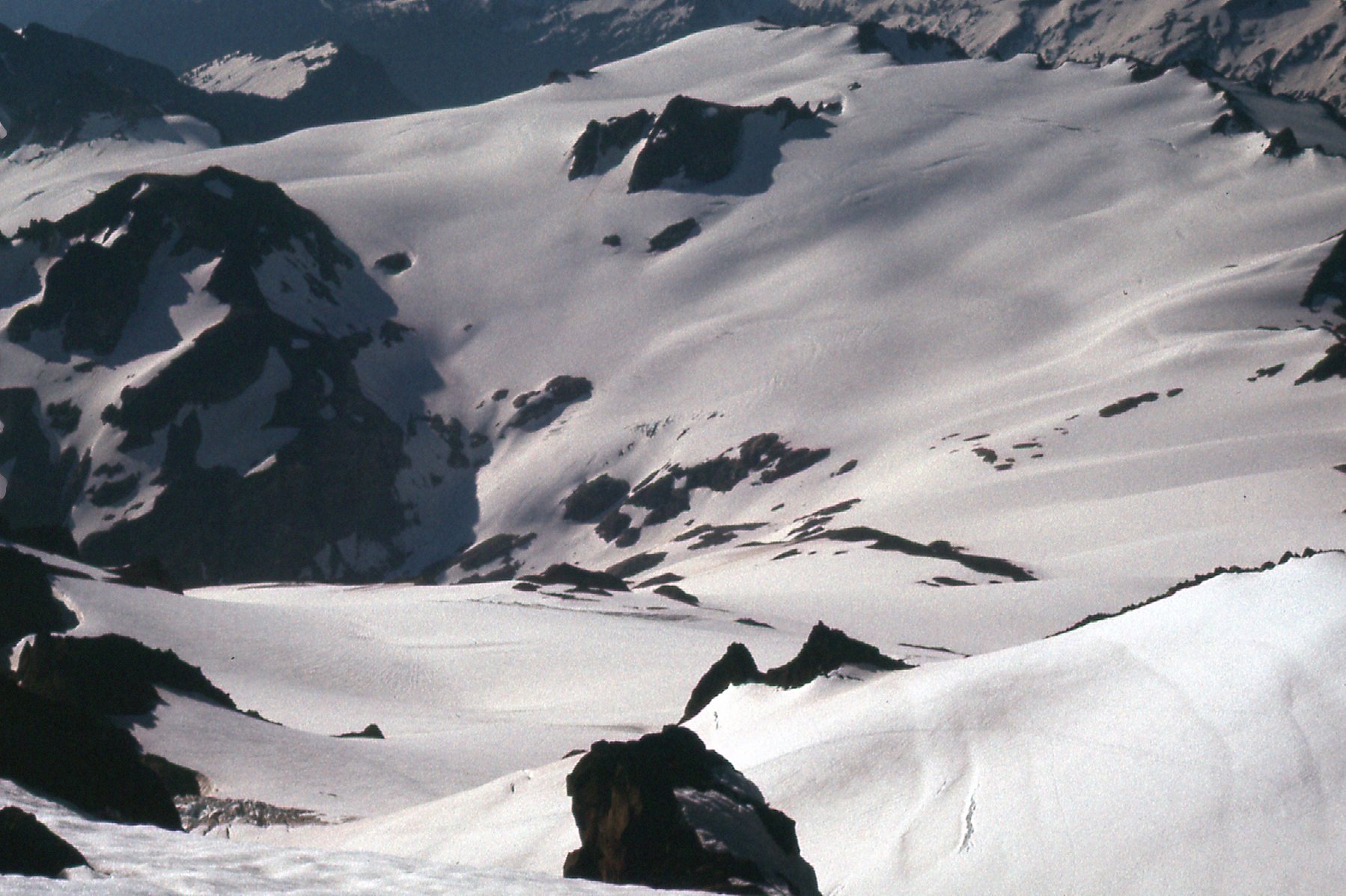
The Cool glacier southeast of the summit.
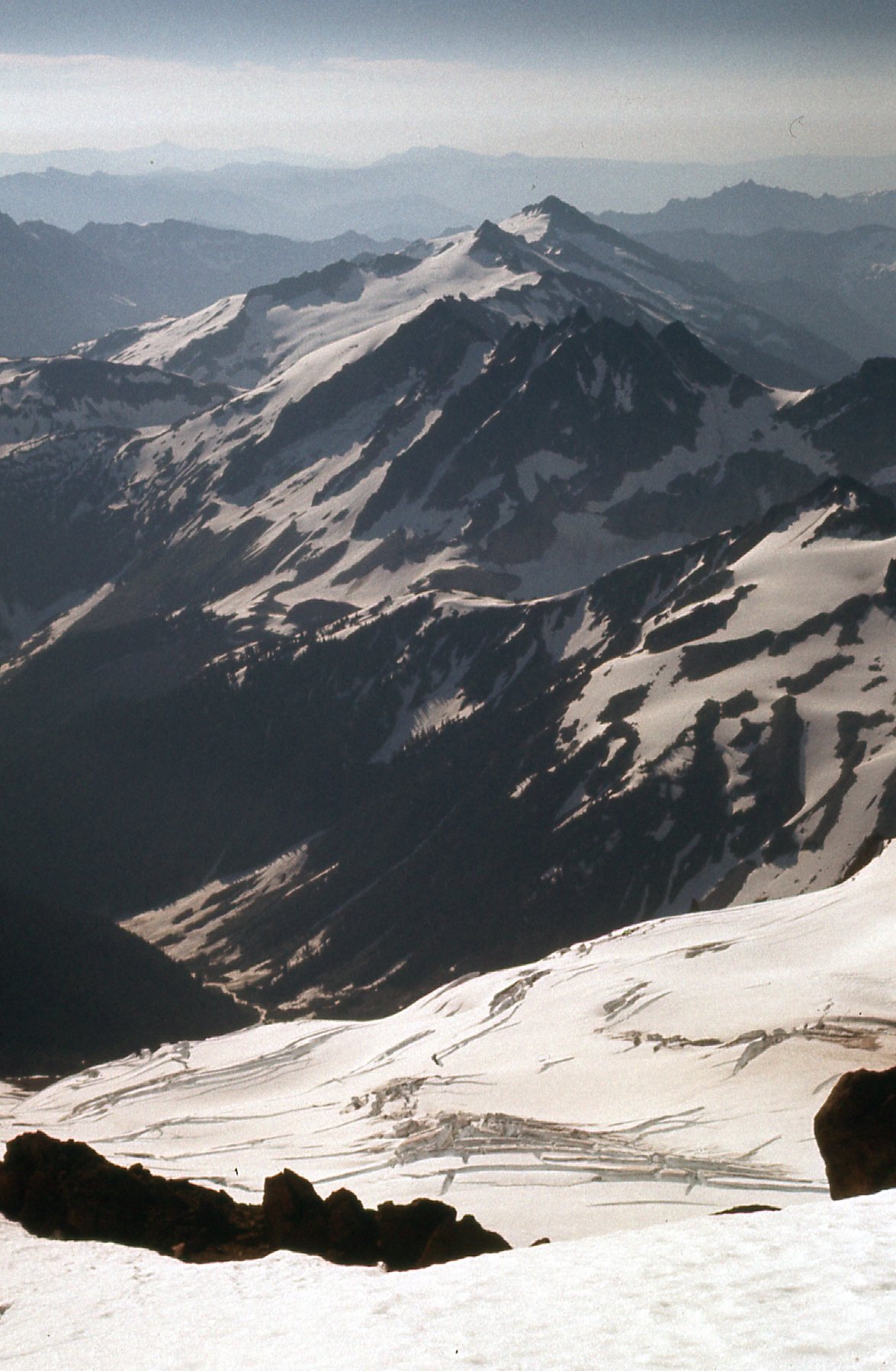
Looking south of east from the summit.
From high on the peak, everywhere you look there are glaciers.
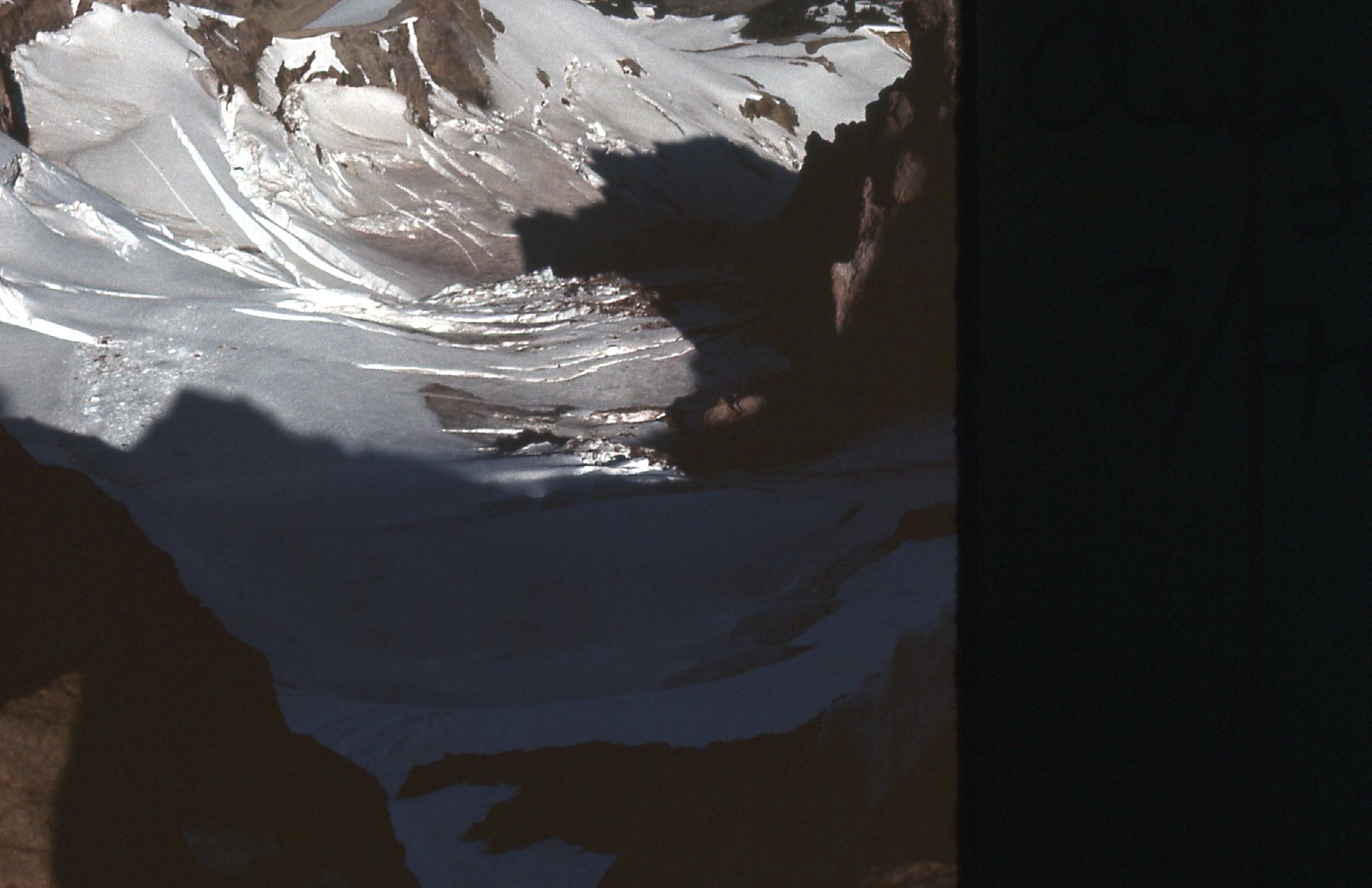
Looking northwest to the Scimitar Glacier
Here we are looking east to the summit. The glacier in the foreground is the Upper Sitkum Glacier. The dark part across the middle of the photo is bare ice, while much of the rest of the glacier is snow-covered and looks white. The darker parts higher up are bare ice.
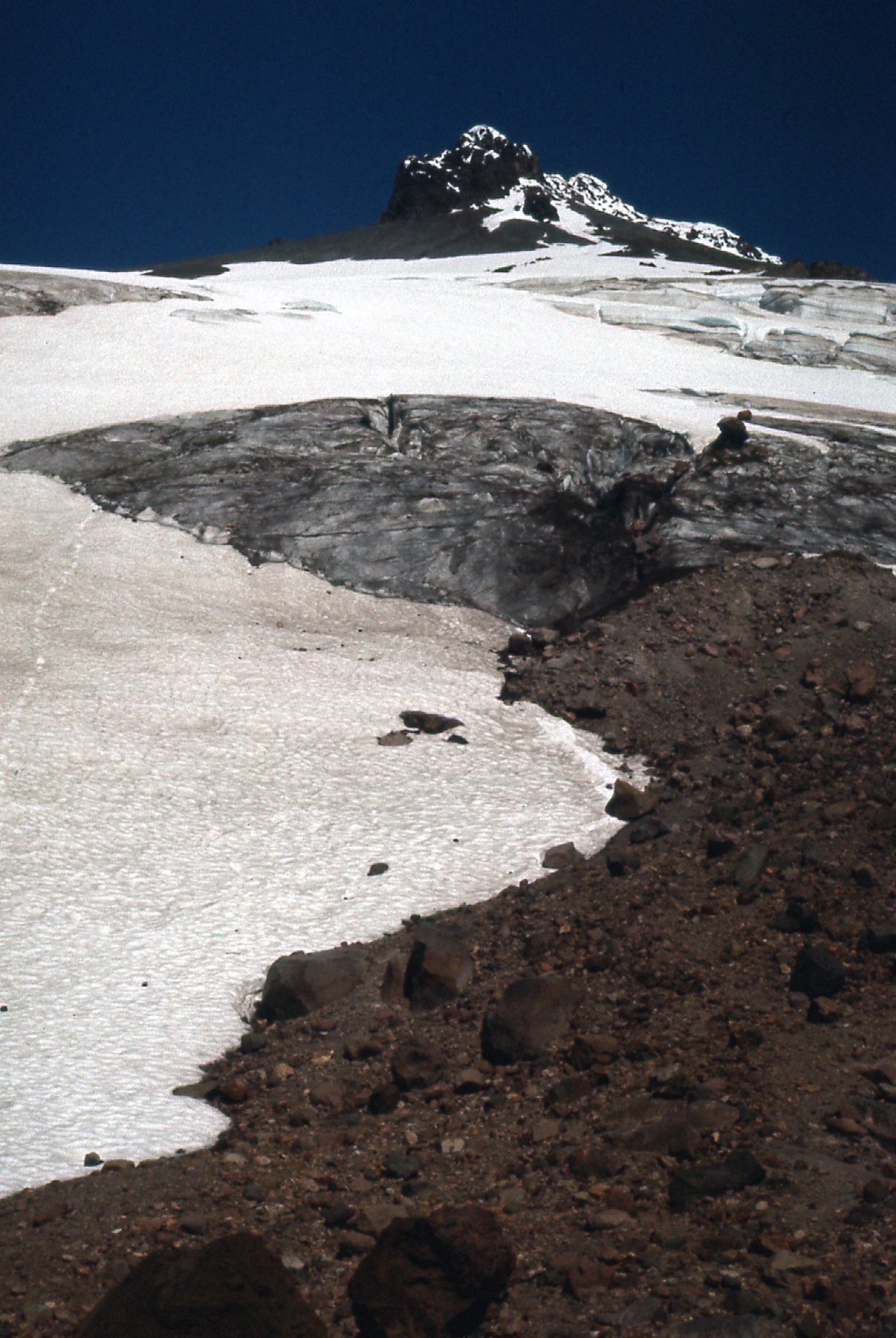
Looking east.
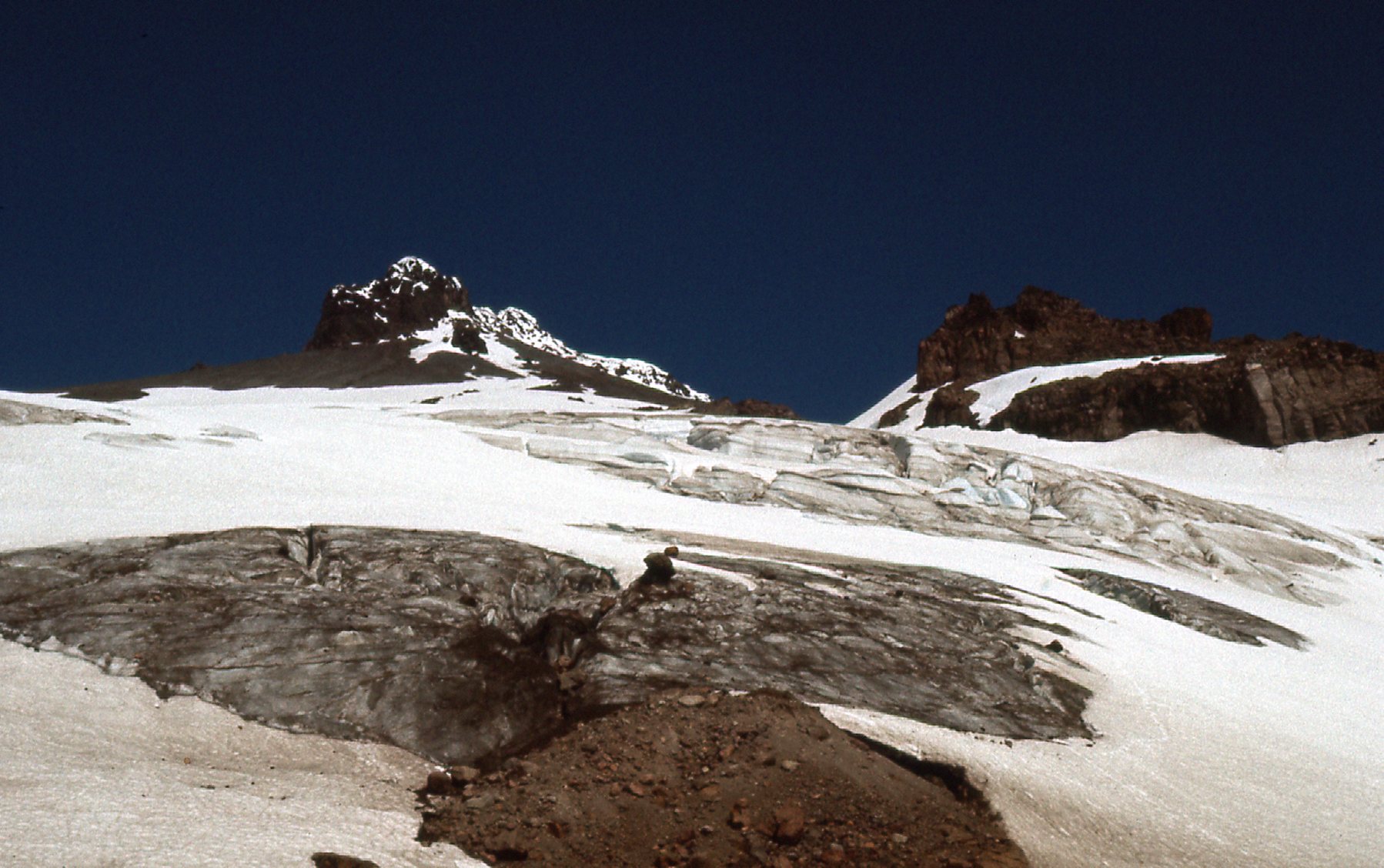
The summit is on the left, elevation 10,541 feet. On the right and more brownish in color is Disappointment Peak, at 9,755 feet.
Here, we are looking south. The area around Glacier Peak has plenty of glaciers from which to choose.
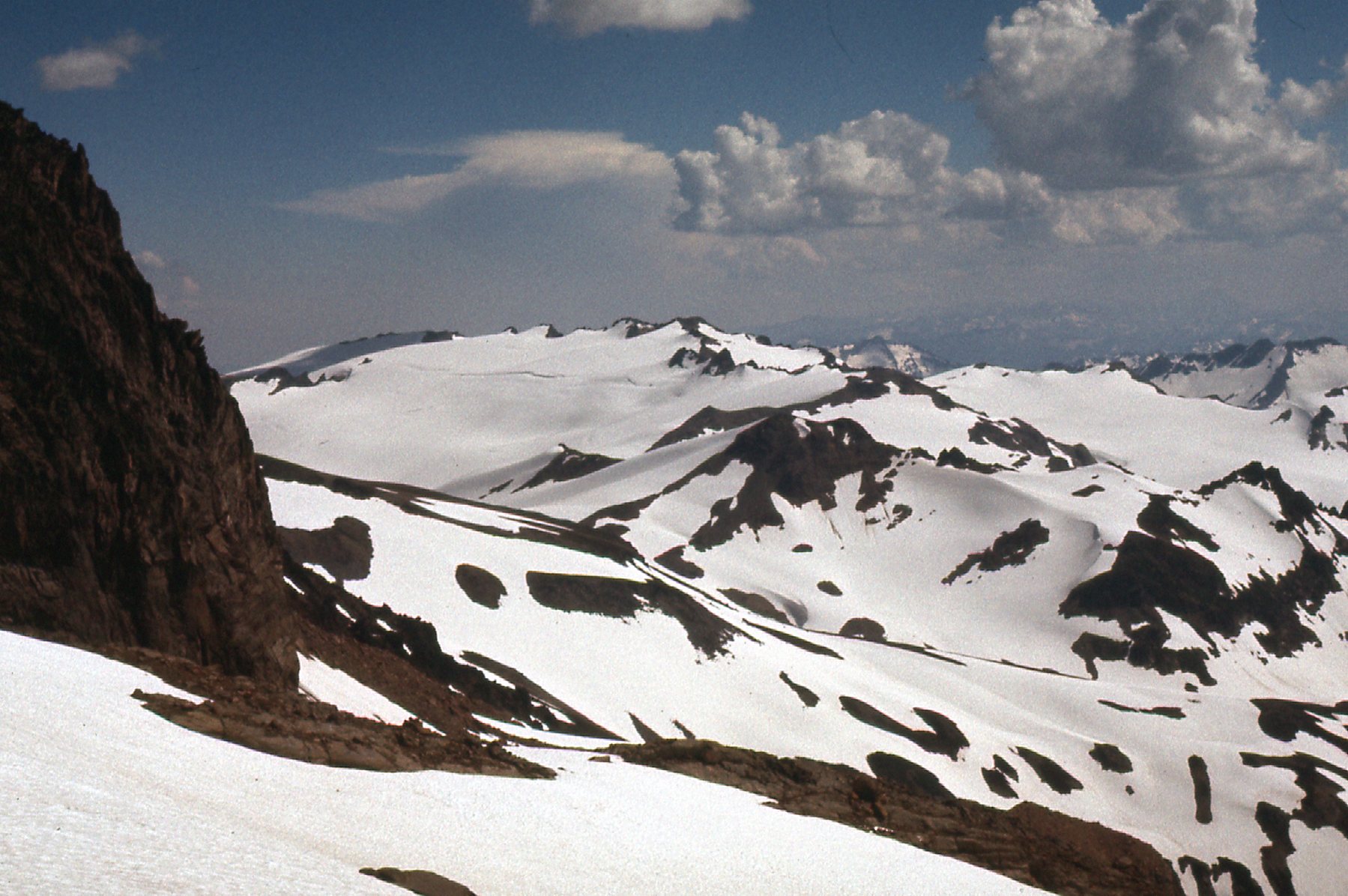
This view is to the south, to White Chuck Glacier and Suiattle Glacier.
Well, I’ve just realized that in my grand tour of glaciers, I’ve exceeded the 2,000-word limit I like to set for each piece, so I’m going to sign off here and continue with Glaciers I Have Known – Part 2. Please stay tuned for the next installment.